In the future manufacturing landscape of 2026, there is going to be a shift in the use of aluminum alloys, from general chemical composition to more metallurgically controlled conditions. The term aluminum temper is no longer just about hardness for procurement representatives or design engineers; it also indicates structural adequacy, corrosion, and residual stress levels. With the rise of digital material passports in B2B commerce, quality engineering, as well as a better understanding of how aluminium temper designations effort is of the essence for the extended life of the components, as well as for reducing the excess machining expenses.
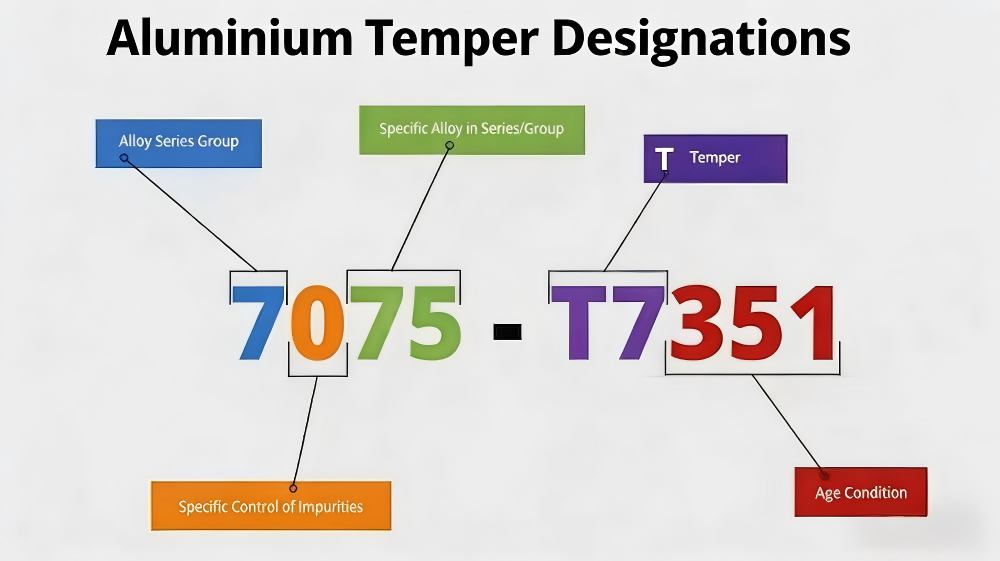
The Fundamental Logic of Aluminium Temper Designations
The alphanumeric system used to designate aluminum tempers provides a standardized roadmap of the mechanical and thermal history of the metal. These designations are divided into five primary categories, each representing a distinct stage of processing:
- F (As Fabricated): Indicates no special control over thermal or work-hardening conditions.
- O (Annealed): Represents the lowest strength and highest ductility state.
- H (Strain Hardened): Applied to non-heat-treatable alloys (typically the 1xxx, 3xxx, and 5xxx series) where strength is increased through cold working.
- T (Thermally Treated): Applied to heat-treatable alloys (2xxx, 6xxx, and 7xxx series) to produce stable tempers through solution heat treatment and aging.
In 2026, the focus of the industry has intensified on the sub-categories of these tempers, specifically those addressing the micro-structural challenges of high-performance environments.
Marine Engineering: The Technical Threshold of H116 and H321
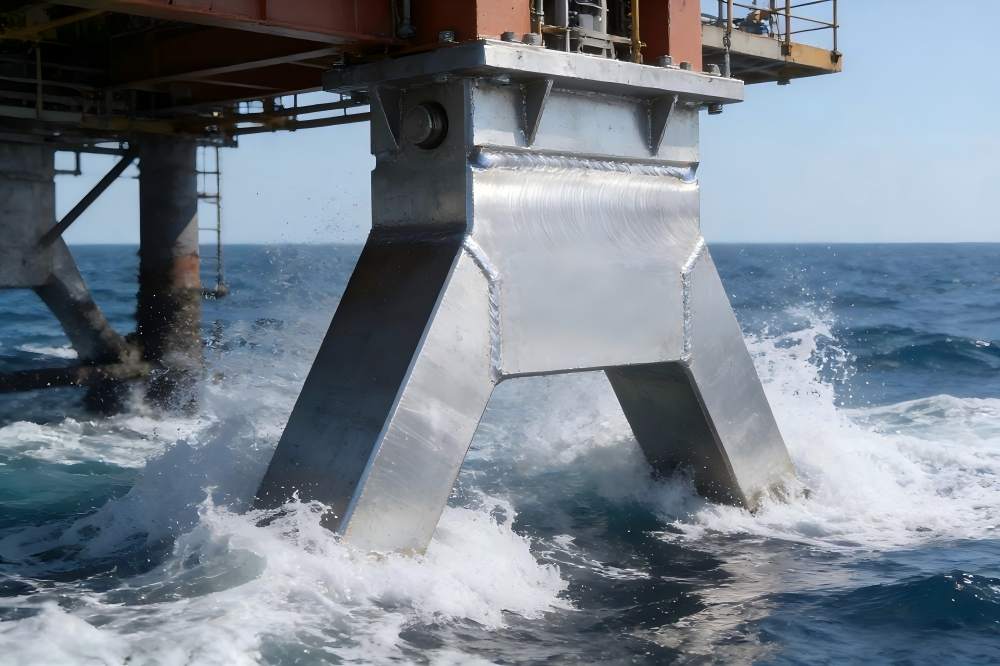
As it concerns materials like 5xxx series of aluminum-magnesium alloys, such as 5083 and 5456, the choice of H116 or H321 will affect whether or not the material will survive in the ocean. The primary concern of this aluminum-magnesium alloy is the precipitation of the magnesium-rich β phase (Mg2Al3) at the grain boundaries, eventually leading to a significant loss.
1. H116: Optimized for Exfoliation Resistance
The H116 temper is specifically engineered for high resistance to exfoliation corrosion. Under 2026 quality protocols, H116 materials must undergo the ASTM G67 (NAMLT) test to measure mass loss. A successful H116 designation indicates that the manufacturing process has prevented the formation of a continuous network of the β phase, making it the standard for hull plates and deck structures in high-speed ferries and naval vessels.
2. H321: Stabilization Through Thermal Control
H321 involves strain hardening followed by a low-temperature stabilization treatment. This process ensures that the magnesium atoms remain in a state that will not sensitize over time when exposed to moderate operating temperatures. In 2026, the shift toward offshore wind energy and marine pressure vessels has increased the demand for H321 due to its superior stability under sustained mechanical loads.
The distinction between these two is no longer qualitative. Digital Material Certificates (MTCs) now frequently include quantitative data on the β phase precipitation rate to verify that the material will not become susceptible to intergranular corrosion during its 25-year service life.
Precision CNC Machining: Managing Residual Stress with T651
In sectors such as semiconductor equipment manufacturing and aerospace tooling, the primary cost driver is often not the raw material, but the scrap rate caused by dimensional instability during machining. The T651 temper has emerged as the industrial solution to this “hidden cost.”
1. The T651 Process Logic
The T651 designation indicates that the material has undergone solution heat treatment, followed by a controlled permanent stretch of 1.5% to 3%, and finally artificial aging. The mechanical stretching is the critical step; it effectively “neutralizes” the high levels of residual internal stress caused by the rapid quenching process of a standard T6 temper.
2. Dimensional Stability in Heavy Milling
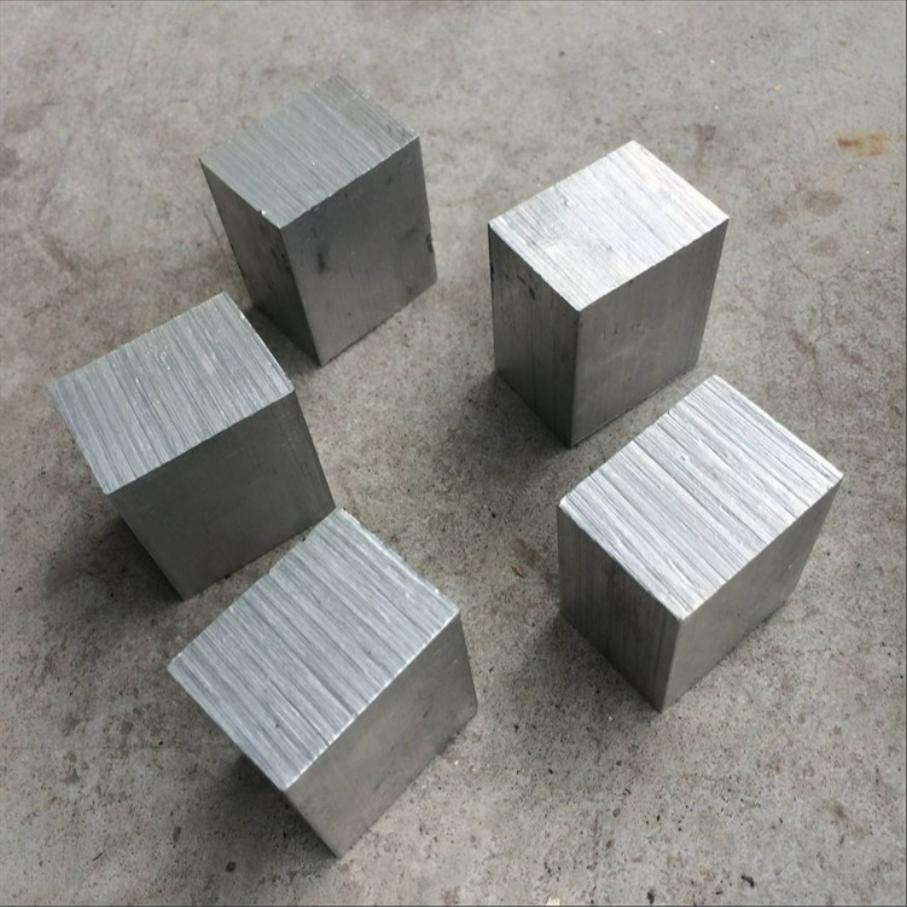
When a standard T6 plate is subjected to heavy CNC milling—such as the creation of vacuum chambers or complex manifolds—the removal of material triggers an imbalance in internal stresses. This results in the part warping or “bowing” like a banana once it is released from the machine fixtures. By using T651, the internal stresses are uniform and minimal, allowing for high-precision tolerances without the need for multiple stress-relief cycles or rework. In the 2026 market, high-end mold and die manufacturers have categorized T651 as the default requirement, requiring any non-stretched material to be explicitly disclosed as “Non-Stretched” in the Bill of Materials (BOM).
Aerospace Structural Safety: The Role of T7351
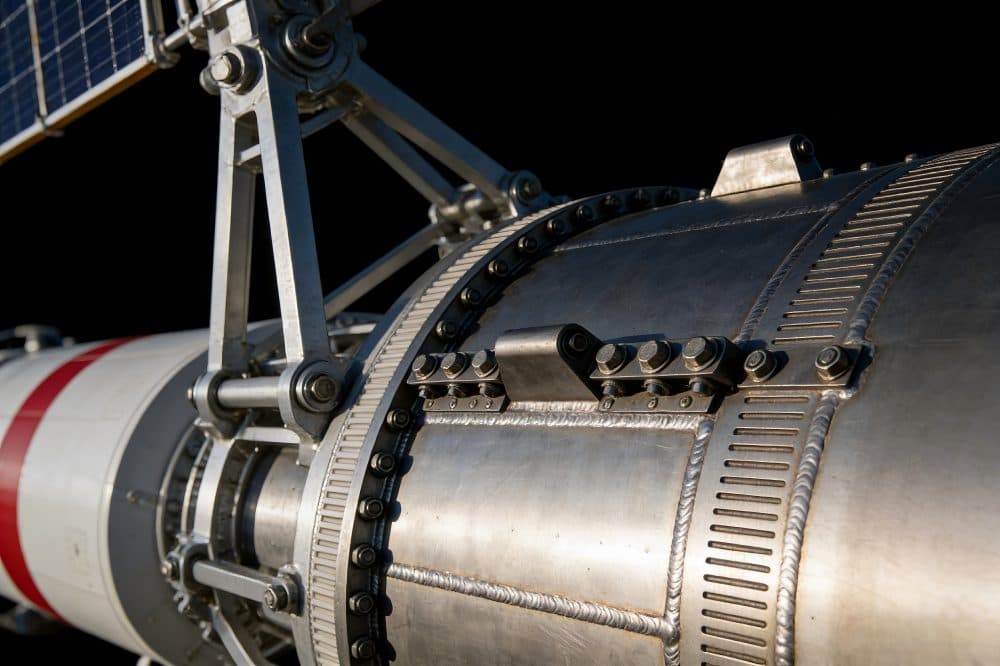
While T6-series tempers provide the highest tensile strength, they are often susceptible to Stress Corrosion Cracking (SCC). In aerospace applications, where failure is not an option, the industry utilizes the T7351 temper to prioritize safety over absolute strength.
1. T7351: The Over-Aging Strategy
T7351 involves a two-stage artificial aging process known as “over-aging.” By pushing the material past its peak strength point, the microstructure is altered to become virtually immune to SCC. Although this results in a strength reduction of approximately 10% to 15% compared to T651, the gain in fracture toughness and fatigue life is substantial.
2. Strategic Application
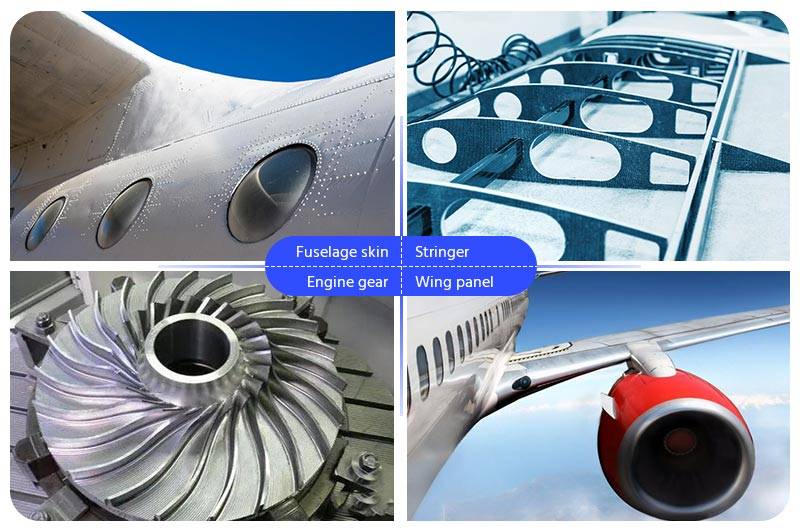
For thick-section components in the wings and fuselage frames, T7351 is required for the following particular 7xxx series alloy (such as 7075). In addition to machining aerospace ribs and bulkheads, the 51 suffixed T7351, as is the case for T651, has also undergone stretching to flatten the thick plates.
2026 Technical Comparison and Application Guide
To assist in the technical procurement process, the following table summarizes the core differences and primary applications of these critical temper processes under the latest standards.
| Temper Designation | Core Process Characteristic | Primary Advantage in 2026 | Industry Application |
| H116 | Controlled β phase distribution | Maximum exfoliation resistance | Marine hulls, maritime deckings |
| H321 | Strain hardening + Stabilization | Structural stability in marine environments | Offshore wind, marine tanks |
| T651 | Solution heat treat + Controlled stretch | Minimal residual stress; zero warping | Semiconductor tools, precision molds |
| T7351 | Two-stage over-aging + Stretch | High resistance to SCC and fatigue | Aerospace frames, military hardware |
Material Specification-Based on Data
The increase in demand for high-strength alloys is mainly attributable to the trend in most industrial applications to achieve the greatest amount of strength with the least possible weight. For B2B organizations, the capability to grade an aluminum temper designation accurately-that is, to tell a T6 from a specification T651-is most important.
In the foregoing scenario, digital tracing and thrust on the infrastructure due to environmental laws make the reinforcement of the quality-sensitive temper fitting very pertinent and likely. Manufacturers need to appreciate aluminum as a metal and not a standard commodity, and to consider it as a thermo-mechanically processed component. Selecting the most applicable temper to a material is the most direct and definite way of ensuring that the product will meet all industrial safety and efficiency standards set in the current era.