As a pipeline engineer with years of experience in the pipeline engineering industry, I have witnessed firsthand how poor material selection can cause failure, leading to enormous expenses as well as early retirement of pipelines. Carbon steel has been regarded as the king of long-distance transmission pipelines for many decades now. Carbon steel is not only cheap, but it is also predictable and durable. But once you move offshore into drilling platforms, design deep cryogenic LNG systems, or handle sour gases containing hydrogen sulfide (H2S), then you will find carbon steel falling short.
In these “special battlefields” of the energy sector, material engineers must look beyond traditional ferrous metallurgy. That is where the seamless aluminum tube steps in. This is not about a total replacement of steel; it is about strategic deployment where aluminum’s unique metallurgy solves complex engineering headaches.
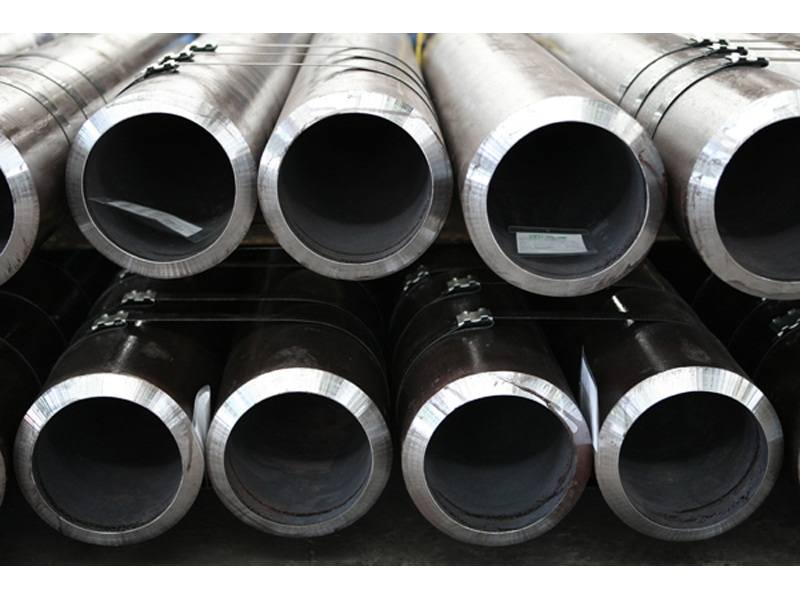
The “Seamless” Absolute: Why Welded Tubes Fail in High-Pressure Pipelines
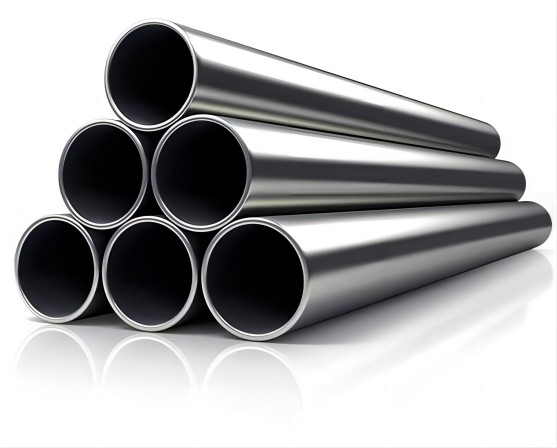
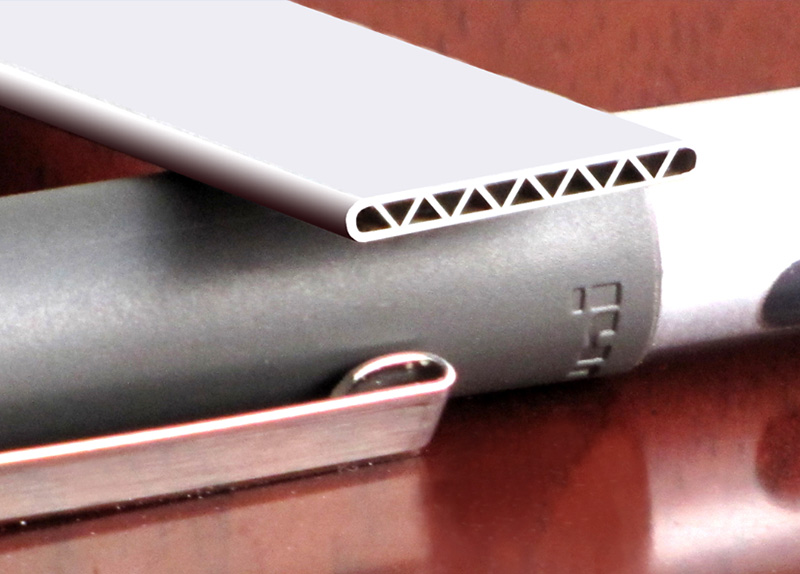
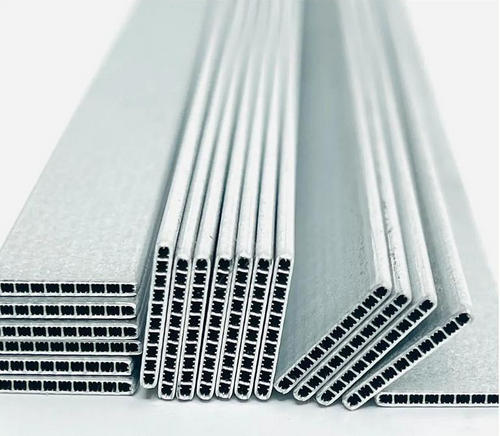
Before proceeding to the chemistry of aluminum, we should look into the manufacturing process. As for high-pressure oil and gas operations, welding is practically out of the question; only seamless aluminum tubes are specified. Why? Because in a pipeline under intense internal pressure, a weld seam is a liability.
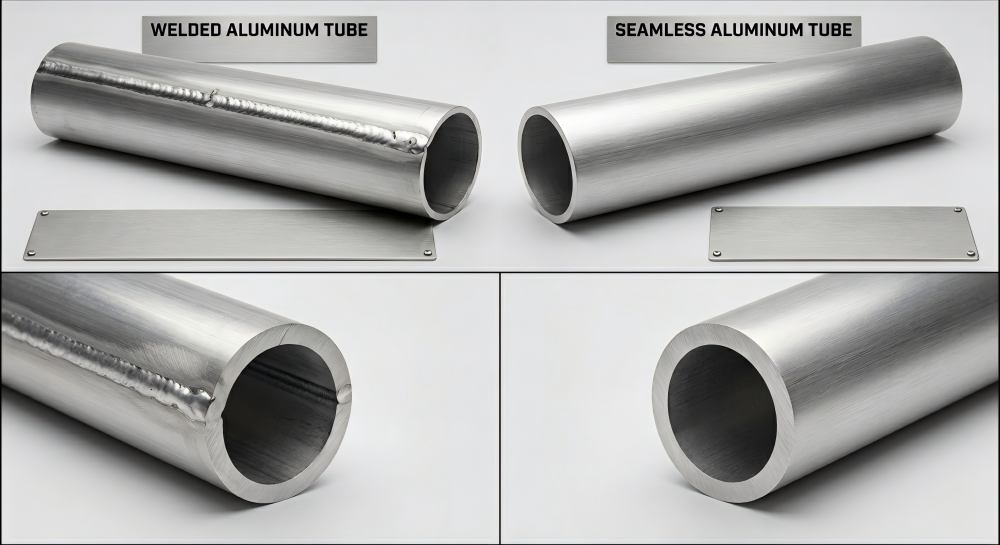
1. No Weak Points (Eliminating Structural Asymmetry)
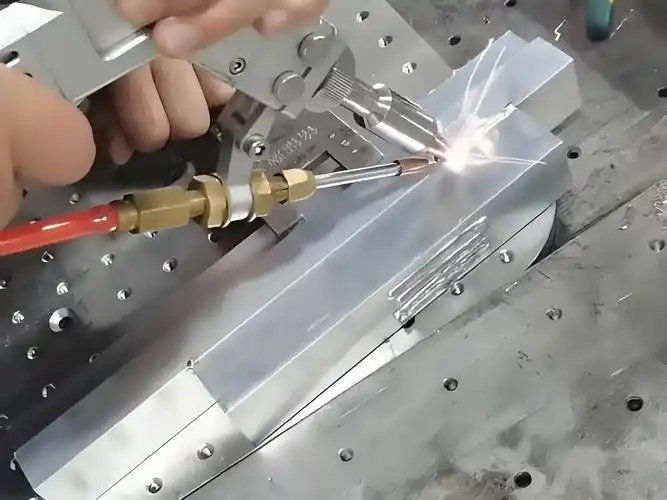
A welded pipe inherently possesses a heat-affected zone (HAZ) and a longitudinal seam where the crystal structure of the metal has been altered by melting and resolidification. This seam acts as a natural stress concentration point. Under cyclic pressure loading, or when exposed to corrosive media, the weld line is where cracks initiate. A seamless tube, manufactured via extrusion or cold drawing, features a completely homogenous, continuous grain structure across its entire cross-section.
2. Superior Burst Pressure Capacity
This is because a seamless aluminum tube has uniform wall thickness and perfectly isotropic mechanical properties, vastly superior in its ability to resist hoop stress (circumferential stress due to internal fluid pressure). From an engineering design standpoint, a seamless tube will typically have a safety factor or burst pressure rating 20% to 30% higher than a welded tube of the same alloy and wall thickness. When you are transporting volatile hydrocarbons, that 20% is the difference between a routine operation and a catastrophic blowout.
The Top 4 Engineering Benefits of Aluminum Alloys in Pipeline Design
When we look at the physics and chemistry of aluminum alloys, four distinct properties stand out as absolute game-changers for midstream and upstream oil and gas infrastructure.
1. Native Corrosion Resistance (Thwarting H2S and CO2)
One of the greatest enemies of a pipeline engineer is “sour gas”—natural gas contaminated with high levels of hydrogen sulfide (H2S) and carbon dioxide (CO2). In the presence of moisture, these gases form acids that chew through carbon steel, causing hydrogen-induced cracking (HIC) and sulfide stress cracking (SSC).
Aluminum does quite well in this environment because of a process called passivation. As soon as aluminum is exposed to oxygen, it spontaneously forms a microscopic, dense, highly adherent layer of aluminum oxide (Al2O3) on its surface. This layer will self-heal immediately if scratched or abraded by fluid flow. This oxide film is highly inert to water, hydrogen sulfide, carbon dioxide, and various organic acids, eliminating the need for expensive chemical corrosion inhibitors that steel pipelines require.
2. Zero Cryogenic Embrittlement (The LNG Standard)
But if you try to pump liquefied natural gas (LNG) at its boiling point of -162℃ through regular carbon steel, the pipe will shatter like glass to the slightest impact. Carbon steel has a body-centered cubic (BCC) crystal lattice, which exhibits a dramatic “ductile-to-brittle transition” at low temperatures.
Aluminum alloys, conversely, have a face-centered cubic (FCC) crystal structure. This atomic arrangement means aluminum does not have a brittle transition temperature. When the temperature drops into deep-cryogenic zones, the tensile strength, yield strength, and fracture toughness of an aluminum tube actually increase while retaining excellent ductility. For LNG storage, vaporizers, and jetty transfer lines, aluminum is highly reliable.
3. Unmatched Strength-to-Weight Ratio
Aluminum has a density of about 2.7g/cm3, and weighs roughly one-third as much as steel. Properly alloyed, it has a specific strength on par with or greater than mild steel.
- Offshore Topside Weight Reduction: Weight is at an absolute premium on a multi-tier offshore platform or a floating production storage and offloading (FPSO) vessel. Replacing secondary steel lines with aluminum, instrument arrays, and utility piping saves hundreds of tons of topside weight, easing the structural engineering load on the hull.
- Logistical Benefits: In remote and trackless terrain – such as mountainous areas or dense jungles where gathering lines need to be laid – the lighter weight of aluminum tubes significantly cuts transportation costs and allows smaller crews to install them without heavy cranes.
4. Superior Hydraulic Efficiency
Over time, steel pipes rust, pit, and develop a rough internal surface that chokes fluid flow. Seamless aluminum tubes possess an incredibly smooth internal bore with a very low hydraulic roughness coefficient. This smoothness yields two massive operational benefits:
- It lowers friction loss, meaning less pumping horsepower is required to move the same volume of oil or gas.
- It drastically minimizes the deposition of heavy hydrocarbons like paraffin wax and asphaltenes, which like to cling to rough surfaces. This lowers your operational expenditure by reducing the frequency of mechanical pigging cycles.
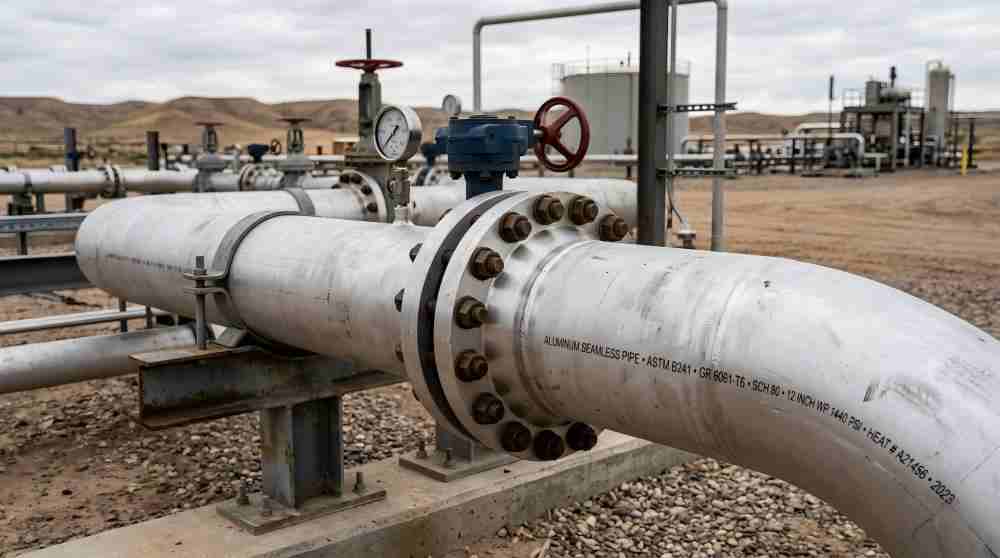
5083 vs 6061: The Ultimate Selection Guide for Pipeline Engineers
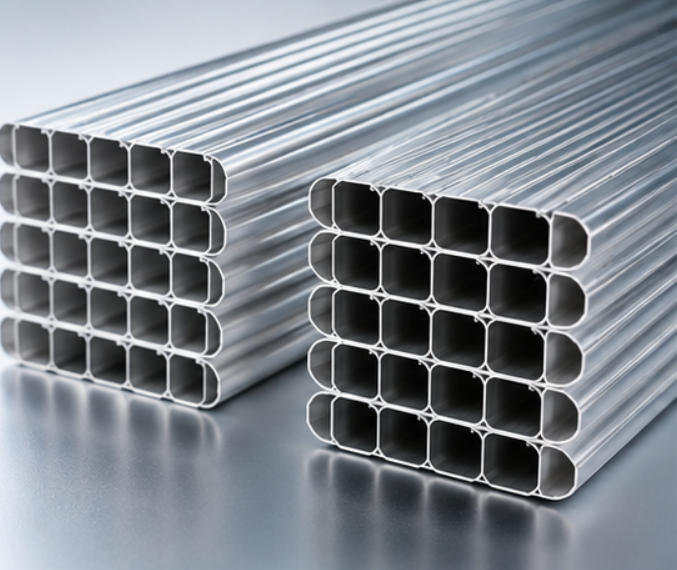
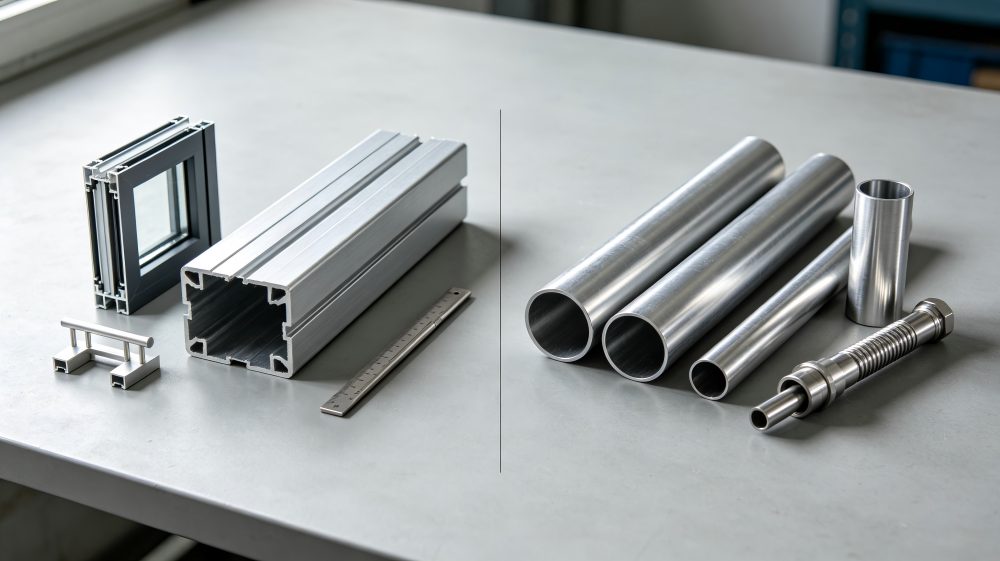
Once the choice has been made to use aluminum, the next vital thing to do is to choose the correct alloy series. Within the petroleum and gas industry, the choice will most likely revolve around the 5000 series and the 6000 series. Making the wrong choice here can ruin your pipeline.
| Material Property | 5-Series (e.g., 5083-O / H112) | 6-Series (e.g., 6061-T6) |
| Primary Alloy Agents | Magnesium (Mg, 4.0%−5.5%) | Magnesium + Silicon (Mg+Si→Mg2Si) |
| Strengthening Method | Work hardening / Strain hardening | Thermal precipitation / Age hardening |
| Yield Strength (Rp0.2) | Moderate (∼125−200 MPa) | High (∼240−275 MPa) |
| Welded Joint Efficiency | Excellent (∼90%−100%): The weld zone retains close to baseline annealed strength. | Poor (∼60%−70%): The heat of welding over-ages the metal, causing a severe “softening” of the HAZ. |
| Cryogenic Performance | Supreme fracture toughness at −162∘C. | Good, but slightly lower ductility than 5083. |
| Maximum Operating Temp | Strict limit: <65∘C (150∘F) | Highly stable up to ∼120∘C |
The Engineering Selection Logic for Seamless Aluminum Tube
1. When to Choose 5083 (Al-Mg)
The 5-series is your go-to material for welded structures, marine exposure, and cryogenic applications. The fact that 5083 is not heat-treated means that, once welded in the field through the process of joining two pipe sections, the high temperature from the flame will not affect the mechanical strength of the joint. Also, the corrosion resistance against chloride pitting makes it perfect for subsea applications.
A Critical Engineer’s Warning (Sensitization): Don’t specify a high magnesium alloy such as 5083 or 5456 if your pipeline’s continuous operating temperature is above 65℃. For long times at temperatures above this limit, the excess magnesium diffuses to the grain boundaries and precipitates as an unstable β-phase (Al3Mg2). This leads to rapid Intergranular Corrosion (IGC) and catastrophic Stress Corrosion Cracking (SCC) in a pressurized pipeline.
2. When to Choose 6061-T6 (Al-Mg-Si)
The reason why the right alloy for you if your pipes have to be exposed to warm conditions and are under high pressure, is 6061-T6, as it has a very high yield strength compared to 5083. That means that the wall thickness of the pipe can be made thinner because of its high strength.
But you do have to take into account the welding penalty. If you weld 6061-T6, then you destroy the artificial aging (the T6 temper), and the strength in the heat-affected zone drops to near annealed levels. So we’re not big fans of field welding 6061-T6. Rather, the pipeline is designed with mechanical joints and threaded fittings or flanged connections to preserve the high-strength temper of the alloy.
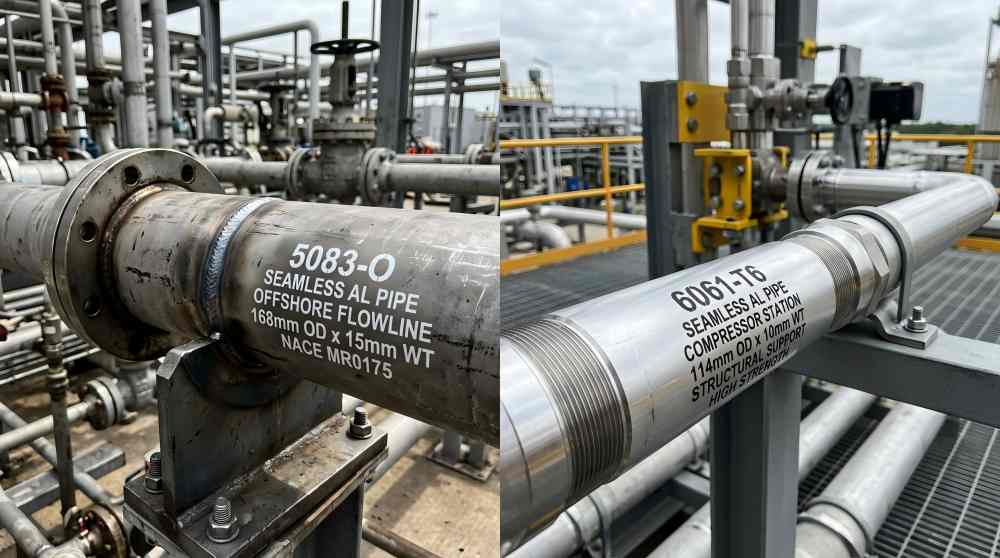
Critical Application Scenarios
To summarize, where a seamless aluminum tube beats out the competition, look at these three distinct operational environments:
- LNG Regasification & Liquefaction Plants: For manifold piping, heat exchanger tubes, and cryogenic liquid transfer lines where steel brittleness is a safety failure risk.
- Offshore Subsea Flowlines & Risers: Used in shallow-water gathering lines where high corrosion resistance to seawater externally and wet sour gas internally is required simultaneously.
- High-Pressure Instrument & Hydraulic Lines: Small-diameter seamless 6061-T6 tubing is the industry benchmark for offshore control systems, actuator lines for emergency shutdown valves (ESVs), and downhole chemical injection lines due to its high burst pressure rating and tight dimensional tolerances.
Conclusion & Engineering Checklist
As pipeline engineers, we do not select materials based on trends; we select them based on empirical data, operating envelopes, and long-term risk mitigation. A seamless aluminum tube gives us a highly specialized solution that does away with the weight penalties of steel, the fragility of low-temperature iron, and the chemical vulnerabilities of welds in sour environments.
- Before specifying your next pipeline material, run through this quick checklist:
- Will the field joints be welded or connected via mechanical flanges?
- Is the operating temperature safely below 65℃ for the 5-series or below 120℃ for the 6-series?
- Does the fluid chemistry contain aggressive corrosive agents like H2S or marine chlorides?