By 2026, the global focus in manufacturing will be on the decarbonization of processes, increasing energy efficiency, and increasing structural safety within manufacturing processes. Also, shifting from the use of conventional solid materials to the use of more advanced composites is occurring more rapidly. One of the new materials that is becoming a major component is the aluminum honeycomb material. While it used to be that honeycomb materials were primarily used for architectural facades, these materials are now moving to more critical use cases in the Electric Vehicle (EV) and aerospace engineering industries. This is primarily due to the superb mechanical properties that honeycomb aluminum structures possess, such as excellent thermal management and an unmatched strength-to-weight ratio.
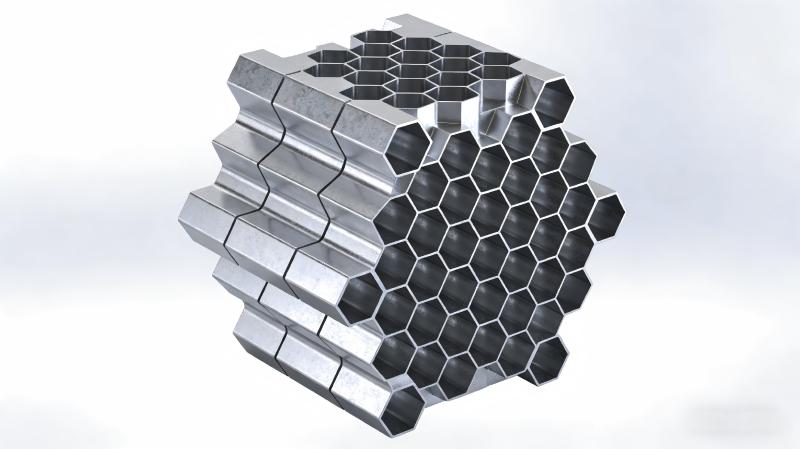
Understanding the Aluminum Honeycomb Structure
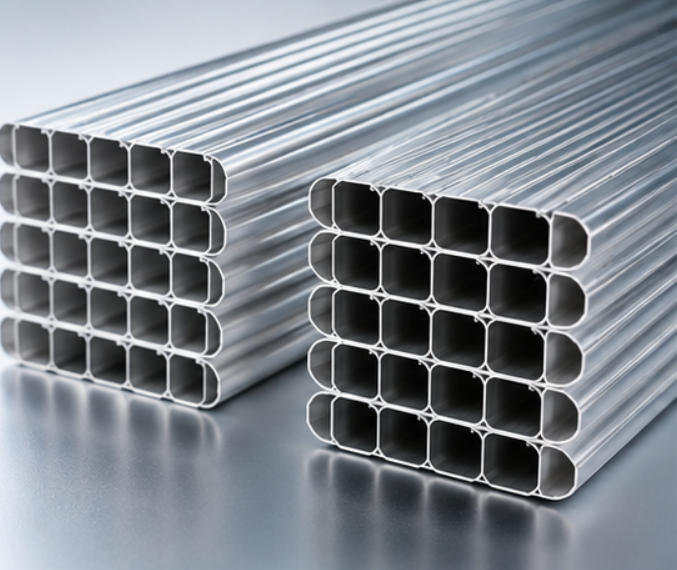
To analyze the sudden increase in demand, first, we look at the mechanical properties of the aluminum honeycomb core. The core has a number of hexagonal cells, created from thin aluminum foil, generally 3003 or 5052 alloyed. These foils are bonded and expanded. When these cores are placed between two high-strength alloy skins, the construction aluminum honeycomb panel acts like an I-beam in 3 dimensions.
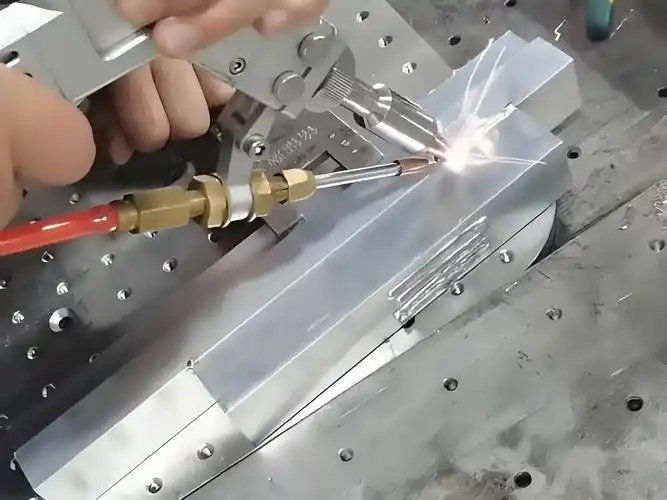
The primary advantage of this geometry shows its strength-to-weight ratio as its most significant benefit. The standard aluminum honeycomb structure consists of 90% to 95% open space but achieves exceptional strength because of its directional rigidity. The 2026 development of laser welding, together with high-temperature adhesive bonding, has enabled these structures to withstand extreme vibrational and thermal stress, which makes them essential components of future transport technology.
The Role of Aluminum Honeycomb in Electric Vehicle (EV) Engineering
The largest consumer of aluminum honeycomb materials is the EV sector. With the advancement of battery technologies towards greater energy densities, the physical infrastructure that supports these batteries needs to balance safety and efficiency.
1. Structural Integration and Range Optimization
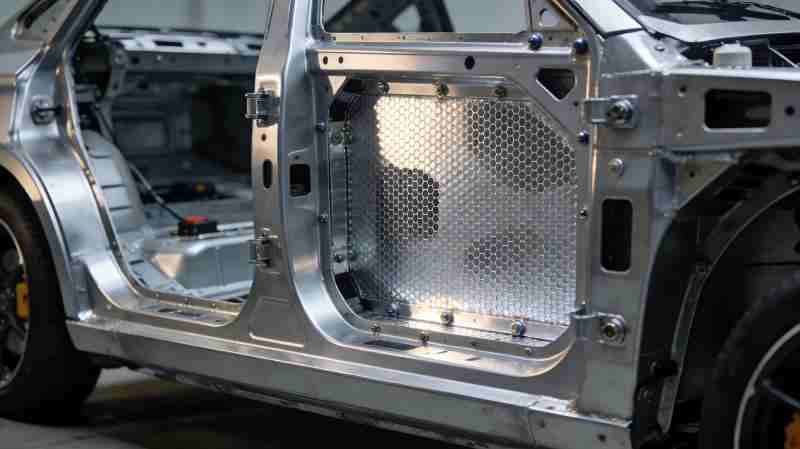
Using aluminum honeycomb panels in vehicle chassis and floor design helps solve the ‘weight to range’ problem. Using honeycomb composites instead of heavy steel parts, vehicle platform manufacturers can reduce net weight by up to 30%. Less weight means less operational energy consumption per kilometer, and the operational range of the vehicle increases. To help lower the center of gravity and rigid structural integrity, the honeycomb-based ‘Skateboard Chassis’ design is predicted to be used by many Tier 1 suppliers by 2026.
2. Advanced Battery Thermal Management (BTM)
Thermal runaway is still a big safety issue for high-performance EVs. The aluminum honeycomb core is an effective heat sink. Because of aluminum’s high thermal conductivity, the hexagonal cells aid rapid heat removal from the battery cells during fast-charging cycles (6C or above). Also, the honeycomb cells can be incorporated with Phase Change Materials (PCM) in the air gaps to form an embedded system that passively manages thermal energy of the battery cells to avoid spending more energy.
3. Impact Absorption and Crashworthiness
The energy absorption capacity of an aluminum honeycomb structure is linear and predictable. In the event of a side-impact collision, the honeycomb core collapses at a constant stress level, absorbing kinetic energy that would otherwise penetrate the battery pack. This “crush zone” is a mandatory safety feature in 2026 EV models to prevent internal short circuits and subsequent fires.
Global Market Dynamics and Material Supply (2026)
The international trade environment in 2026 significantly influences the availability and pricing of aluminum honeycomb material.
- Supply Chain Resilience: Due to global tensions, a ‘China Plus One’ strategy has emerged. Southeast Asia has become an alternative to China for North American and European markets, although China is still the largest supplier of aluminum honeycomb cores.
- Aluminum Pricing: The London Metal Exchange (LME) has experienced aluminum price fluctuations due to energy prices and new carbon taxes. This, in turn, is stimulating production of ‘closed-loop’ recycling systems so that aluminum scrap created during the production of aluminum honeycomb panels can be immediately remelted back into foil stock
- Technological Standardization: The Standardization of cell sizes like 1/8”, 1/4”, and 3/8” has been implemented in the industry to facilitate easier integration of various aerospace and automotive manufacturers.
Technical Specification Comparison (2026 Standards)
| Property | Aluminum Honeycomb Structure | Solid Aluminum Plate | Carbon Fiber Sandwich |
| Weight (per m2) | Low (1.5 – 5.0 kg) | High (8.0 – 15.0 kg) | Very Low (1.0 – 3.5 kg) |
| Thermal Conductivity | High (Metallic) | High (Metallic) | Low (Insulating) |
| Recyclability | 100% | 100% | < 20% |
| Cost Efficiency | Medium | High | Low |
| Impact Energy Absorption | Excellent | Poor | Fair |
By 2026, aluminum honeycomb materials must be integrated within advanced engineering processes. This is especially true for the EV market, where an equilibrium still needs to be achieved between impact safety/thermal management efficiency. Also, in aerospace engineering, aluminum honeycomb materials are the only means to achieve weight reduction without loss of structural integrity or increased durability and recyclability.