Aluminum finned tubes represent a viable means to manage temperature by combining high performance and practicality. In this sense, aluminum finned tubes have become more common for use in industries such as energy, data center cooling, and petrochemical processing. The increase in surface area to volume ratio helps optimize heat exchangers, allowing them to function optimally within their necessary thermal envelope without surpassing acceptable CAPEX and TCO values. The described technical setting forms the background against which the choice of aluminum finned tubes can be considered.
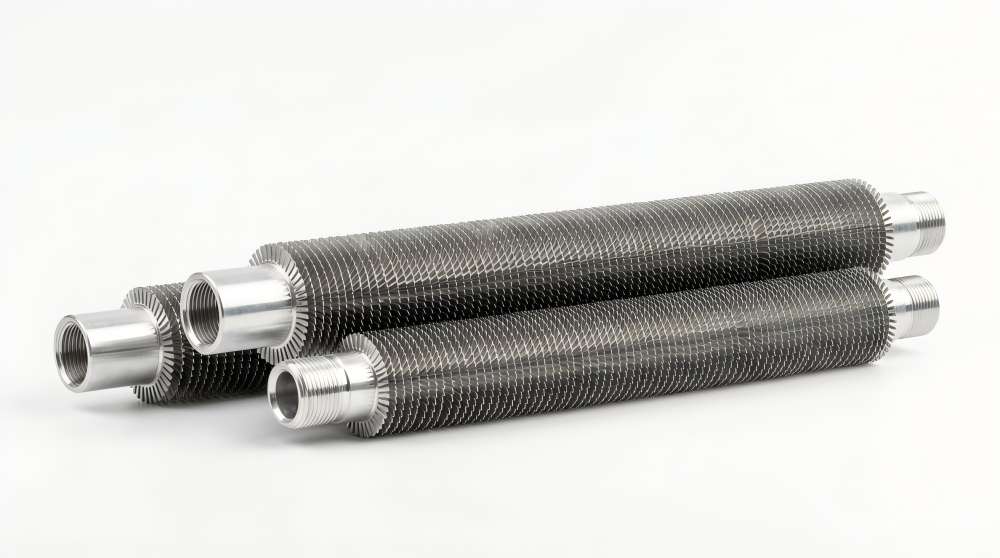
Why Aluminum Finned Tubes?
Aluminum is favored in heat exchanger design for its specific combination of physical, thermal, and economic properties.
- Thermal Conductivity: Aluminum exhibits high thermal conductivity (k≈237W/m·K). Although marginally inferior to copper’s conductivity, this value still proves enough for most industrial heat transfer applications. In conjunction with efficient fin geometry design, the heat transfer coefficient of the heat exchanger system stays sufficiently high.
- Weight Savings: Thanks to its light weight (2.7g/cm3), aluminum permits the creation of lightweight heat exchanger modules. It makes such designs easier to install and transport, which contributes to lower installation expenses in the context of large-scale industrial operations.
- Cost Efficiency: Aluminum is noticeably cheaper than copper. In cases of large-scale air-cooled heat exchanger (ACHE) installations that utilize hundreds of meters of tubing, aluminum proves to be far more economical.
- Sustainability: Due to ever-growing demands associated with ESG policies, aluminum’s ability to be easily recycled becomes an important benefit. The production of aluminum finned tubes is less resource-intensive than primary aluminum production.
Industry-Specific Applications and Performance
Heat exchanger requirements vary drastically depending on the operational environment. Proper selection requires matching the finning process and material configuration to the specific industry.
- Power Equipment: In outdoor transformer cooling, resistance to environmental degradation is paramount. Extruded or L-type fins provide the necessary structural integrity against weather, while specialized coatings can mitigate atmospheric corrosion.
- HVAC & Data Centers: The focus is on compactness and high heat flux. High-density fin configurations (high FPI) are required to dissipate heat from electronic loads. L-Type or LL-Type fins provide an excellent balance of surface area and airflow resistance.
- Petrochemical Energy: These environments often involve high-temperature gradients and rapid thermal expansion. G-Type (Embedded) fins are preferred, as the mechanical locking of the fin into the base tube prevents loosening under extreme thermal shock.
Application Matrix
| Industry | Performance Priority | Recommended Fin Type | Key Environment Parameters |
| Power Equipment | Corrosion Resistance | Extruded / L-Type | Humidity, Salinity, UV exposure |
| HVAC & Data Centers | Heat Transfer Density | L-Type / LL-Type | Airflow velocity, FPI (Fins Per Inch) |
| Petrochemical | Mechanical Strength | G-Type (Embedded) | High temp, Thermal cycling, Pressure |
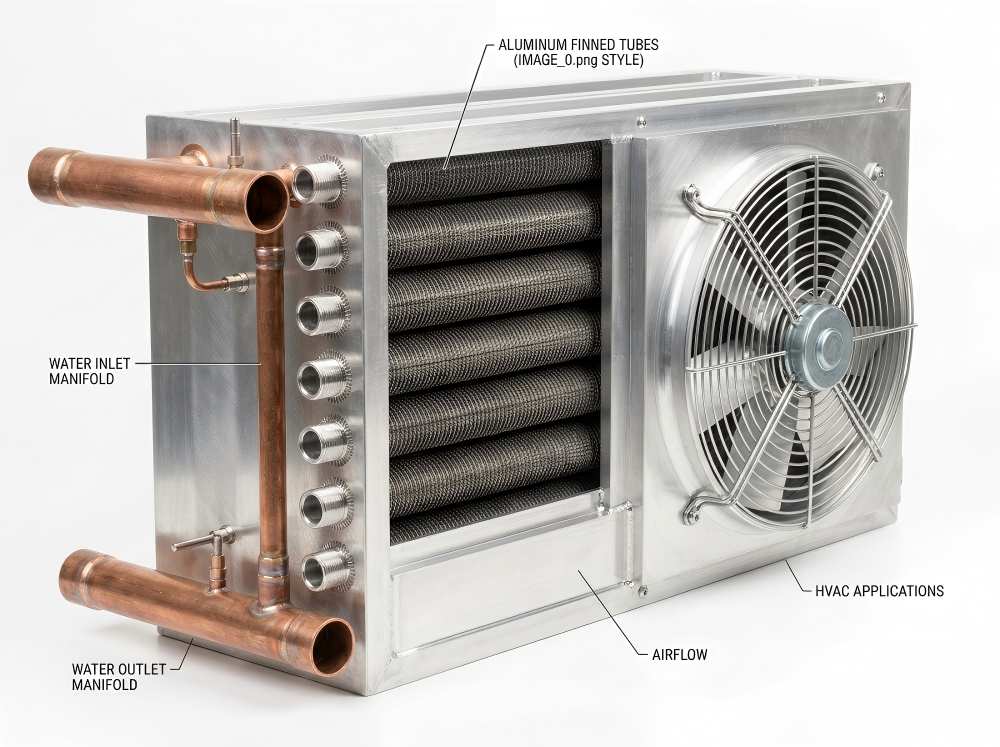
The Checklist for Aluminum Finned Tube Selection
Choosing the ideal aluminum finned tube entails assessing numerous technical aspects. This section presents an organized suggestion for engineering decision-making.
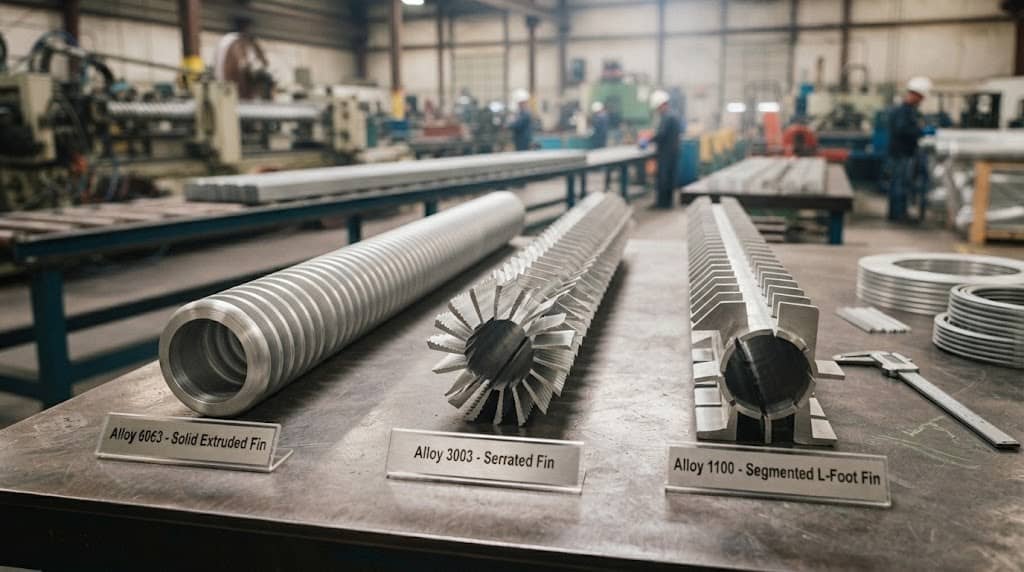
Fin Types Explained
1. Extruded Fin (Solid Fin)
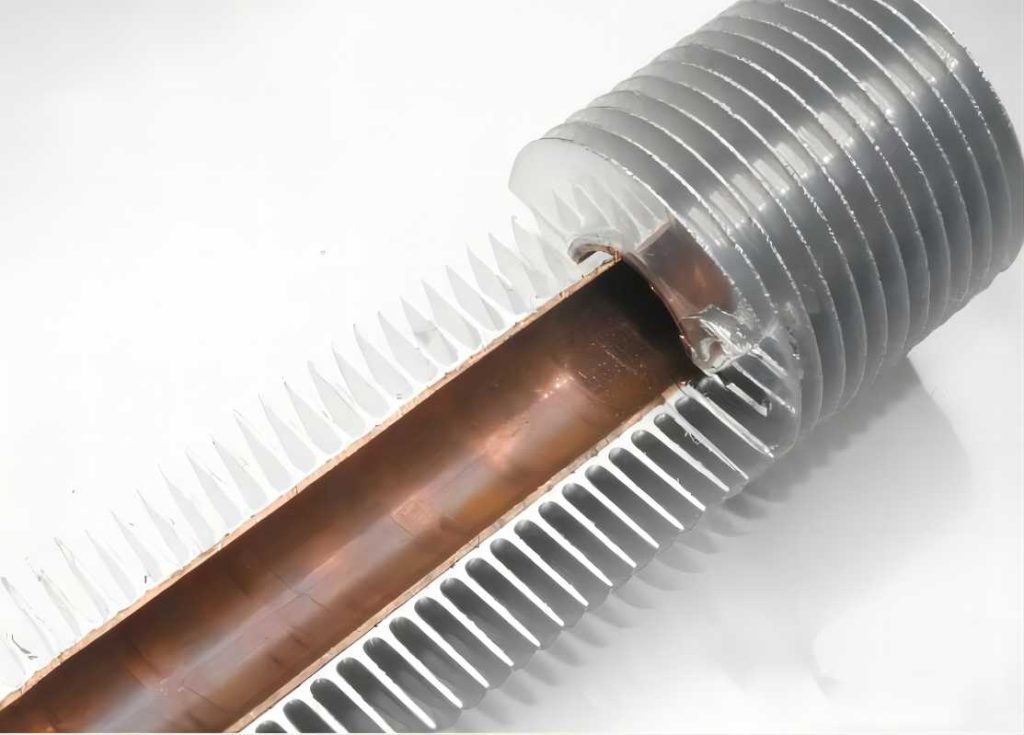
Extruded fins are formed by mechanically extruding aluminum over the base tube, creating a continuous and integral bond. This structure provides the highest thermal efficiency and mechanical strength. It also offers excellent protection to the base tube.
Recommended for:
- High-performance heat exchangers
- Corrosive environments
- Long service life requirements
2. L-Type / LL-Type Fin
L-type fins are wrapped around the base tube, with the foot of the fin forming a bond through tension. LL-type improves on this with overlapping fin feet for better coverage.
Recommended for:
- Moderate temperature applications
- Cost-sensitive projects
- HVAC systems
3. G-Type (Embedded Fin)
G-type fins are embedded into a groove machined into the base tube. This provides strong mechanical bonding and allows operation at higher temperatures.
Recommended for:
- High-temperature environments
- Applications with thermal cycling
- Petrochemical systems
Material Compatibility and Galvanic Corrosion
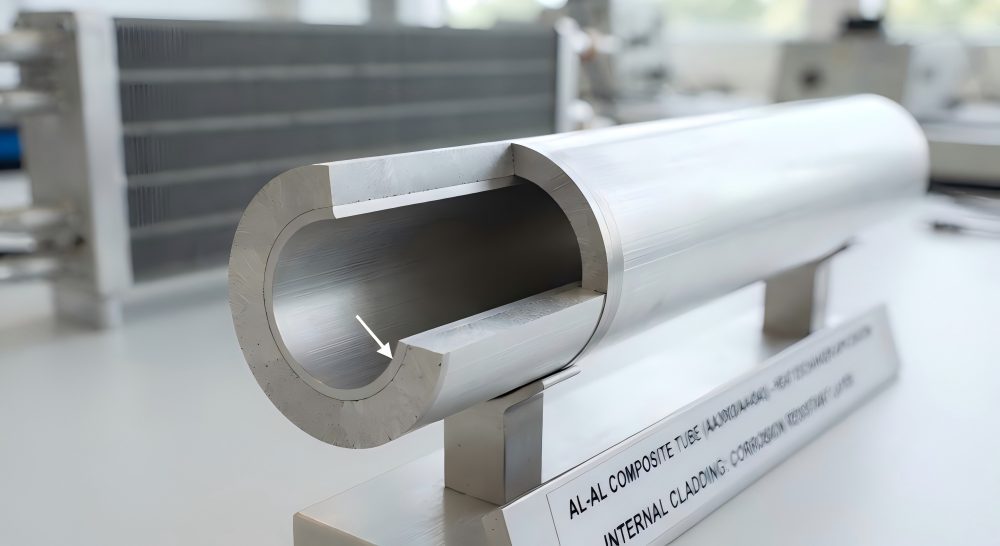
Galvanic corrosion can take place between aluminum finned tubes and carbon steel or stainless steel tubes. It occurs due to two different metals being in direct contact in the presence of an electrolyte.
To reduce galvanic corrosion risk:
- Apply protective coatings on the base tube
- Use intermediate bonding layers
- Ensure proper drainage to prevent moisture accumulation
- Select compatible materials based on the electrochemical series
Compatibility testing is essential in the design phase in order to avoid any failures in the future.
Environmental Test
Environmental conditions significantly influence finned tube performance and lifespan.
1. Salt Spray Resistance (ASTM B117)
Corrosion is magnified in environments rich in salt content, such as shores and waters. The results from tests like ASTM B117 help to form a perspective of the ability of an alloy in retarding corrosion.
2. Air Velocity and Flow Conditions
Airflow affects both heat transfer and mechanical stress on fins. High wind speeds can lead to fin deformation if structural integrity is insufficient. Proper fin thickness and bonding method must be selected accordingly.
Common Mistakes in Procurement
Procurement decisions based solely on unit price often lead to higher long-term costs.
- The “Price-Only” Trap: Low-cost aluminum finned tubes often utilize lower-grade aluminum alloys or thinner gauges. This results in fins that deform easily during cleaning or transport, permanently reducing the effective heat transfer surface area and compromising system efficiency.
- Ignoring Process Consistency: The process by which the fin is attached to the tube influences the level of contact resistance. Inconsistency in the production process leads to increased thermal resistance. Poorly manufactured products result in uneven cooling, causing hot spots in equipment that cannot be afforded.
- Material Compliance: Check for material compliance with the standards. Failure to adhere to the required pressure and fire regulations may cause material failure. Request material test reports (MTRs), if necessary, and third-party validation for infrastructure development.
Frequently Asked Questions (FAQ)
Q1: What kind of fins would be most suited for high-vibration environments?
A1: G-type or Extruded fins should be selected. These fins have a mechanical lock between themselves or are integral in nature, which makes them less prone to loosening in high-vibration environments.
Q2: What precautions can I take against corrosion on aluminum finned tubes?
A2: LL-type fins are ideal for giving double coverage to the underlying tube. It would also be wise to use quality protective coatings over the underlying tube before adding fins.
Q3: Can aluminum be used instead of copper in heat exchangers?
A3: Yes. Copper may have better thermal conductivity, but aluminum is significantly lighter and cheaper than copper. With appropriate design of higher FPI or using extruded fins, aluminum is capable of performing as well as copper heat exchangers.