When you are looking for aluminium tubing for a project, you will primarily have two choices to make: drawn aluminum tubes and extruded aluminum tubes. They may look alike at first sight, but they are made differently, and they have different structural capabilities, dimensional tolerances and production costs. Selecting the wrong one can result in part failures or unnecessary expenses. This guide highlights the technical and practical differences between the two options so you can choose the right path for your application.
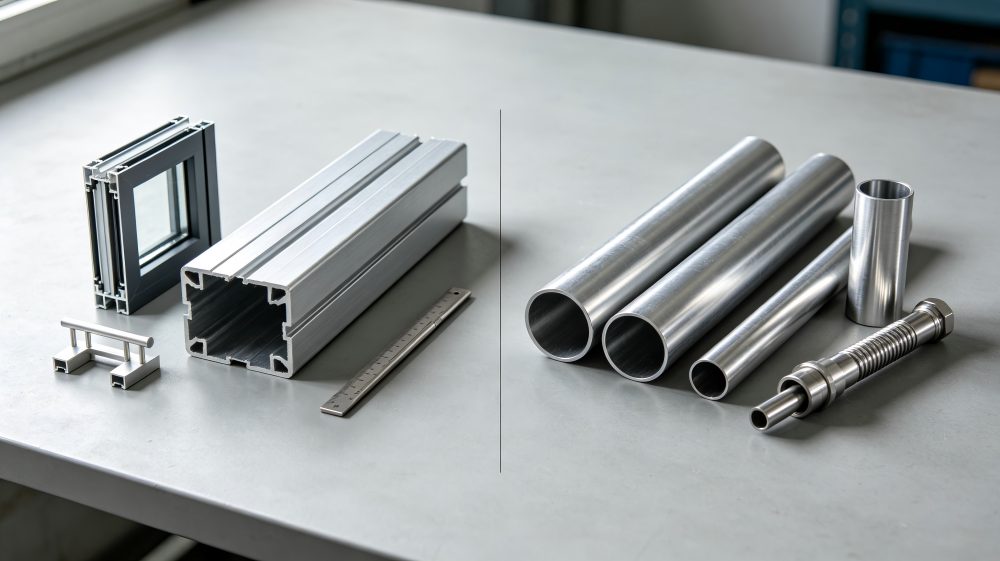
What Is Extruded Aluminum Tube?
To get the difference between the two types, you need to look at how they are made. The extruded aluminum tubing is produced by a hot-working process. Workers heat a solid block of aluminium, called a billet, until it is soft but not completely liquid. This heated aluminium is then forced through a shaping die under huge pressure by a hydraulic ram.
The aluminum is shaped to the opening as it comes out of the die and is cooled down, stretched to straighten it and cut into certain lengths.
Key Advantages of Extruded Tubing
- Lower production costs: The process of extrusion is simple and fast. The cost of a drawn aluminium tube is considerably more than an extruded tube, as it requires fewer production steps.
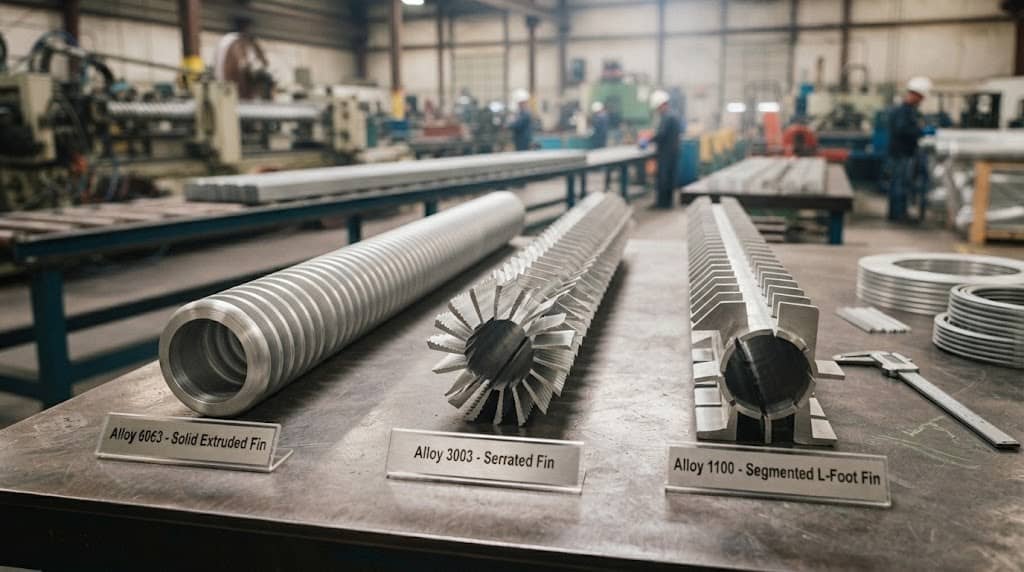
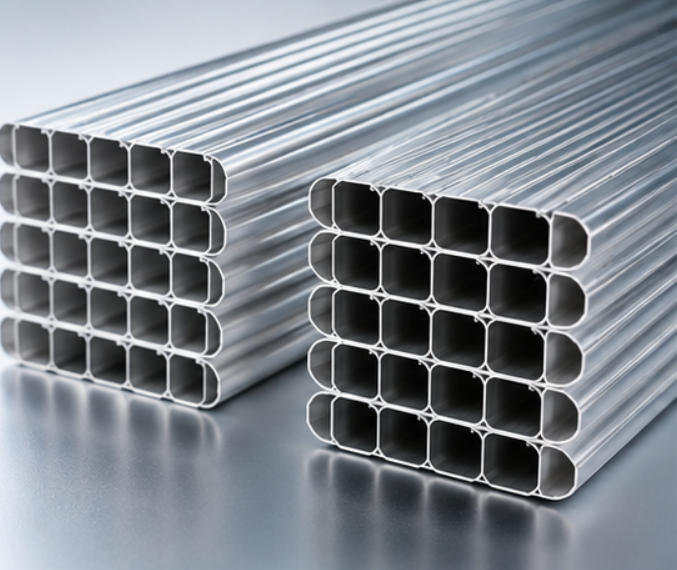
- Design Flexibility: Extrusion dies are capable of being cut into complex shapes. If you need them, extrusion can easily produce tubes with internal ribs, multi-hollow chambers, or unusual exterior shapes.
- Fast Turnaround: Large volumes of extruded tubing can be manufactured in a short period of time.
Typical Applications
Extruded tubes are fine where you don’t need micro-precision but need structural support. They should be found in:
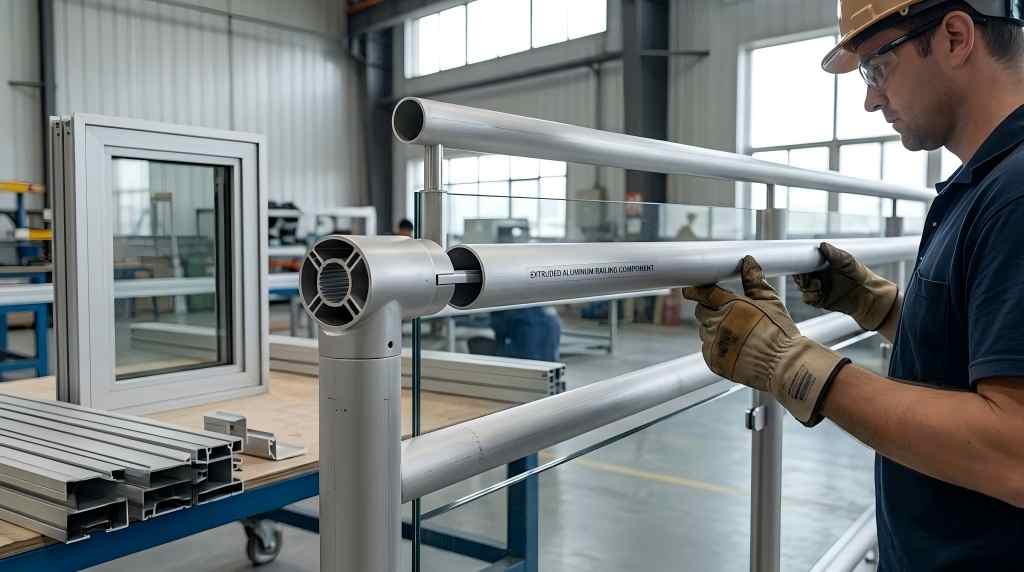
- Architectural surrounds, window trim, and door trim
- General construction materials and railings
- Outdoor furniture frames.
- Electric conduits and heat sinks
What is Drawn Aluminum Tube?
A drawn aluminum tube starts life as an extruded tube, but then goes through a secondary refining process called cold drawing. After the first extrusion cools to room temperature, workers clean and lubricate it. Then they pull, or “draw,” the tube through a series of increasingly smaller dies and over an internal tool known as a mandrel.
Because this takes place at room temperature, it causes the molecules of aluminum to compress, so the walls grow thinner and the diameter of the tube shrinks to precise specifications.
Key Advantages of Drawn Tube
- Extremely Tight Tolerances: Aluminum tube drawing process gives manufacturers the ability to tighten tolerances. The wall thickness is very uniform, and the outer and inner diameters are precise to a fraction of a millimetre.
- Higher Structural Strength: Drawing the metal at room temperature through a die causes work hardening (also known as strain hardening). This changes the grain structure of the metal, making precision aluminium tubing considerably stronger than standard extruded tubing made from the exact same alloy.
- Superior Surface Finish: The drawing process uses high pressure to remove manufacturing lines and blemishes. This creates a shiny, scratch-free surface that looks like it’s been polished.
Typical Uses
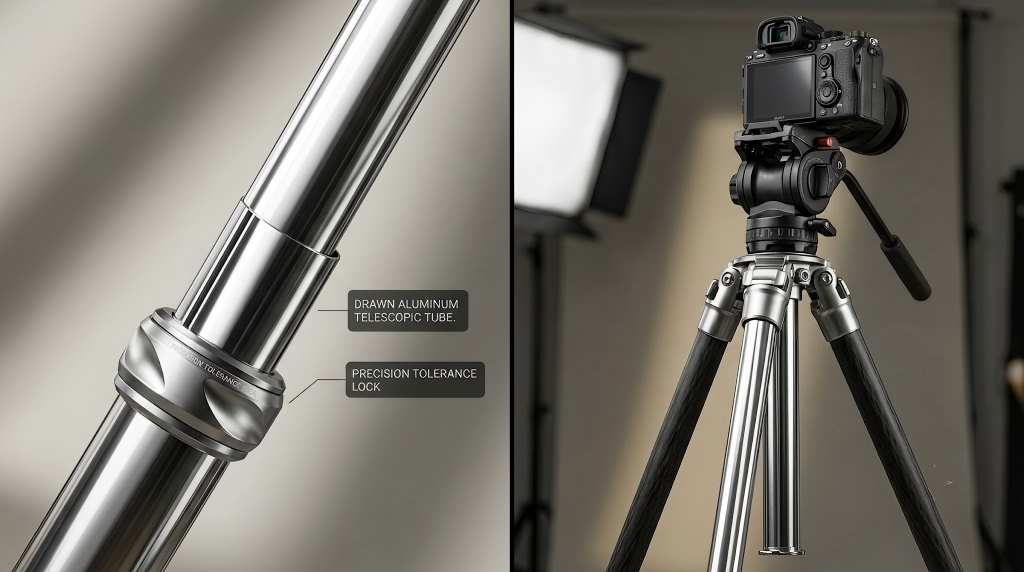
Drawn tubes are indispensable when components have to slide into each other or when high inner pressures have to be absorbed. Use common to:
- Aerospace, aviation and military structural parts
- High-end bicycle frames and automotive drive shafts
- Telescopic poles, tripods and camera equipment
- Hydraulic cylinders and pressure vessels
Head-to-Head Comparison: Drawn vs Extruded Aluminum Tube
To help you visualize the trade-offs, look at the core differences side-by-side:
| Performance Metric | Extruded Aluminum Tube | Drawn Aluminum Tube |
| Production Temperature | Hot working (heated billet) | Cold working (room temperature) |
| Dimensional Tolerances | Moderate / Industry standard | Extremely tight / High precision |
| Wall Thickness Uniformity | Thicknessminor variations may exist | Highly uniform |
| Mechanical Strength | Alloy Standard | Higher (increased via work hardening) |
| Surface Appearance | Matte, visible die lines | Smooth, polished, smooth |
| Production Cost | Low to moderate | High (due to additional labor and steps) |
| Tooling Flexibility | High (can make complex shapes) | Low (only standard round/shapes) |
How to Choose: Which One Fits Your Project?
The secret to making the right decision is to weigh your technical specifications against your budget. Here are some criteria you can use to help make your choice.
Go With Extruded Aluminium If:
- You are on a tight budget: If you are buying in high volumes and the financial cost of drawn aluminium tube options does not make sense for your profit margins, then extrusion is the standard choice.
- High precision is not needed: If your tube is used solely to support a sign, serve as a structural frame, or move fluids at low pressure, then standard extrusion tolerances will do just fine.
- You need a custom shape: If you require specific channels or non-standard geometry built into the tube wall, a drawing will not be able to provide this.
When to Choose Drawn Aluminium:
- You need parts to telescope or mate together perfectly: If your design has tubes that slide inside of each other, the slight variances in an extruded tube will cause jamming. You need the accuracy of a drawn tube.
- You want the most strength for no added weight: In industries like aerospace or high-performance sports, you need to squeeze as much yield strength out of the metal as possible.
- Consumer-facing product: If your product will be touched and looked at by customers, the smooth surface finish of a drawn tube looks professional and takes anodizing or powder coating beautifully without showing underlying lines.
Frequently Asked Questions
Q1: Is drawn aluminum stronger than extruded aluminum?
A1: Yes. Even if you use the exact same aluminum alloy (like 6061), a drawn tube will have higher tensile strength and yield strength than an extruded tube. This increase in strength happens because the cold-drawing process compresses the metal grains, creating strain hardening.
Q2: What causes the higher costs of drawn aluminium tube products?
A2: The production of drawn aluminium tubes requires additional time, machinery and labour, which makes it more expensive. You cannot make a drawn tube from scratch. You have to make an extruded tube first, treat it, and then run it through the drawing benches. You’re really paying for two manufacturing processes.
Q3: Is it possible to anodise both types of tubing?
A3: Yes, you can anodise both of them. However, extruded tubes have minor surface imperfections and die lines, which will also be visible underneath the anodising layer. Drawn tubes are already perfectly smooth on the surface, so after anodising, they provide a flawless, premium aesthetic.