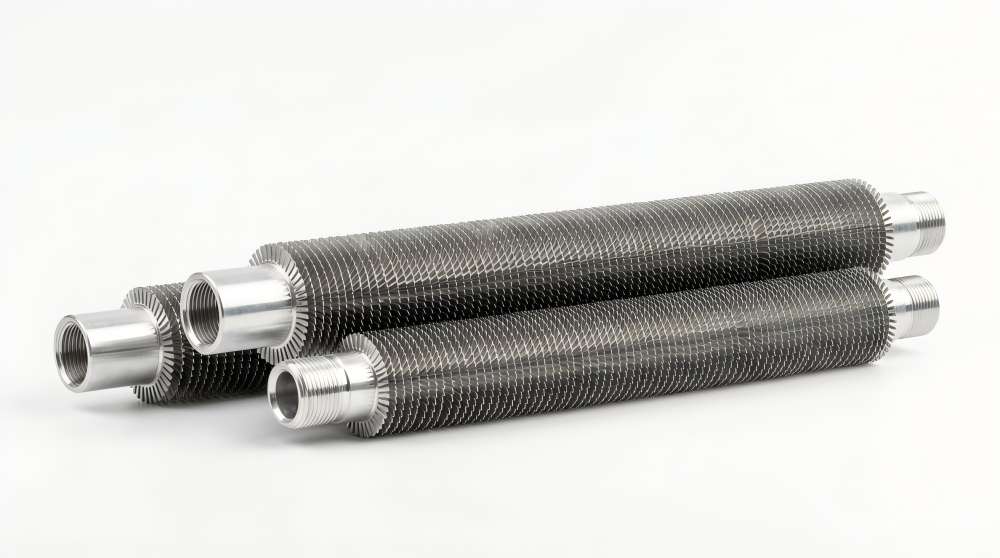
As a senior materials engineer with extensive experience in the high-performance transportation industry, I am often asked the same question by procurement managers and structural designers: “What tubing material will provide complete structural integrity and the greatest weight reduction, when a commercial aircraft is buffeting at 35,000 feet or a high-speed train is screaming down the track at 350 km/h?”
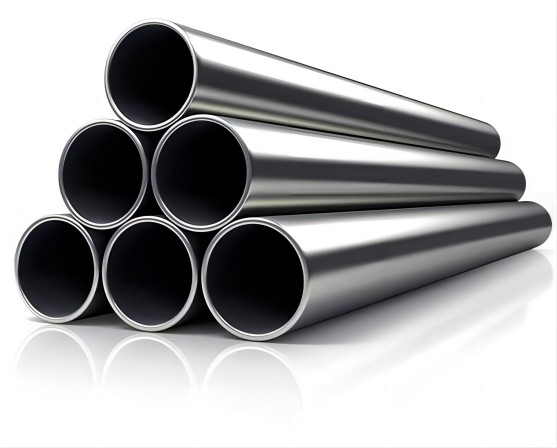
The answer is always two top-of-the-line structural alloys, 2024 aluminum tubing (duralumin) and 7075 aluminum tubing (super-duralumin). Today’s aerospace grade aluminum tubing has come a long way from being a simple fluid conduit in modern engineering. It has become a load-bearing, stress-relieving, environment-defying element that is essential for global transit infrastructure.
If you have a global engineering team and want to maximize your supply chain efficiency with a reliable high-strength aluminum tube, knowing exactly how the environment impacts these two alloys, their mechanical properties, and where you can use them is critical.
Critical Application 1: Aerospace Hydraulic Tubing Systems
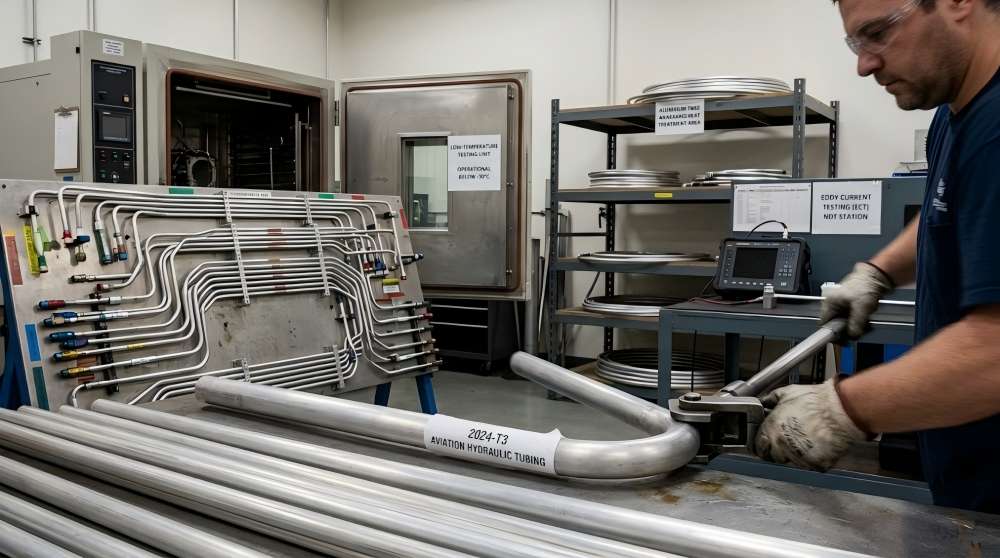
The hydraulic system of an aircraft is its circulatory system, moving the primary flight control surfaces, deploying the landing gears, and managing the braking mechanisms. The performance parameters demanded of hydraulic tubing are extremely unforgiving. The world industry standard for this high-pressure crucible is 2024-T3 or 2024-O seamless aluminium tubing.
Why 2024 Alloy Is Great for Hydraulic Applications
- Excellent Fatigue Resistance: The 2024 alloy is a special aluminum alloy with a copper-magnesium-aluminum matrix (Al-Cu-Mg) and excellent cyclic fatigue strength. 2024 tubing can withstand the micro-fissures that can cause catastrophic blowout failures even with the cyclic pressure pulsations of hydraulic pumps.
- High Fracture Toughness: 2024 aluminum has high fracture toughness at sub-zero temperatures; other metals become brittle at low temperatures. It can absorb a lot of kinetic energy without breaking, keeping the all-important control paths of the aircraft intact.
- Optimal Workability: In annealed condition (2024-O), the material has the ductile compliance to make complex, tight-radius bends through crowded aircraft bulkheads prior to heat treating to the final high-strength temper.
Critical Application 2: Fuselage Framework and Spacecraft Structures
Hydraulic conduits are designed to be ductile and compliant and to withstand fatigue; structural airframes and orbital vehicles must be absolutely, uncompromisingly rigid. Structural engineers want the maximum strength-to-weight ratio they can find in the case of fuselage longerons, wing spar attachments, helicopter rotor skins, or satellite truss networks.
For these structural nodes, the choice is obvious: 7075-T6 Aluminum Tubing.
Significant Mechanical Benefits of 7075 Tube
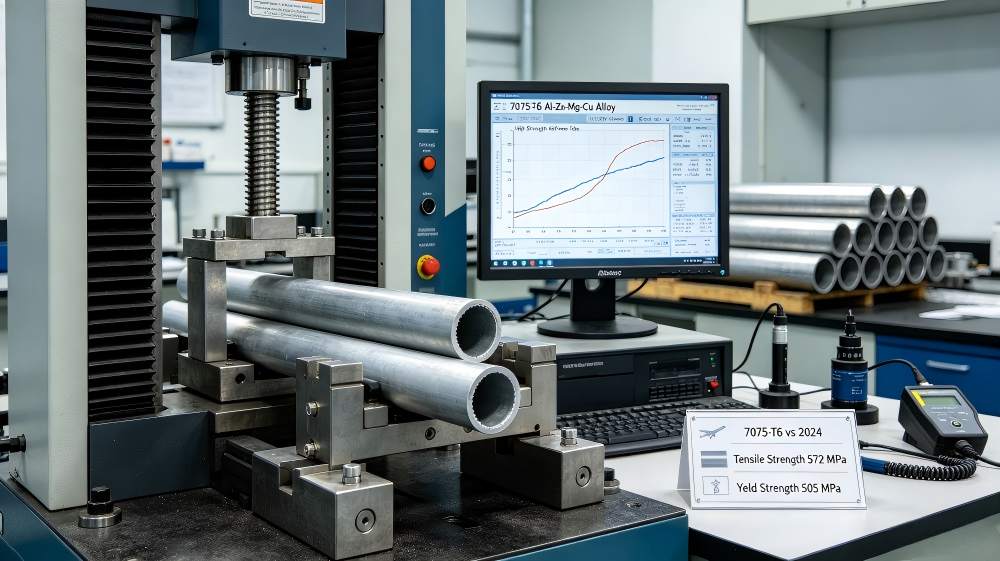
- Steel-Like Strength: 7075-T6 is a very highly engineered zinc-magnesium-copper-aluminium (Al−Zn−Mg−Cu) precipitate hardened matrix with ultimate tensile strength > 570 MPa. This rating is equal to or better than many structural steel grades while maintaining the benefits of native density for aluminum.
- Maximum Weight Optimization: Less weight means more payload efficiency, a greater operational range, and less fuel burn. Structural mass reductions of up to 60% over conventional steel configurations are possible with the use of 7075 aluminum tube applications while maintaining load-bearing safety margins, according to structural engineers.
- Compressive Yield Strength: The airframe struts are subjected to tremendous compressive loads during high-G maneuvers. 7075-T6 offers high yield strength (~500 MPa) to avoid structural buckling under severe mechanical deflection.
Critical Application 3: High-Speed Rail Chassis and Crash-Energy Absorption
In the rail transit sector, modern aerodynamic trainsets operate under immense dynamic stress. As high-speed trains enter narrow tunnels, they generate localized atmospheric pressure waves that slap the train’s exterior shell. This cycling requires chassis materials that endure millions of low-amplitude stress reversals over decades of service.
While the visible body panels of high-speed trains rely extensively on easily weldable 6xxx series extrusions, the underlying structural safety architectures depend heavily on high-strength alloy variants.
The Role of 7075 Alloys in Rail Transit:
- Crashworthiness Systems: High-strength aluminum tube components are integrated into the train’s forward and rear deformation zones. In emergency collision scenarios, the controlled crushing behavior of heavy-wall 7075 tubing absorbs catastrophic kinetic energy, protecting the passenger cabin.
- Suspension and Braking Frameworks: 7075 tubing is used for the bogie frames, braking linkages and undercarriage sway bars to reduce unsprung mass. Reducing unsprung mass improves stability of the contact and between the wheel and the rail, reduces wear on the track and provides a smoother ride for passengers at speeds above 300 km/hr.
- Corrosion Control via Tempering: To mitigate the risk of Stress Corrosion Cracking (SCC) caused by constant track-side moisture, industrial manufacturers utilize specialized thermal tempers like 7075-T73. This customized overaged state sacrifices a nominal percentage of peak tensile strength to deliver superior resistance to environmental degradation.
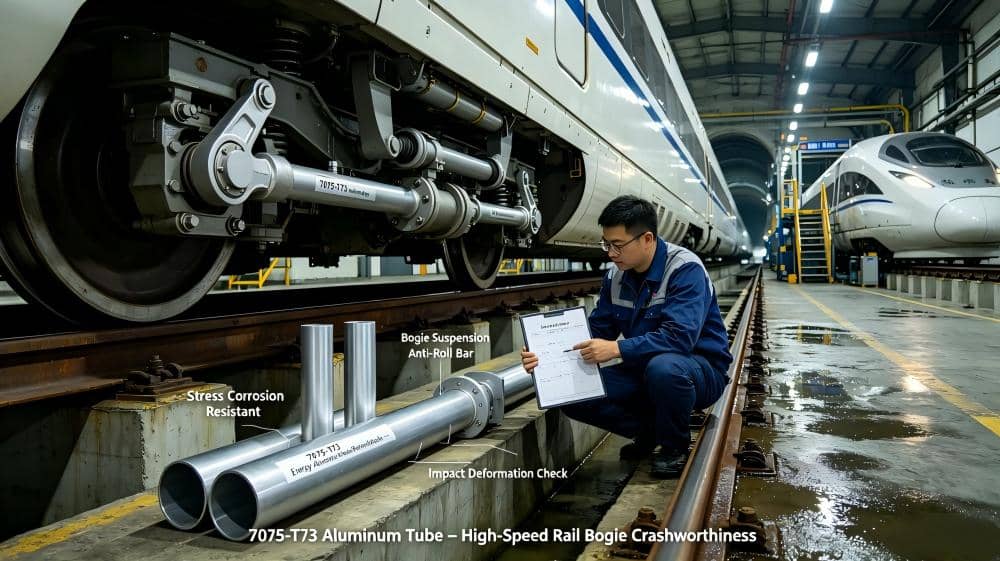
aluminum tube in High-Speed Rail Chassis and Crash-Energy Absorption application
Technical Specifications: 2024 vs. 7075 Aluminum Tubing
To assist procurement teams and design engineers in their material selection matrix, the baseline mechanical and physical parameters of these two leading aerospace alloys are detailed below:
| Property / Metric | 2024-T3 Aluminum Tubing | 7075-T6 Aluminum Tubing |
| Primary Alloying Elements | Copper (Cu), Magnesium (Mg) | Zinc (Zn), Magnesium (Mg), Copper (Cu) |
| Ultimate Tensile Strength | ~470 MPa | ~572 MPa |
| Yield Strength | ~345 MPa | ~503 MPa |
| Fatigue Strength | Superior (Exceptional cyclic endurance) | Moderate-High (Prone to notch sensitivity) |
| Corrosion Resistance | Moderate (Requires anodizing/cladding) | High (Excellent in T73 / T76 Tempers) |
| Primary Industrial Intent | Tension applications, high-fatigue parts | Compression applications, high-stress parts |
Manufacturing Protocol: Defining “Aerospace Grade” Quality
The right alloy composition is only part of the job. “To guarantee that 2024 and 7075 alloys do not fail prematurely from fatigue and perform flawlessly in high-risk environments, the underlying production process must be held to a stringent global standard.”
1. Continuous piercing and extrusion
Welded tubing is not allowed for high-stress hydraulic lines and structural frames. The manufacturers must use a seamless extrusion process in which a solid aluminum billet is hot-pierced and forced over a mandrel. This completely removes internal weld seams, removing weak structural points that could open under pressure.
2. Cold drawing for micro tolerance
After the initial extrusion, the high-performance tubes are cold-drawn with precision. The tube is drawn through specialized dies to refine the grain structure and harden the material, thus enforcing micro-tolerances. This gives the wall thickness uniformities (often to ±0.05 mm) demanded by aerospace specifications.
3. Non-destructive testing (NDT)
100% Nondestructive Testing shall be performed on all production runs of high-reliability transport. Eddy Current Testing (ECT) to identify microscopic surface defects and Ultrasonic Testing (UT) to probe the internal wall structure for hidden metallurgical inclusions or voids.
Engineering Takeaway:
Specify 2024 aluminum tubing for project environments with high cyclic tension, fluid pressures, vibration, and exposure to cryogenic conditions. If your operational requirements are peak mechanical load, compression resistance, and the lightest weight possible, choose 7075-T6 aluminum tubing.
CHAL Precision Aluminium is a global integrated leader in high precision aluminium manufacturing, with the highest international aerospace and rail transit certifications, and certified, fully compliant 2024 and 7075 seamless tubing solutions. Call our engineering support team today for detailed alloy selection guidance, mechanical certification records, and project-specific quotes.