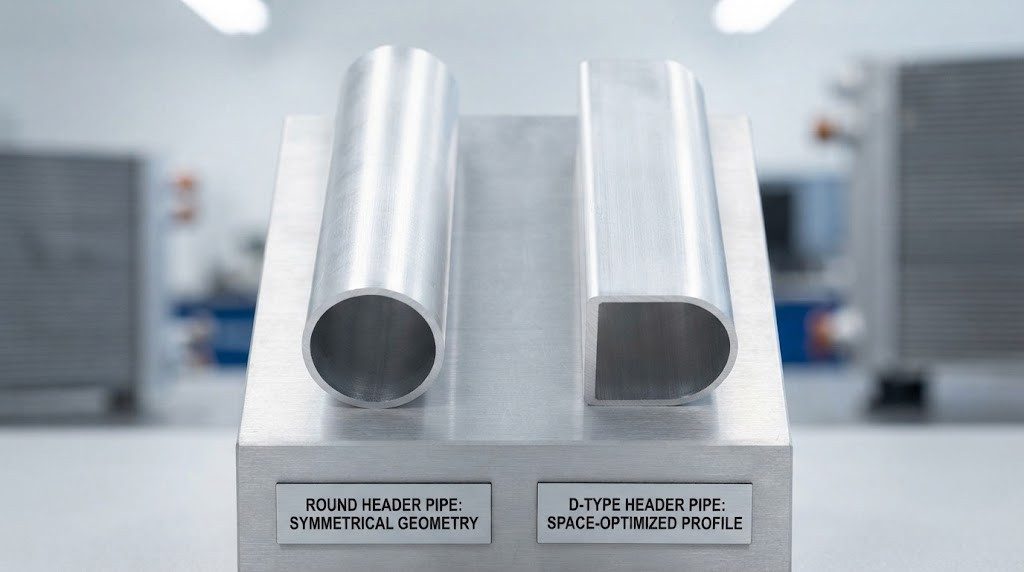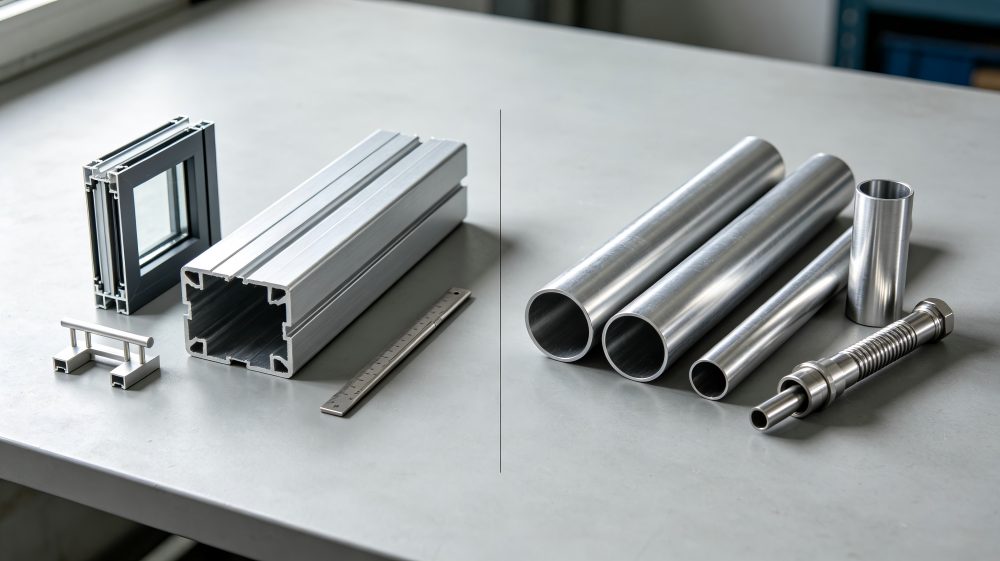
EV battery packs generate heat during fast charging, high-power discharge, and continuous operation. An effective battery thermal management system (BTMS) must remove this heat while maintaining temperature uniformity, controlling coolant pressure drop, fitting within limited battery-pack space, and providing long-term leak-tightness.
Two common liquid-cooling architectures are aluminum tube cooling and aluminum cold plate cooling. Both use aluminum as a lightweight thermal-management material, but their cooling paths, packaging, flow distribution, and manufacturing requirements are different. Understanding the difference between an EV battery cooling tube and a battery cold plate helps engineers select the appropriate cooling architecture for cylindrical, prismatic, and pouch-cell battery packs.
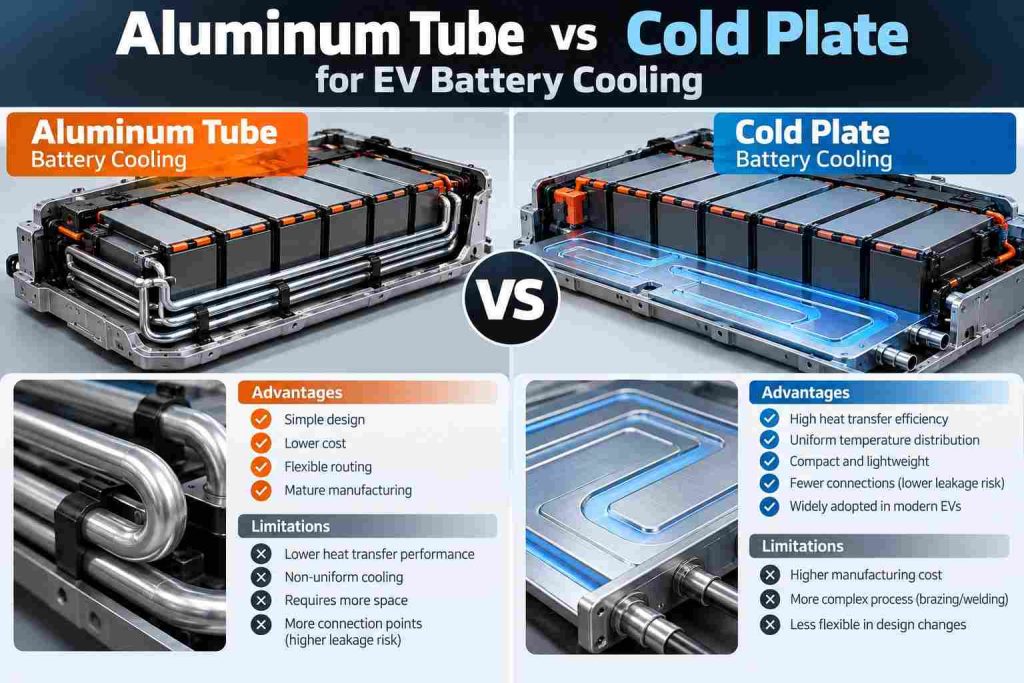
Aluminum Tube for EV Battery Cooling: How Does It Work?
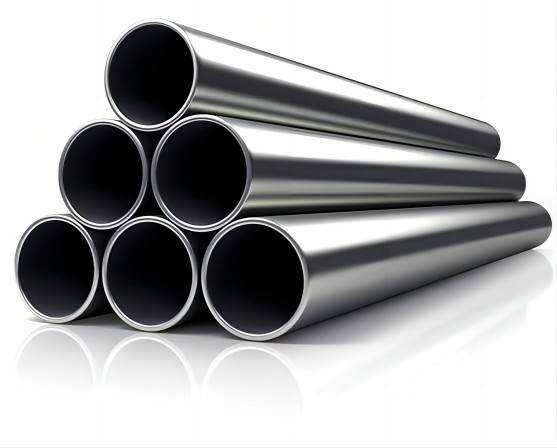
An aluminum tube cooling system uses a formed tube as the coolant passage. Depending on the battery-pack design, the tube can be installed beneath, beside, or around battery cells or modules.
Common configurations include:
- Serpentine aluminum tube: A continuous tube follows a repeated path across the battery module.
- Parallel cooling tubes: Multiple branches distribute coolant across different battery sections.
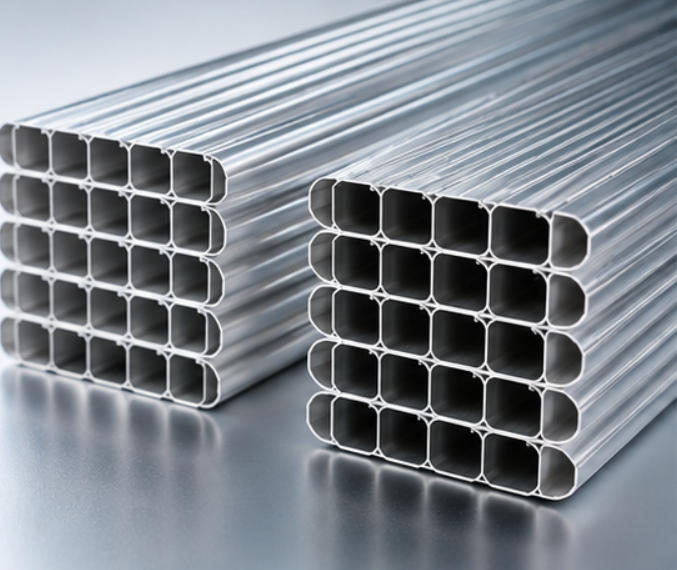
- Multi-port aluminum tube: Multiple internal passages provide a compact coolant path.
The basic heat-transfer path is:
Battery cell → thermal interface → aluminum cooling tube → coolant → heat exchanger
The main advantage of tube-based cooling is layout flexibility. Tube routing can be adapted around battery components, structural members, connectors, and other packaging constraints.
However, cooling performance depends on tube spacing, contact resistance, coolant distribution, bend geometry, and flow resistance. A tube that provides sufficient coolant flow does not automatically provide uniform battery temperatures.
What Is an Aluminum Cold Plate?
An aluminum cold plate is an integrated cooling component containing internal coolant channels. It is normally positioned directly beneath or adjacent to battery cells or modules. Cold plates can use extruded channels, formed aluminum sheets, brazed structures, or machined passages. Their purpose is to create a controlled coolant path close to a relatively large battery surface.
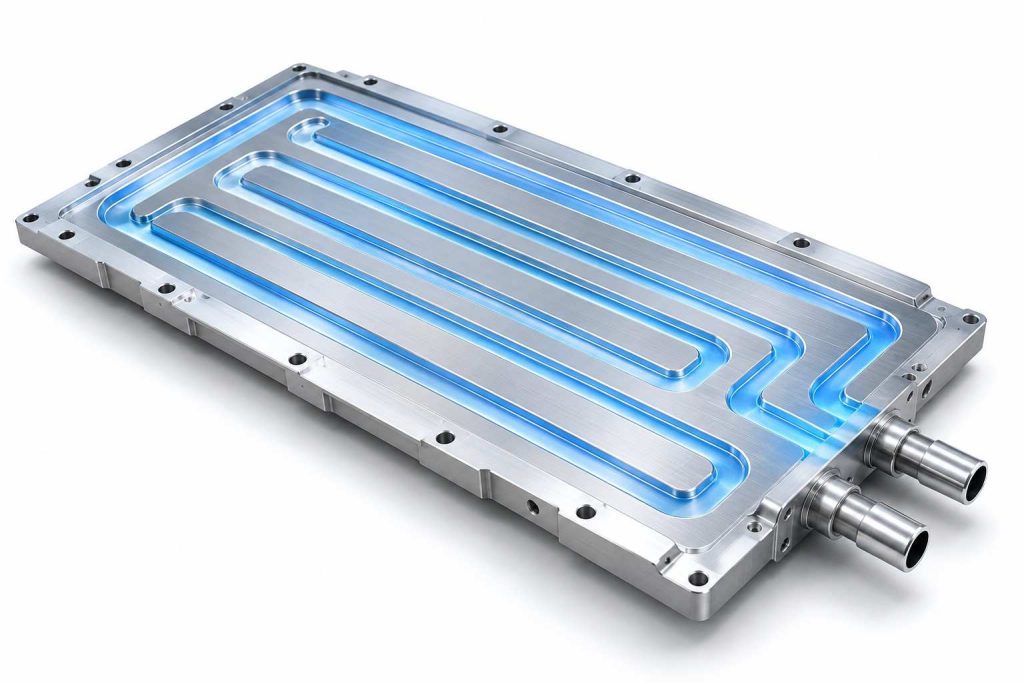
The thermal path is:
Battery cell → thermal interface → aluminum cold plate → internal cooling channels → coolant
Compared with a separate cooling tube, a cold plate can provide a broader and more continuous thermal interface. This makes it useful for compact battery modules where packaging and temperature uniformity are important. CHAL also offers EV battery-related aluminum components incorporating water-cooling plate structures, providing a practical connection between aluminum tube manufacturing and integrated battery thermal-management components.
Aluminum Tube vs Cold Plate: Key Differences
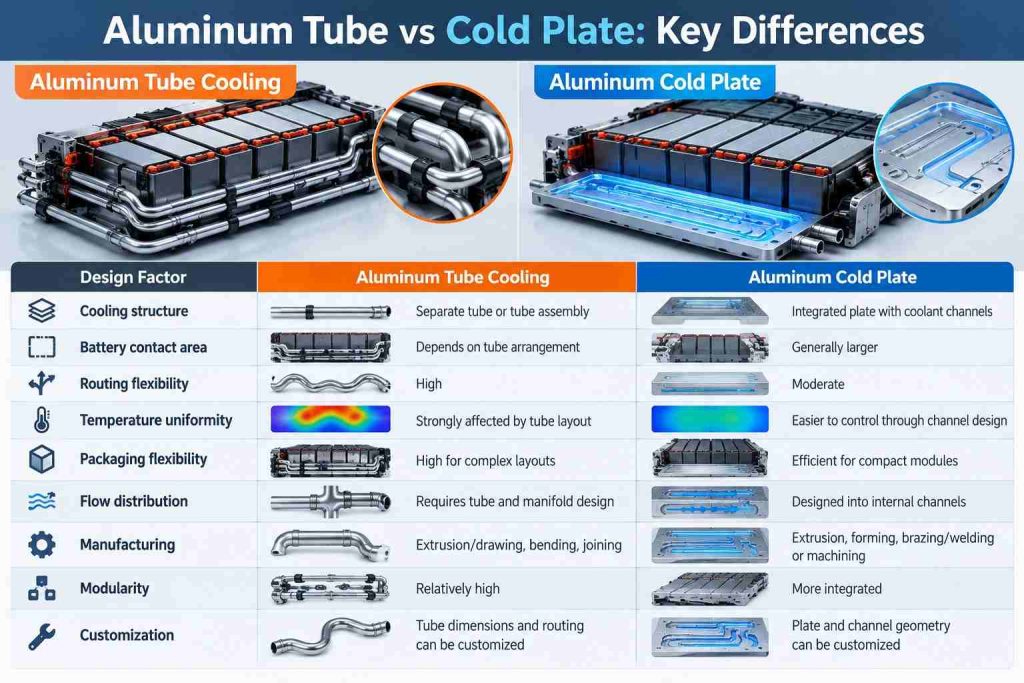
| Design Factor | Aluminum Tube Cooling | Aluminum Cold Plate |
| Cooling structure | Separate tube or tube assembly | Integrated plate with coolant channels |
| Battery contact area | Depends on tube arrangement | Generally larger |
| Routing flexibility | High | Moderate |
| Temperature uniformity | Strongly affected by tube layout | Easier to control through channel design |
| Packaging flexibility | High for complex layouts | Efficient for compact modules |
| Flow distribution | Requires tube and manifold design | Designed into internal channels |
| Manufacturing | Extrusion/drawing, bending, joining | Extrusion, forming, brazing/welding or machining |
| Modularity | Relatively high | More integrated |
| Customization | Tube dimensions and routing can be customized | Plate and channel geometry can be customized |
The comparison shows an important engineering distinction: Aluminum tube cooling prioritizes routing flexibility, while aluminum cold plate cooling prioritizes integrated contact area and controlled coolant-channel distribution. Neither architecture is universally suitable for every EV battery pack.
Which Performs Better for EV Battery Cooling?
1. Heat Transfer
A cold plate can provide a large thermal interface between the battery module and cooling structure. This can shorten the thermal path and help distribute cooling over a larger area.
For an aluminum tube cooling system, performance depends more strongly on tube position, tube spacing, thermal interface material, and contact conditions. Therefore, comparing only the thermal conductivity of aluminum is not enough. Engineers should evaluate the complete thermal resistance from the battery cell to the coolant.
2. Temperature Uniformity
Temperature uniformity is a critical BTMS design parameter. Excessive temperature differences between cells can contribute to uneven aging and performance variation. Cold plates can distribute coolant channels across a broad area. Tube systems can also achieve uniform cooling, but tube pitch, routing pattern, coolant distribution, and contact conditions require careful optimization.
The relevant question is therefore not simply which cooling method removes the most heat. It is which architecture maintains the required temperature range across the entire battery module?
3. Pressure Drop
Cooling performance must also be considered together with coolant pressure drop. For aluminum cooling tubes, pressure drop is affected by:
- Tube inner diameter
- Tube length
- Coolant flow rate
- Bend radius and number of bends
- Manifold configuration
For cold plates, channel dimensions, hydraulic diameter, channel length, flow distribution, and parallel-channel design become important. A cooling system with high heat-transfer performance but excessive pressure drop may require a larger pump and consume more auxiliary power.
4. Cooling Capacity
The coolant-side heat removal can be estimated using:
Q = ṁ × Cp × ΔT
where:
- Q = heat removed
- ṁ = coolant mass flow rate
- Cp = coolant specific heat
- ΔT = coolant temperature rise
The required cooling capacity should be established from battery heat generation, charging/discharging conditions, ambient temperature, and allowable cell temperature before selecting the tube or cold-plate architecture.
Aluminum Tube or Cold Plate for Different Battery Cell Formats
Battery cell geometry strongly influences cooling architecture.
1. Cylindrical Cells
Cylindrical battery cells can use serpentine or strategically routed EV battery cooling tubes, particularly when the cooling structure needs to follow groups of cells or adapt to pack geometry.
2. Prismatic Cells
Prismatic cells provide relatively large planar surfaces. An aluminum cold plate can therefore provide a broad thermal interface beneath or alongside the cells.
3. Pouch Cells
Pouch cells can also benefit from large-area cooling structures where uniform thermal contact is required.
However, cell format alone should not determine the design. Heat generation, pack structure, available space, coolant flow, mechanical loading, and manufacturing requirements must also be evaluated.
Manufacturing Aluminum Battery Cooling Tubes and Cold Plates
A typical aluminum cooling tube manufacturing route may include:
Extrusion or drawing → heat treatment → cutting → bending/forming → joining → leak testing
Tube-based systems provide flexibility in length, profile, routing, and connection configuration.
Cold plate manufacturing can involve:
Extrusion/forming → channel formation → brazing or welding → machining/finishing → leak testing
The manufacturing process needs to be compatible with the desired channel geometry, dimensional tolerance, operating pressure, joining technique, production volume, and leak-tight requirements. Dimensional consistency is important for precision thermal-management applications because variations in tube geometry or channel dimensions can affect coolant distribution and assembly quality.
How to Choose an Aluminum Tube or Cold Plate?
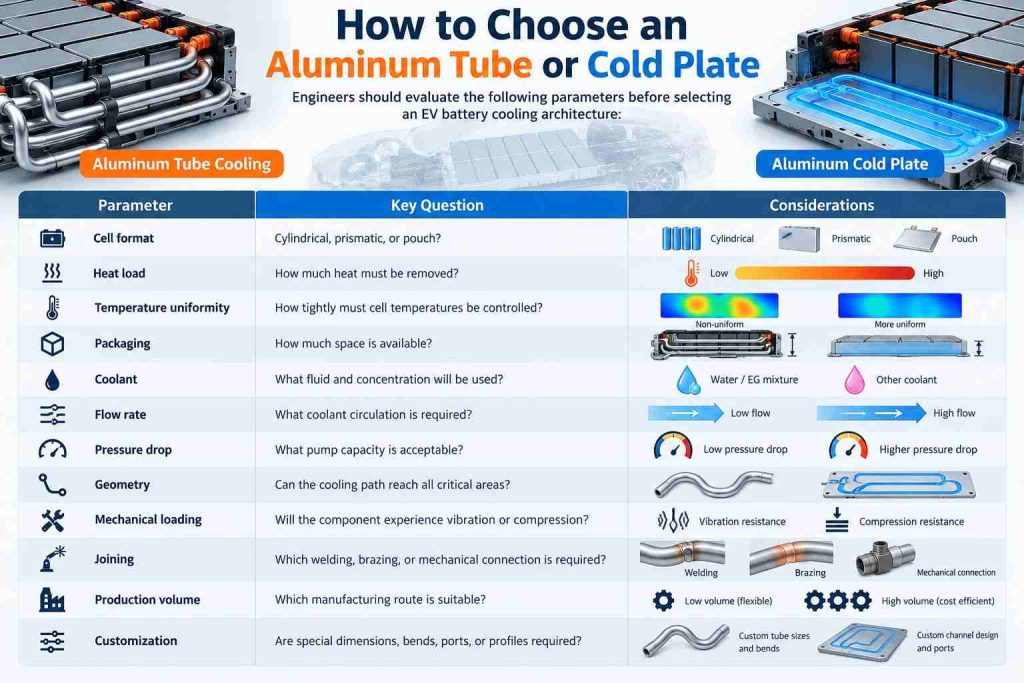
Engineers should evaluate the following parameters before selecting an EV battery cooling architecture:
| Parameter | Key Question |
| Cell format | Cylindrical, prismatic, or pouch? |
| Heat load | How much heat must be removed? |
| Temperature uniformity | How tightly must cell temperatures be controlled? |
| Packaging | How much space is available? |
| Coolant | What fluid and concentration will be used? |
| Flow rate | What coolant circulation is required? |
| Pressure drop | What pump capacity is acceptable? |
| Geometry | Can the cooling path reach all critical areas? |
| Mechanical loading | Will the component experience vibration or compression? |
| Joining | Which welding, brazing, or mechanical connection is required? |
| Production volume | Which manufacturing route is suitable? |
| Customization | Are special dimensions, bends, ports, or profiles required? |
When to Consider an Aluminum Cooling Tube?
An aluminum tube may be appropriate when the battery system requires:
- Flexible coolant routing
- Complex or irregular cooling paths
- Modular cooling components
- Customized tube lengths or bends
- Adaptation around other battery-pack components
When to Consider an Aluminum Cold Plate?
A cold plate may be appropriate when the design requires:
- Large thermal contact area
- Compact battery-pack integration
- Controlled coolant-channel distribution
- High temperature uniformity
- Integration of cooling channels into the battery structure
Can an EV Battery Cooling System Use Both?
Yes. Tube and cold-plate technologies don’t need to be mutually exclusive. A battery thermal management system can include cooling tubes, cold plates, manifolds, pumps and heat exchangers.
A hybrid architecture could have different components for different functions, e.g., localised cell cooling, coolant distribution, and pack-level heat removal. This approach may be useful when a battery pack contains different thermal zones or has complex structural and packaging constraints.
FAQs
Q1. Is an aluminum tube or cold plate better for EV battery cooling?
Neither is universally better. Aluminum tubes offer flexible routing and modularity, while cold plates provide integrated channels and larger contact areas. Selection depends on cell format, heat load, packaging, and flow requirements.
Q2. How does coolant flow affect aluminum EV battery cooling performance?
Coolant flow directly affects heat removal and temperature uniformity. Excessive flow increases pressure drop and pumping demand, while insufficient flow can create hot spots. Channel geometry and flow distribution must be evaluated together.
Q3. When should a cold plate be selected instead of an aluminum cooling tube?
A cold plate is generally considered when cells require broad, consistent thermal contact, compact packaging, and controlled internal flow paths. It is particularly suitable where temperature uniformity is more important than routing flexibility.
Q 4. Can aluminum tubes and cold plates be used together in one battery thermal management system?
Yes. Hybrid designs can combine cold plates for localized cell cooling with aluminum tubes for coolant distribution. This approach can balance thermal performance, packaging constraints, serviceability, and system-level flow management.ble stress and therefore influence the pressure capacity of the tube.