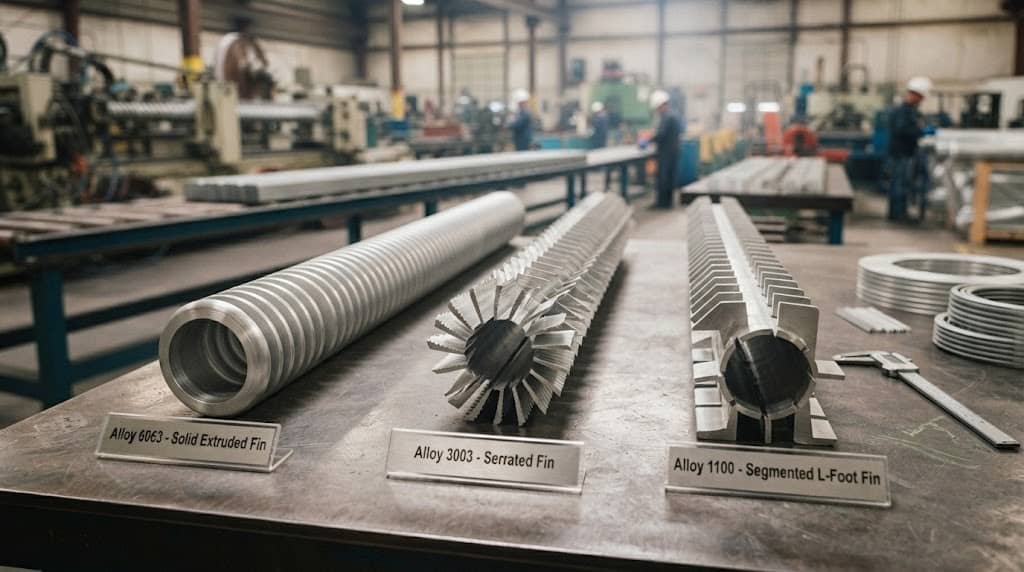
Cooling systems in EVs need to effectively get rid of heat and also ensure that the coolant flow, connections, and durability are maintained over time. The EV battery cooling tube is critical to the hydraulic performance and thermal management. The geometry, internal resistance, and connection quality of the tubes can affect the performance of the whole cooling circuit.
Engineers and OEMs need more than just a check of dimensions or material specifications to evaluate a cooling tube. This guide describes how to evaluate pressure drop, coolant distribution, heat transfer, leakage and durability before production approval.
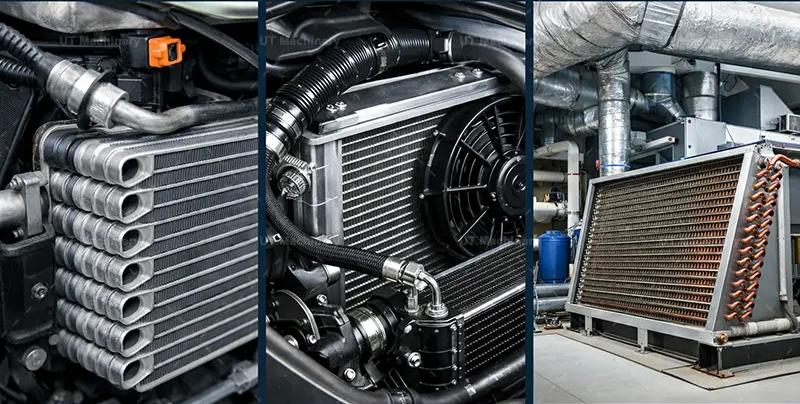
How Tube Geometry Affects Coolant Flow?
Uneven distribution of coolant may result in lower cooling efficiency and temperature variations among battery modules. There are a number of things that affect how coolant moves through battery thermal management tubing.
The channel geometry defines the flow area and hydraulic resistance. The fluid velocity and pressure drop at a given flow rate can be increased by smaller passages. However, the actual result also depends on the shape of the channel, the properties of the coolant and the flow conditions.
Flow distribution can also be affected by branch length, bends, fittings and manifold geometry. In a parallel circuit, the flow rate can be different in the branches with different hydraulic resistance.
| Design factor | Potential impact | Recommended check |
| Channel cross-section | Changes flow resistance | Measure flow rate and pressure drop |
| Branch length | Creates resistance differences | Compare branch flow rates |
| Bends and fittings | Add local pressure losses | Measure pressure at defined points |
| Manifold design | Influences coolant distribution | Evaluate outlet flow balance |
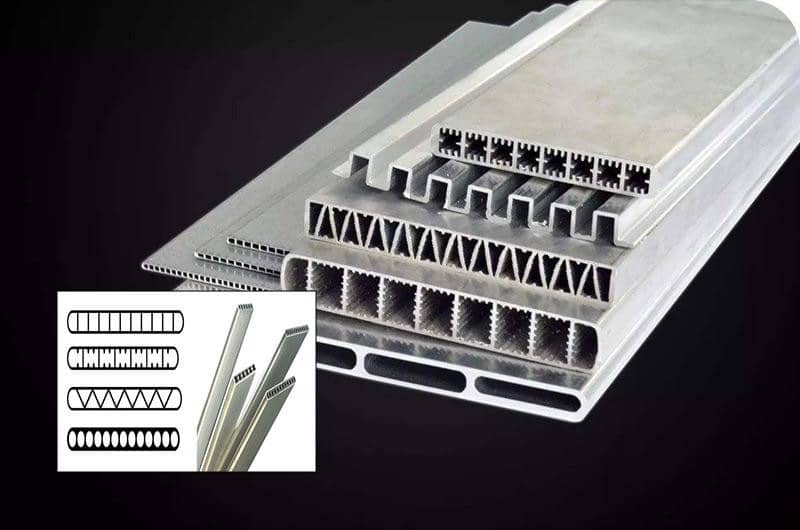
An aluminum micro-channel tube can support compact heat-exchange designs through multiple internal passages. However, more channels do not automatically guarantee better flow distribution. Channel dimensions, manifold design, and operating conditions must be evaluated together.
Pressure Drop in EV Battery Cooling Tubes
The pressure drop is the resistance the coolant pump has to overcome to get the required flow rate. Too much resistance can increase the demand on the pump or prevent the system from achieving the desired flow rate.
The total pressure loss is usually made up of the friction in the straight channel and local losses caused by the bends, fittings, transitions, and manifolds. For straight sections, the friction loss can be estimated using the Darcy–Weisbach relation. It is calculated from the passage length, hydraulic diameter, flow velocity, coolant density, and friction factor.
The pressure drop has to be calculated at a certain flow and operating temperature. Coolant viscosity and density change with temperature, which influences the result obtained.
Coolant conditions should be recorded and compared with design requirements and pressure measurements should be taken at well defined inlet and outlet locations by engineers. You will want to test at different flow rates to show the performance of the circuit over the expected operating range.
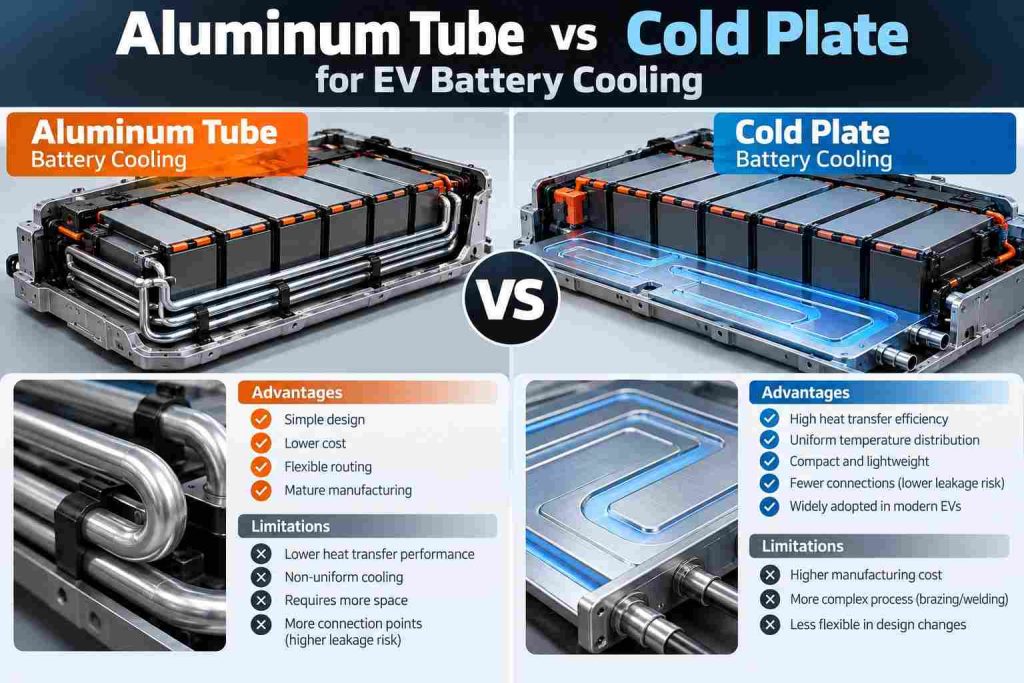
The complete cooling circuit also has components such as cooling plates, hoses, valves and heat exchangers. Their resistance should be taken into account when checking the pump operating point. A low pressure drop across a single tube does not mean the whole battery cooling circuit will have a low resistance. For a comparison of cooling architectures, see aluminum tubes vs cold plates for EV battery cooling.
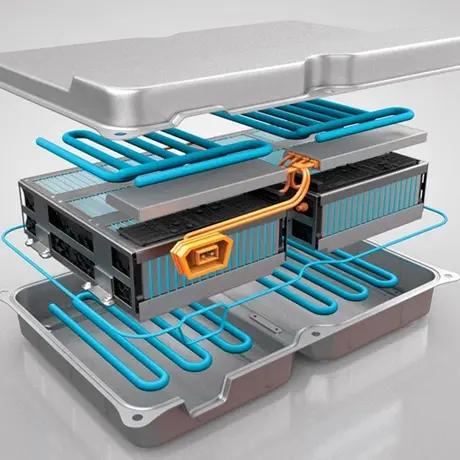
Thermal Performance and Heat Transfer
The thermal performance of EV battery cooling tubes is affected by the coolant flow, temperature difference, heat transfer area, and the thermal resistance between the battery and cooling interface. For appropriate single-phase steady-state conditions, the heat carried by the coolant can be approximated from the mass flow rate, specific heat capacity and temperature change.
An increased temperature difference of the coolant does not mean better cooling. It might be a sign of good heat removal, but it could also be due to poor flow. Engineers should consider the temperature measurements in relation to the coolant flow and the battery temperature distribution.
Three measurements are especially useful:
- Coolant flow rate: Confirms whether the system delivers the required fluid volume.
- Inlet and outlet temperatures: Help estimate the heat transferred to or from the coolant.
- Battery temperature distribution: Reveals whether cooling is sufficiently uniform across critical locations.
Engineers may evaluate overall heat-transfer performance under specified thermal loads for more detailed analysis. This helps decouple the limitations of the tube circuit from the limitations of the battery-to-cooling interface. For further reading, see this review of liquid-cooling battery thermal management systems for electric vehicles.
Aluminum multi-channel tubes may be appropriate for applications requiring a compact, custom flow arrangement. Its adequacy should be demonstrated by hydraulic and thermal testing rather than by geometry alone.
Leak Testing and Connection Reliability
The cooling tube assembly shall be leak-tight under the specified operating conditions. Any leakage can reduce the amount of available coolant and compromise thermal management.
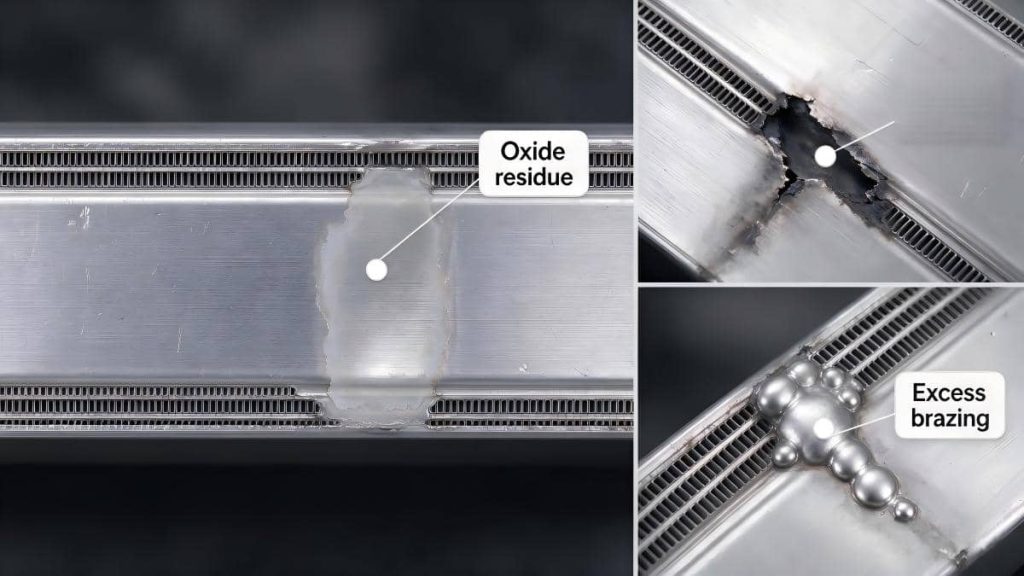
The potential causes are bad brazed or welded joints, damaged sealing surfaces, dimensional mismatch, assembly stresses and degradation during repeated operation .
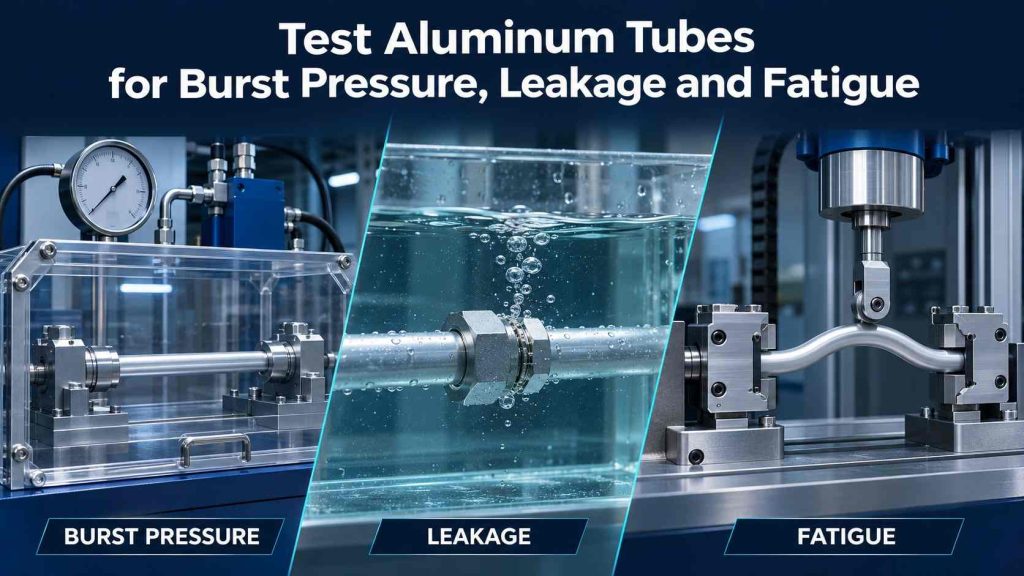
The right leak test is defined by component design and acceptance criteria requirements. Pressure decay tests, tracer gas techniques, and other verified techniques may be used where applicable.
Before testing, define the test medium, pressure, temperature, duration, detection sensitivity, and acceptance criteria.
Testing an individual tube does not establish the leak tightness of the complete assembly. Connections, manifolds, and other interfaces should be evaluated at the appropriate component or system level. Visual inspection can detect visible defects, but should not be used in place of an appropriate leak test where leak tightness is a critical requirement.
Durability Testing of Battery Cooling Tubes
Battery cooling systems experience changing temperatures and pressures during operation. Vehicle vibration and mounting constraints may also affect tubing and connections.
Thermal cycling can create repeated expansion and contraction, particularly where connected components have different thermal expansion characteristics.
Pressure cycling can contribute to fatigue damage, depending on stress concentration, tube geometry, material condition, and the pressure history.
Coolant compatibility must also be considered. The coolant formulation, temperature range, contamination level, and exposure duration may affect corrosion and connection performance.
A practical durability program should include:
- Record baseline dimensions and inspect the tube assembly.
- Conduct initial flow, pressure-drop, and leak tests.
- Apply the specified thermal and pressure cycles, with vibration testing where relevant.
- Inspect for cracking, deformation, corrosion, or joint damage.
- Repeat the required hydraulic and leakage tests.
- Compare the results with approved acceptance criteria.
Test conditions should reflect the intended operating environment and customer requirements. There is no single universal cycling threshold that proves suitability for every EV battery cooling tube.
How to Validate Cooling Tubes Before Production?
A structured validation process helps identify performance issues before volume production.
- Step 1: Define operating conditions. Document coolant type, target flow rate, working pressure, temperature range, and expected service requirements.
- Step 2: Set hydraulic targets. Establish allowable pressure drop and required flow rates, including branch-level requirements where necessary.
- Step 3: Verify thermal performance. Measure coolant flow, inlet and outlet temperatures, and battery-side temperatures under controlled conditions.
- Step 4: Confirm leak tightness. Test the tube assembly using an approved method and clearly defined acceptance limits.
- Step 5: Evaluate durability. Apply relevant thermal, pressure, and mechanical cycles, then repeat the specified inspections.
- Step 6: Confirm production consistency. Check that dimensions, channel geometry, joining quality, and test results remain within the agreed specifications across production samples.
Test records should identify the sample, drawing revision, test conditions, equipment, results, acceptance criteria, and final disposition. This provides traceability for engineering approval and supplier quality review.
How to Select Aluminum Tubes for EV Battery Cooling?
The choice of tube geometry is dictated by the flow paths desired, the cross-section, the type of connection and the constraints imposed by manufacturing.
- Aluminum micro-channel tubes may be suitable for compact heat-exchange assemblies requiring multiple internal passages.
- Aluminum multi-channel tubes can be designed for defined parallel flow paths or customized channel arrangements.
- Custom extruded aluminum tubes may be used where a project requires a non-standard cross-section or integrated flow passages. Browse custom extruded aluminum tube solutions to see the relevant product options.
To get a quotation, engineering teams must prepare tube drawings, dimensional requirements, coolant specifications, target flow rates, allowable pressure drop, connection details and required validation tests.
CHAL’s aluminum tube products come in a variety of tube configurations for industrial applications. The final choice should be based on the actual design requirements and proven manufacturing capabilities. For your EV battery cooling project, contact CHAL with your drawings, operating conditions and performance requirements to discuss suitable aluminum tube configurations.
Frequently Asked Questions
How Does Tube Geometry Affect EV Battery Cooling?
Tube geometry influences hydraulic resistance, coolant distribution, and available heat-transfer area. Actual performance depends on the complete circuit and operating conditions.
Does Lower Pressure Drop Always Mean Better Cooling?
No. Lower resistance may reduce pumping demand, but the system must still deliver sufficient coolant flow and heat removal.
How Can Engineers Identify Uneven Coolant Flow?
Measure branch flow rates or pressure differences where practical, and compare them with temperature measurements under controlled conditions.
What Tests Are Needed Before Approving Battery Cooling Tubes?
Depending on the application, testing may include dimensional inspection, flow measurement, pressure-drop evaluation, leak testing, thermal assessment, and durability testing.