In aerospace structural engineering, when you are picking an alloy for CNC- machined parts, it really needs a strict balance of mechanical properties, all tied to the exact stress state in the aircraft zone. On the surface, it looks like 7075 aluminum wins because it has a higher ultimate tensile strength, but structural airframe design usually does not just chase peak strength by itself. In a lot of critical components, especially those seeing cyclic tension and also dynamic aerodynamic loading, 2024 aluminum ends up being the required option. This technical analysis evaluates the structural, metallurgical, and manufacturing reasons why 2024 aluminum is frequently selected over 7075 aluminum for high-performance aerospace components.
Material Composition & Mechanical Profiles: 2024 vs 7075 Aluminum
To understand their performance under flight loads, we got to first have to look at those distinct metallurgical classifications that the American Aluminum Association has defined.
- 2024 Aluminum is an Al-Cu-Mg (2xxx series) alloy, where copper (3.8%−4.9%) is the primary alloying element. It achieves its mechanical properties through solution heat treatment and natural or artificial aging, which forms Al2CuMg (θ and S phase) precipitates that block dislocation movement.
- 7075 Aluminum belongs to the Al-Zn-Mg-Cu (7xxx series) system. With zinc (5.1%−6.1%) as its principal alloying element alongside magnesium, it utilizes η phase (MgZn2) precipitates to achieve exceptionally high yield and tensile strength through artificial aging.
| Mechanical Property | 2024-T3 / T351 | 7075-T6 / T651 |
| Ultimate Tensile Strength (UTS) | 470 MPa (68 ksi) | 572 MPa (83 ksi) |
| Yield Strength | 324 MPa (47 ksi) | 503 MPa (73 ksi) |
| Fracture Toughness (KIC– L-T) | 34−40 MPa⋅m1/2 | 25−29 MPa⋅m1/2 |
| Elongation at Break | 12%−20% | 7%−11% |
| Density | 2.78 g/cm3 | 2.81 g/cm3 |
The Core Aerospace Dilemma: Fatigue Resistance vs. Ultimate Strength
Aircraft structures keep dealing with continuous fluctuating stress cycles while taxiing, when gusts sneak in, and during cabin pressurization. So there is this kind of cyclic loading effect that brings along the danger of metal fatigue, meaning structural parts can fail at stress levels that are way under their static yield strength.
Why 2024 Dominates Tension-Loaded Components
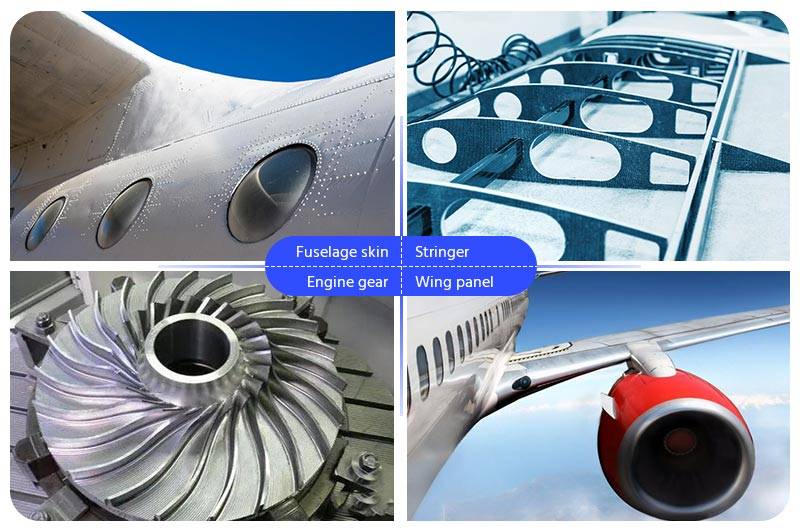
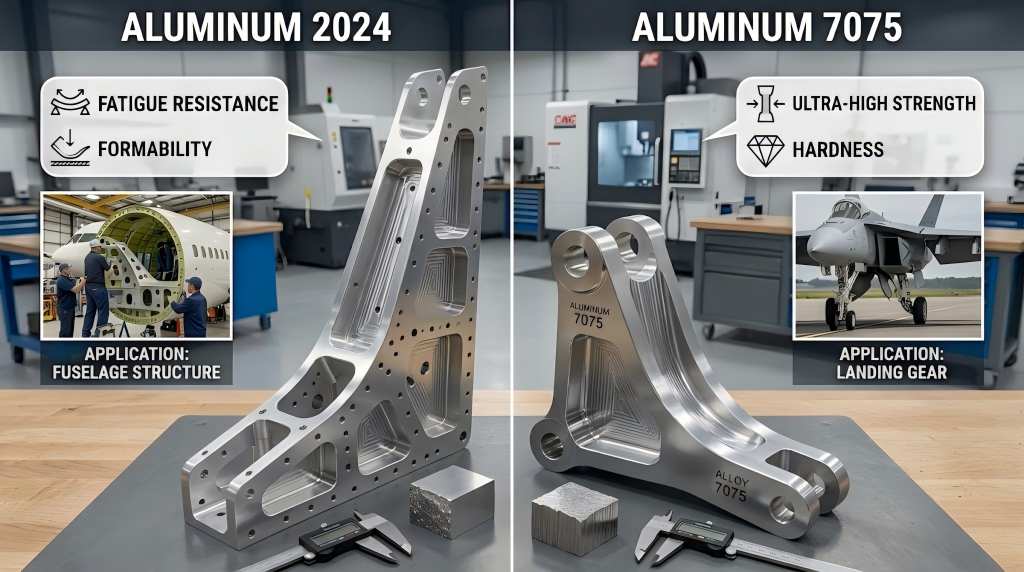
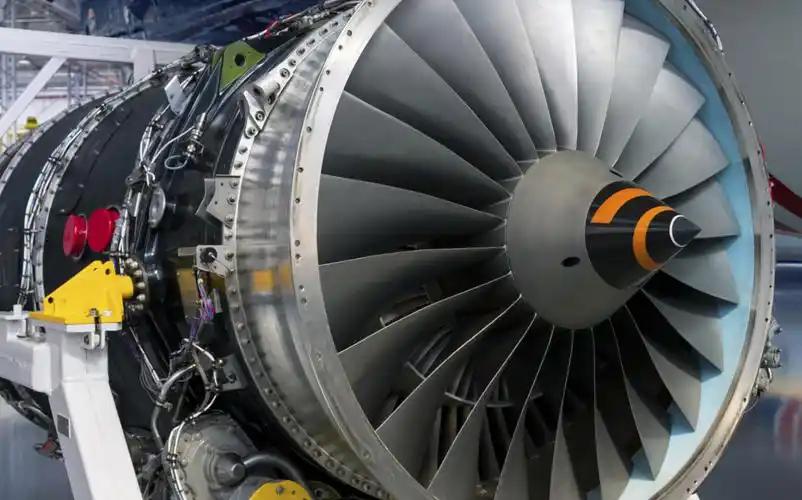
The fundamental reason we specify 2024 aluminum for fuselage skins, tension tie-rods, and lower wing panels is its superior damage tolerance and low fatigue crack propagation rate (FCPR).
In damage-tolerant design, engineers start with the assumption that microscopic flaws and/or cracks exist in the material. These cracks propagate under cyclic tension. The high fracture toughness (KIC) of 2024-T3 allows the material to plastically deform at the crack tip, blunting the stress concentration. The crack growth rate per cycle (da/dN) is therefore much lower in 2024 than in 7075. The slow rate of propagation of a crack that develops in service in a 2024 lower wing skin ensures that the flaw will be detected during routine non-destructive testing (NDT) intervals, before reaching its critical crack length and causing catastrophic structural failure.
Where 7075 Excels: Compression Members
Conversely, 7075-T6 is utilized where the dominant stress state is compression rather than tension. The upper wing skins of a commercial airliner, for example, experience intense compressive bending stresses during flight. Because compressive forces tend to close cracks rather than open them, the material’s fatigue crack propagation rate becomes a secondary concern. Instead, the design limitation shifts to structural buckling and yielding. The 503 MPa yield strength of 7075-T6 provides the necessary resistance to compressive deformation, allowing for thinner cross-sections and structural weight reduction in these specific zones.
Residual Stress and Dimensional Stability in CNC Machining Processing
When translating theoretical designs into physical components via multi-axis CNC milling, the manufacturing characteristics of the alloys introduce practical engineering challenges.
Controlling Distortion in Thin-Walled Aerospace Parts
Aerospace structural design heavily utilizes monolithic components—milling large, complex bulkheads and ribs out of a single solid billet of aluminum to eliminate rivets and welds. During high-speed CNC milling, large volumes of material are removed, which alters the balance of internal residual stresses locked within the raw material.
7075-T6 billets retain high internal quenching stresses. When machined into thin-walled, lightweight components (such as pockets with a wall thickness under 1.5mm), the abrupt release of these stresses causes significant part distortion, warp, and twist, frequently pushing the component out of strict geometric dimensioning and tolerancing (GD&T) limits.
To mitigate this, we specify the T351 temper for 2024 (or T651 for 7075 when it must be used). The “51” suffix denotes that the alloy has undergone controlled mechanical stretching (typically 1.5% to 3%) after solution heat treatment but before aging. This stretching process relieves up to 90% of the internal residual quenching stresses. However, because 2024-T351 has lower base yield strength and higher ductility than 7075-T651, it exhibits greater dimensional stability during aggressive pocket milling, resulting in tighter tolerance control and a lower reject rate during quality control inspections.
Tool Wear and Surface Finish Optimization
From a machinability angle, 2024-T351 tends to put lower cutting forces on CNC tooling than 7075-T651, mostly because it’s generally softer, like around 120 Brinell compared with roughly 150 Brinell for 7075. Those reduced forces help keep the tool from flexing too much, which matters a lot when you’re cutting deep cavities or working with that high-aspect-ratio rib geometry. Also, 7075’s thermal conductivity is lower, so the cutting edge can run hotter, and this speeds up tool flank wear, so people often end up using specialized DLC-coated solid carbide endmills just to hold the surface finish targets, like Ra ≤ 1.6 μm for fatigue-critical parts.
Environmental Resistance: Stress Corrosion Cracking (SCC)
The high altitude and coastal environment where aircraft operate expose structural materials to a bit of corrosive media, like chlorides and moisture. When an alloy gets hit at the same time by a lasting tensile stress and a corrosive environment, it may go into Stress Corrosion Cracking, SCC, and then you can see this sudden intergranular type of failure.
7075 in the peak-aged T6 temper is highly susceptible to SCC along its short-transverse (ST) grain orientation. The MgZn2 precipitates preferentially align along grain boundaries, acting as anodic paths for corrosion. To use 7075 in corrosive, high-stress environments, it must undergo overaging to a T73 or T76 temper. While T73 heat treatment alters the grain boundary precipitate structure to provide excellent resistance to SCC and exfoliation corrosion, it forces a mechanical compromise, reducing the material’s tensile strength by approximately 10% to 15%.
In contrast, 2024-T3 exhibits more predictable electrochemical stability under atmospheric stress. While it requires surface protection, such as Type II sulfuric acid anodizing or chemical conversion coatings (MIL-DTL-5541), it maintains its baseline fatigue resistance and structural integrity without requiring overaging treatments that compromise its intrinsic mechanical properties.
Engineering Decision Framework for Alloy Selection
When it comes to choosing between these two benchmark alloys for the finalization of a material specification sheet for a CNC-machined aerospace component, it is a matter of definitive structural logic:
1. If the component is 2024-T3 / T351, specify:
- Primary tension fields or cyclic aerodynamic loads (e.g., fuselage frames, lower wing skins, tension splices).
- Designed utilizing philosophies of Damage Tolerance (DT) and Fail-Safe design.
- Complex Monolithic structure with deep pockets requiring minimum post-machining distortion.
2. For a component that is: Specify 7075-T6 / T651 (or T7351):
- Under constant compressive stresses or bending moments, with buckling as the primary mode of failure (e.g., upper wing skins, compression struts).
- Under tight space allotments that require maximum yield strength per unit cross-section (e.g., actuators for landing gear, heavily loaded attachment brackets).