The global food packaging industry is changing in a big way because of strict environmental rules and a move toward circular economy models. The EU Packaging and Packaging Waste Regulation (PPWR) and similar rules in North America and Asia will go into effect in 2026. These changes have made aluminum a key material for sustainable development. Aluminum food containers, from very thin foils to very strong cans, have a unique combination of physical barrier properties and the ability to be recycled forever. This article gives a technical look at the aluminum packaging industry, focusing on the Aluminium Stewardship Initiative (ASI), reducing the carbon footprint, material specifications, and adding digital traceability.
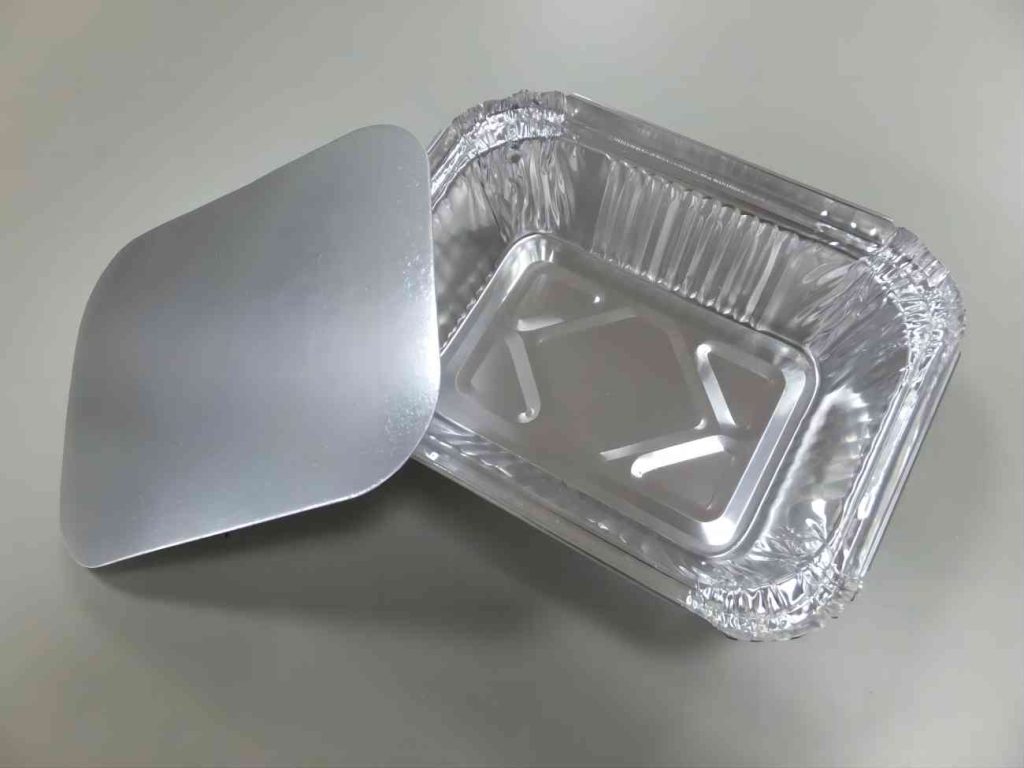
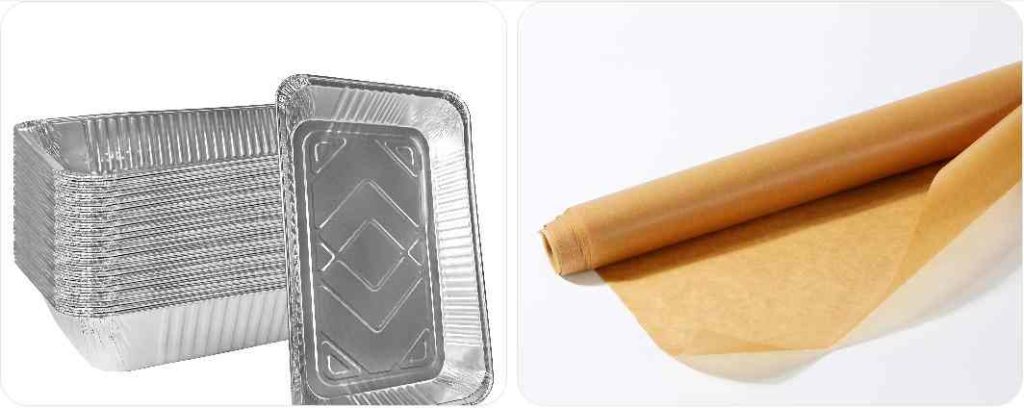
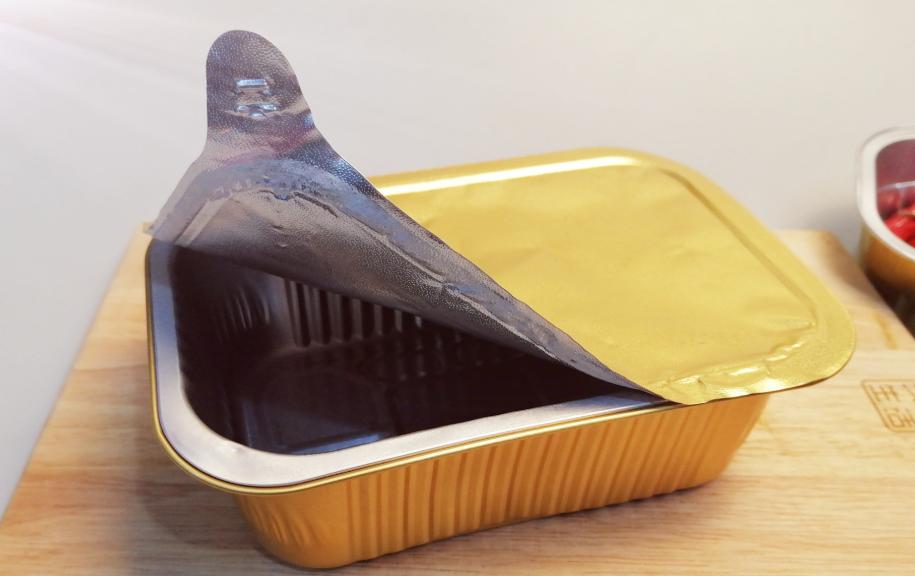
aluminum foil container
The Strategic Role of Aluminum in the Circular Economy
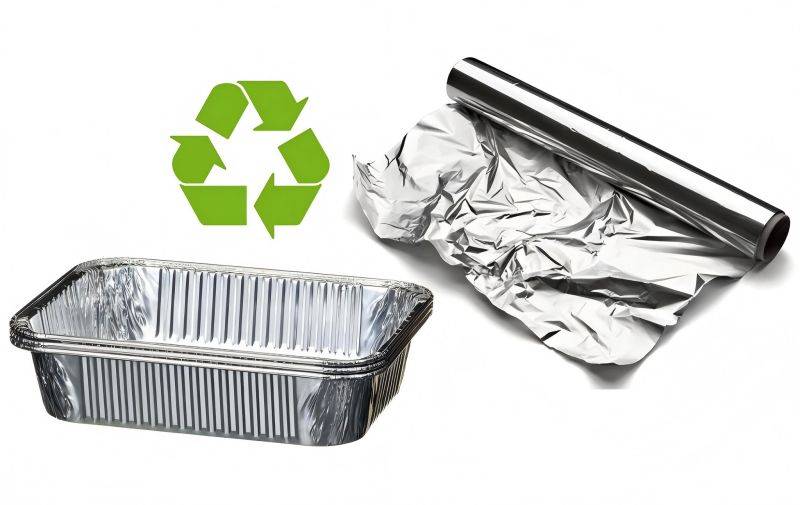
Aluminum belongs to the category of “permanent materials” because its physical characteristics stay unchanged when it goes through multiple recycling processes. The aluminum production system operates through a closed-loop process, which prevents polymers from becoming downcycled into non-recyclable waste products. The market for sustainable aluminum foil will expand because the product offers total protection against light, oxygen, and moisture, which preserves food freshness without using chemical additives.
ASI Certified Aluminum: Establishing Supply Chain Transparency
The Aluminium Stewardship Initiative (ASI) provides the industry’s most rigorous framework for addressing sustainability. An ASI-certified aluminum supply chain ensures that the material meets specific Performance Standards and Chain of Custody (CoC) requirements.
- Performance Standards: These include environmental, social, and governance (ESG) principles, such as how to handle waste, greenhouse gas emissions, and human rights.
- Chain of Custody: This makes it easy to follow the path of aluminum from the bauxite mine to the smelting and rolling processes and finally to the container maker.
For B2B exporters, utilizing ASI-certified materials is no longer optional for entering premium markets. It serves as documented evidence of ESG compliance, which is a mandatory requirement for large-scale retail procurement contracts in 2026.
Aluminum vs Plastic LCA: A Technical Carbon Analysis
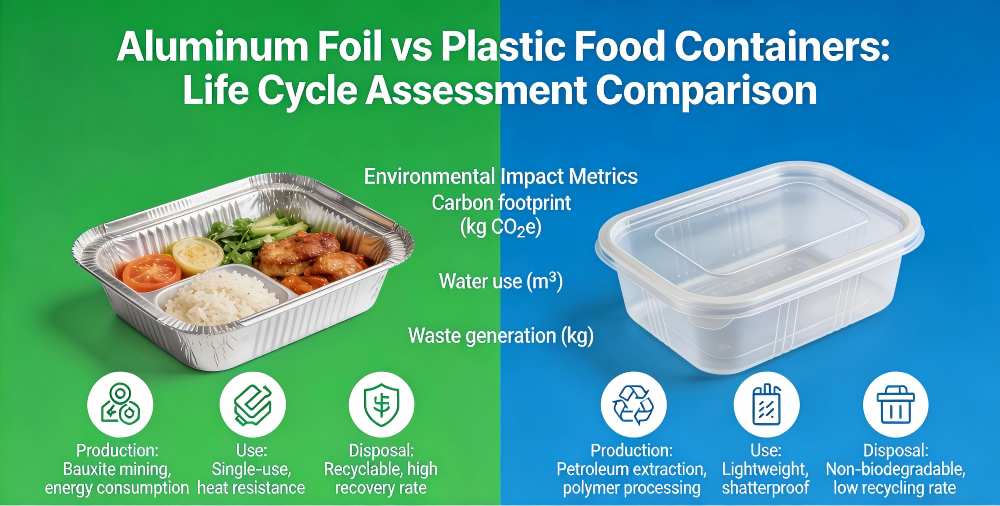
To understand the environmental impact of packaging, engineers utilize Life Cycle Assessment (LCA). A comparative aluminum vs plastic LCA reveals distinct advantages for metal-based systems, particularly when end-of-life (EoL) scenarios are included in the calculation.
| Impact Category | Recycled Aluminum | Virgin Polypropylene (PP) |
| Energy Consumption | ~5% of primary production | 100% of production energy |
| Carbon Footprint | < 0.5 kg CO2e/kg | ~1.8 – 2.5 kg CO2e/kg |
| Recyclability Rate | > 90% (Actual) | < 30% (Actual global average) |
Low carbon food packaging production particularly puts stress on secondary (recovered) aluminum. The carbon footprint is reduced by around 95% by the use of recycled materials, especially secondary aluminum as opposed to primary aluminum. The high prices offered for aluminum waste, in addition to the need to have drugs, promote the establishment of a network to gather it and make sure the vessels are treated, actually recycled as opposed to heading straight for the dump.
Material Specifications: 3003-H24 Container Foil and Performance
The mechanical performance of an aluminium food container is determined by its alloy composition and temper. For the production of semi-rigid containers, 3003-H24 container foil is the industry standard.
- Alloy 3003: Superb resistance to corrosion and moderate strength are honest descriptions of this aluminum-manganese alloy. Adding manganese cumulatively increases the stretch of the alloy greatly compared to 1000 series, which is utilized in deep drawing.
- H24 Temper: The aluminum material shows that it underwent strain hardening before it received partial annealing, which brought it to a half-hard condition. The temper solution gives the foil proper ductility, which enables it to create complicated shapes without breaking, yet it remains rigid enough to protect its structural form during shipping.
In any case, 5052 or 5182 would be a better solution for that because their higher magnesium content contributes to increasing the specific strength and the specific chemical resistance needed for the cans with pull tabs.
Plastic-Free Solutions and Policy Compliance
The shift toward plastic-free solutions is accelerated by Extended Producer Responsibility (EPR) fees. Governments now impose higher taxes on non-recyclable or hard-to-recycle plastics. Aluminum containers assist companies in avoiding these costs.
In terms of prepared meals, the tellurium coefficient of aluminum presents a particular and active point of interest. Because it warms and cools up more quickly, the danger zone, which food is governed by (5°C to 60°C), can be traversed quickly. Furthermore, modern tinplate cannot be coated, enabling such food containers to be used in both conventional and microwave ovens if there are certain geometric-related guidelines in place.
QR Code Smart Packaging: The Digital Frontier
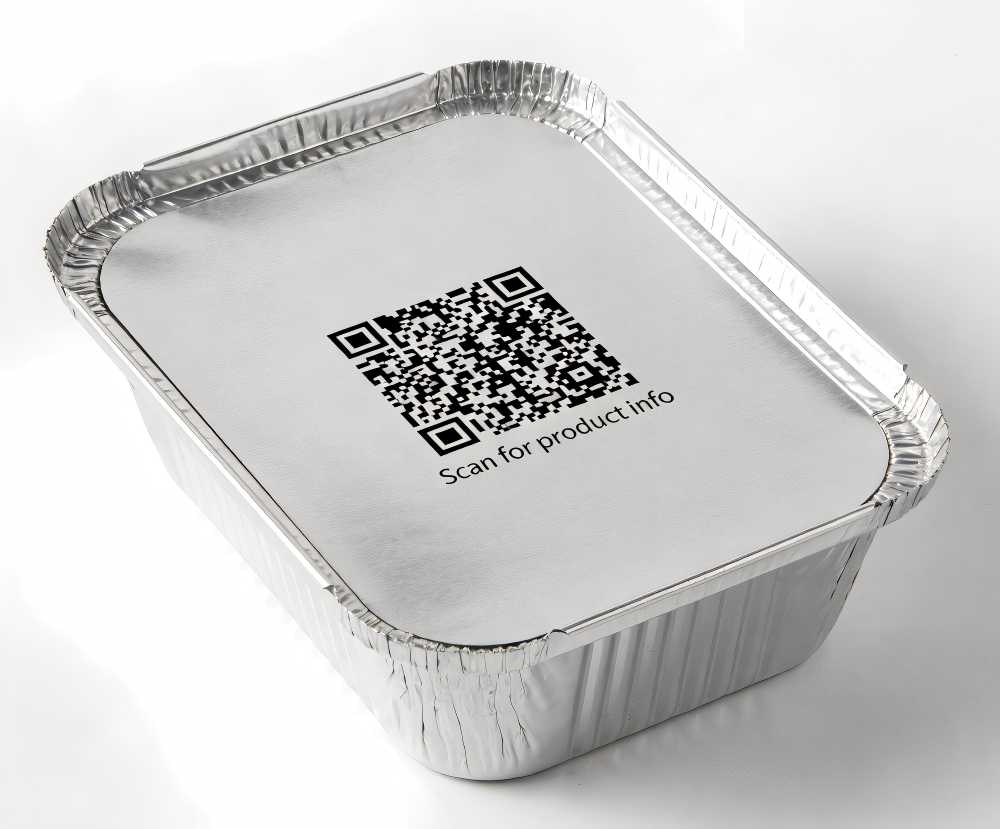
Introduction of QR-coded smart packaging aims at converting the container from a simple device into a smart gadget. By 2026, B2B customers will use these enhancements for numerous essential operations:
- Traceability: All aluminum foil containers are equipped with a unique QR code to allow for cradle-to-grave tracking. Scanning of the code would allow one to see the aluminum’s origin, manufacture date, and compliance certificates like FDA or EU No. 10/2011.
- Consumer Interaction: Brands benefit from using QR codes because not only do they give accurate recycling details, but also help to residents to reduce overloading the pollution in the recycling process.
- Anti-Counterfeiting: The use of encrypted QR Codes in high-value Foods can ensure that the products and their respective packaging are indeed original, thus defending the reputation of the brand in international markets.
FAQ:
A1: Yes, there is no harm in this if the liner is covered with a food-grade lacquer. However, uncoated aluminum is reactive in contact with strongly acidic or salty foods.