The culinary industry of 2026 faces an ongoing dispute about aluminum foil trays vs parchment paper, which extends past standard kitchen organization to include material strength and heat transfer properties and ecological impact assessments. The baking world continues to rely on parchment paper for handling fragile pastries, but aluminum foil trays have established themselves as the best all-around solution for contemporary culinary needs and food storage requirements.
The following analysis explores the technical and practical reasons why aluminum foil trays outperform parchment paper across 6 critical dimensions.
1. Structural Integrity: Container vs. Sheet Material
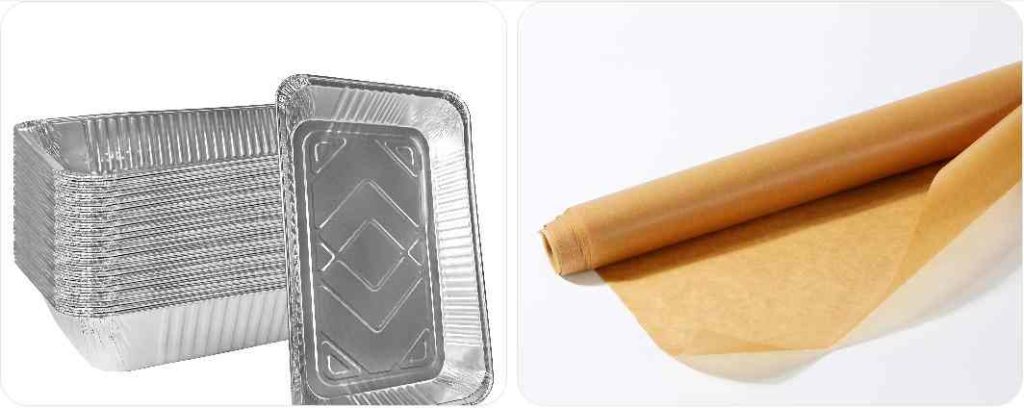
The most fundamental difference between parchment paper and an aluminum foil tray lies in their physical form.
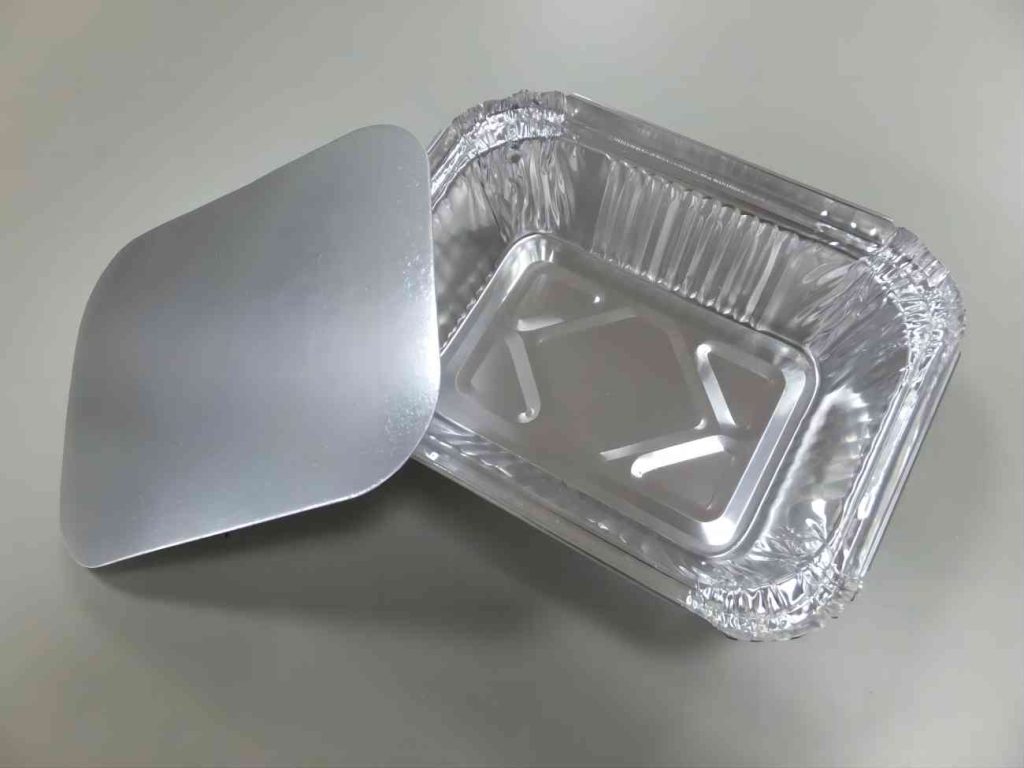
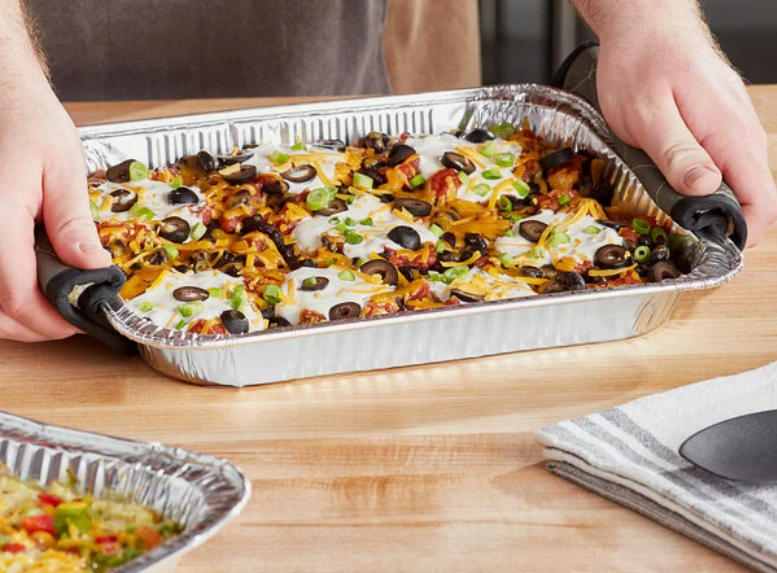
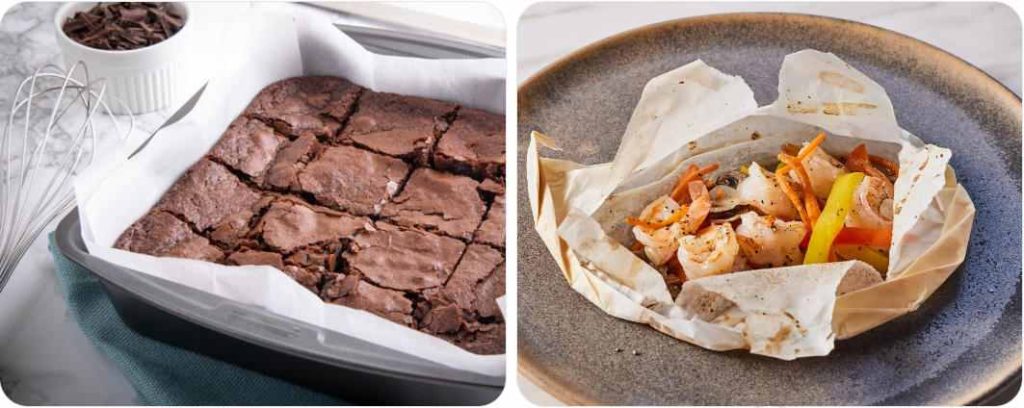
Parchment paper exists as a flexible sheet which designers use to create flat baking surface protection. The system lacks any structural backing because it needs an outside tray or pan to operate correctly. Aluminum foil trays exist as complete containers which feature rigid walls and stable base structures.
This structural advantage becomes critical when cooking foods that release oil, fat, or liquid:
- Liquid containment: Dishes like marinated meats, roasted vegetables with oil, butter-based seafood, or saucy casseroles sometimes let out a lot of liquid when they cook. Parchment paper can get wrinkled, move, or overflow, which can let liquids leak into ovens or air fryers. Aluminum foil trays keep these liquids safe, so there is no mess and no loss of flavor.
- Tear resistance: Parchment paper is weaker when it is exposed to heat and moisture for a long time. It can be readily punctured by sharp bones, the edges of shellfish, or tossing it over and over again. Aluminum foil trays don’t break, collapse, or leak, even while they’re cooking for a long period.
- Self-supporting design: You don’t need any other cookware with an aluminum foil tray. This makes it perfect for circumstances when there isn’t much equipment, including catering sets, cooking outside, or making a lot of food at once.
In practical terms, aluminum foil trays function not just as a cooking surface, but as a complete cooking vessel.
2. Heat Transfer Efficiency and Cooking Performance
Heat behavior is one of the most overlooked yet decisive factors when comparing these two materials.
Heat Conduction
Aluminum is a great material for conducting heat. An aluminum foil tray quickly absorbs heat and spreads it uniformly throughout its base, heating from the bottom up in a consistent way. This is especially critical for items that need a crisp or well-browned bottom, like:
- Pies and tarts
- Pizza slices
- Roasted potatoes
- Baked pasta dishes
Parchment paper serves as an insulating barrier that functions differently from other materials. The anti-stick nature of this material blocks heat from reaching the food directly, which means you need to increase your cooking duration to get proper bottom cooking results.
Heat Reflection
Reflecting radiant heat is another downside of aluminum. When an aluminum foil tray is used, especially when it comes with a cover, heat is confined within the tray, forming a space that can only be warm. This is helpful in increasing efficiency in cooking by lessening the amount of moisture lost and thus reducing the required period for cooking.
Parchment paper does not reflect heat. It merely separates food from the pan, offering no contribution to thermal efficiency.
3. Temperature Limits and Safety Considerations
Temperature tolerance is where parchment paper reaches its functional ceiling.
The majority of parchment papers are made non-stick through the use of silicon coating. In most cases, its working temperature limit is between 215°C and 230°C (420°F–450°F). And anything after that instance, parchment paper, should:
- Darken or become brittle
- Release unpleasant odors
- Char or ignite under direct heat
In contrast, aluminum foil trays have a melting point of approximately 660°C, far exceeding any temperature encountered in conventional cooking environments.
This makes oven safe aluminum foil trays suitable for:
- Broiling and grilling modes
- High-temperature roasting
- Direct contact with open flames or charcoal
- Commercial ovens operating at extreme heat levels
For professional kitchens, food trucks, and outdoor cooking scenarios, aluminum foil trays are often the only safe disposable option.
4. From Freezer to Oven to Table: End-to-End Versatility
One of the strongest arguments in favor of aluminum foil trays is their ability to support the entire food lifecycle.
Freezing and Storage
Aluminum foil trays do not lose their quality at low temperatures, bringing many advantages for frozen meals and the storage of baked food. Even extreme temperature fluctuations will not cause them to crack or deform unless other stresses are imposed on the trays.
Parchment paper becomes stiff and fragile when frozen, offering no protection against crushing or freezer burn.
Reheating and Serving
Aluminum foil trays can be closed with special lids, baked directly in the oven, and served on the table without any additional food utensils, such as plates. This means that an extra time, energy, and effort of shifting the food is saved.
This “cook-store-reheat-serve” loop is impossible to achieve with parchment paper alone.
5. Food Packaging and Takeaway Applications
In the food service industry, aluminum foil trays for food packaging play a critical role.
They provide:
- Physical protection during transport
- Leak resistance for oily or saucy foods
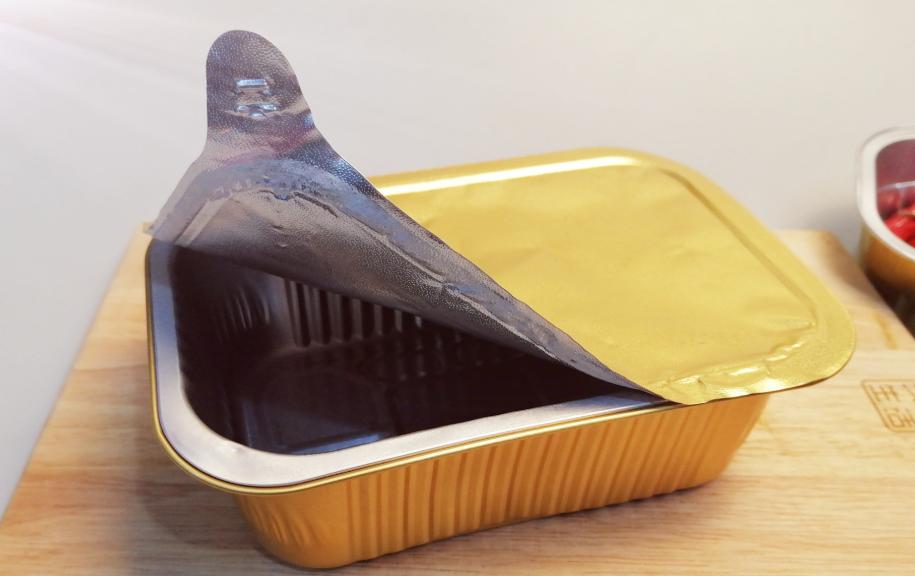
- Compatibility with sealing lids for delivery
- Professional presentation for ready-to-eat meals
Parchment paper may be used as internal packaging; however, it cannot be considered a primary packaging solution. Because it has no stiffness, no closure, and no protection against shock.
With the continuous expansion of food delivery, catering services and pre-prepared meal businesses, aluminium foil trays have become the industry standard rather than an alternative.
6. Environmentally Friendly: Recycling vs. Perceived Sustainability
At first glance, parchment paper appears more environmentally friendly because it is paper-based. However, this perception often overlooks real-world disposal conditions.
Once parchment paper is contaminated with oil or food residue, it cannot be recycled. It must be discarded as waste.
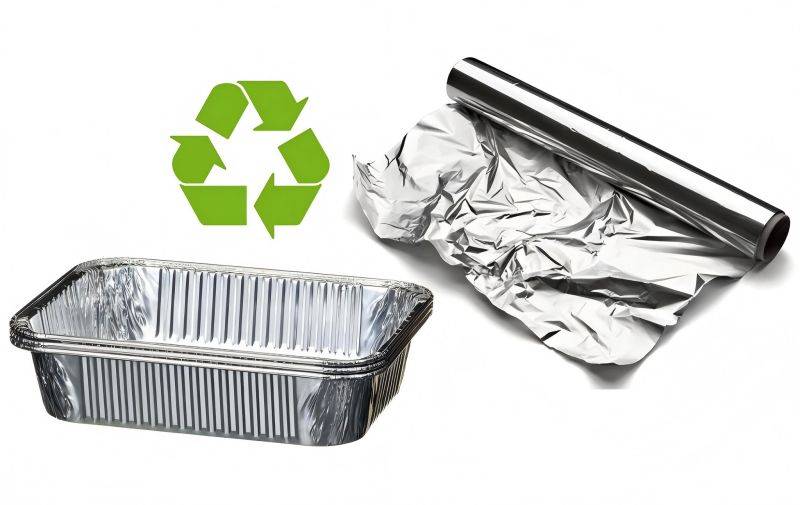
The aluminum foil trays, however, are made from a recyclable material. They can be thrown into the recycling bin after they have been washed thoroughly to remove parts of the food particles. Also, in the casting of aluminum, recycling accounts for only around 5% of the energy used in the making of primary aluminum.
In high-volume food operations, this recyclability gives aluminum foil trays a significantly higher sustainability ceiling than single-use paper products.
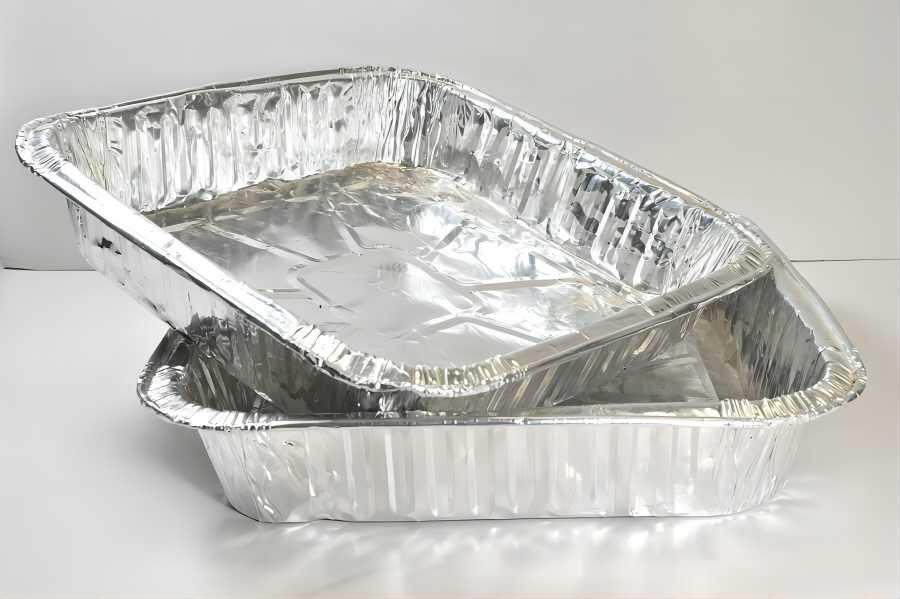
Comparative Analysis Summary: Aluminum Foil Trays vs. Parchment Paper
The following table highlights the technical disparities between the two materials:
| Feature | Aluminum Foil Tray | Parchment Paper |
| Max Temperature Resistance | ≈600°C; maintains structural stability. | ≈230°C; reaches limit before charring. |
| Structural Integrity | Self-supporting, foldable, and prevents spills. | Requires external molds; prone to shifting. |
| Thermal Efficiency | Excellent; utilizes reflective and conductive heat. | Average; acts only as a physical barrier. |
| Microwave Compatibility | Requires specific “oven safe” labeling. | Generally compatible. |
| Cleanup Difficulty | Very low; can be discarded or washed for recycling. | Low; however, the supporting tray may still require cleaning. |
| Primary Use Cases | Broiling, roasting, freezing, camping, and takeout. | Cookie baking and non-stick lining. |