The prime driver in modern housing is energy efficiency. There is no better alternative to enhancing the efficiency of buildings than employing high-quality roofing material. Of all the high-efficiency materials named earlier, only one product, insulated aluminum roof panels, combines lightness, resistance to corrosion, and high levels of thermal insulation. Unlike normal aluminum roof transfers that make use of less thermal cores, insulated aluminum roof sheeting allows much better heat transfer reduction outcomes, thereby helping your building meet very challenging energy-rated requirements.
Thermal performance testing, R-value comparisons, installation experiences, and maintenance costs are the prime areas we will touch in relation to aluminum roof panels. This article will serve as a helpful tool to give some insight to architects, builders, and property owners, aiding them in their decision-making.
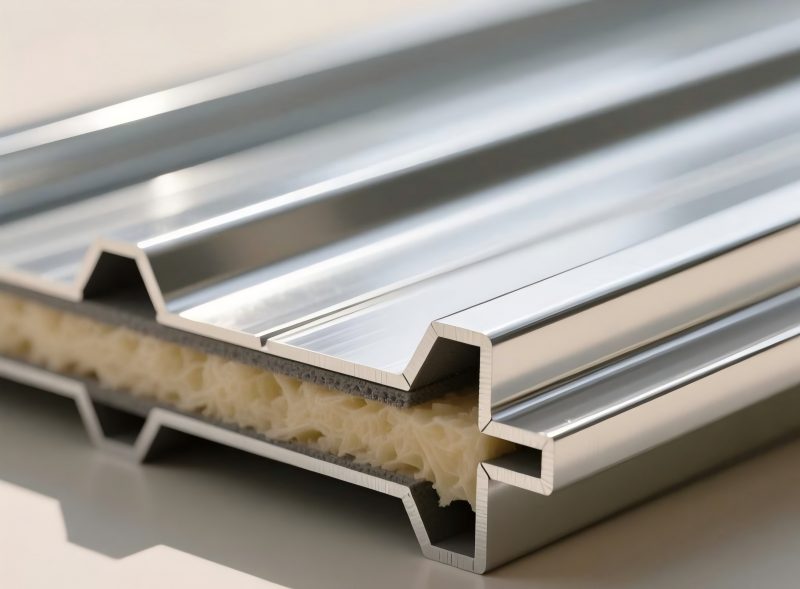
What are Insulated Aluminium Roofing Sheets?
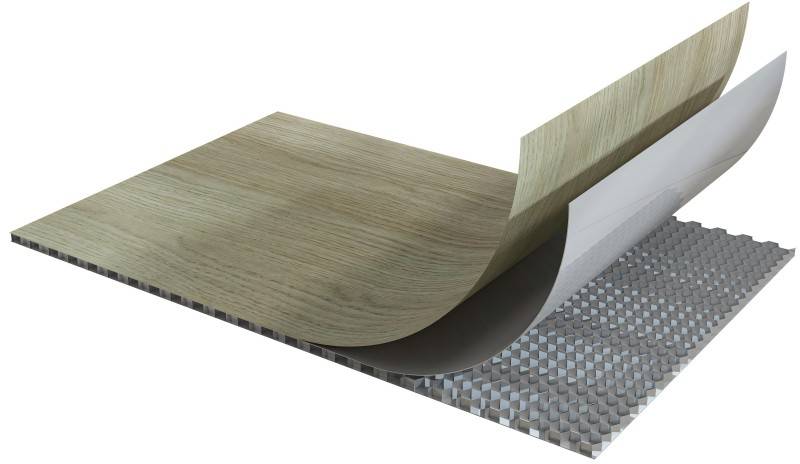
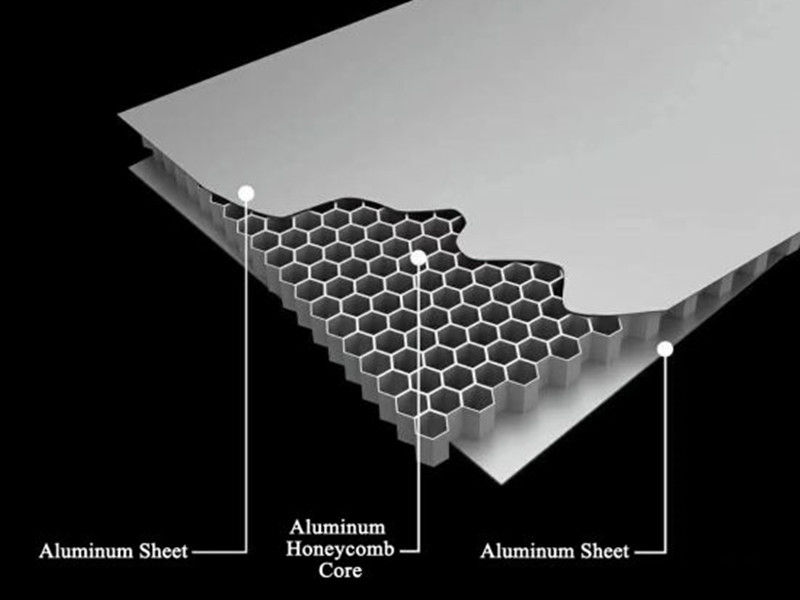
The standard building blocks of insulated aluminum roofing sheets are as follows:
- Outside aluminum panel: It is not only lightweight but also very resistant to corrosion and offers a long service life.
- Heating insulation core: Comes in the form of PIR, PU, or mineral wool, thus giving thermal resistance.
- Inside surface (if necessary): It not only beautifies but also supplies fireproofing, thus improving aesthetics.
| Feature | Aluminium Roofing Sheet | Insulated Aluminium Roofing Sheet |
| Thermal insulation | Low | High (R value 2–6 m²·K/W) |
| Weight | 5–7 kg/m² | 8–12 kg/m² |
| Maintenance | Moderate | Low |
| Installation complexity | Low | Moderate |
| Typical applications | Industrial & residential | Industrial, commercial, residential, energy-efficient buildings |
The integration of insulation cores transforms simple aluminium panels into highly efficient roofing solutions that reduce energy consumption and improve indoor comfort.
How is Thermal Performance Testing?
The thermal performance test evaluates how well the panel reduces heat flow. The following tests apply as a general guideline:
- Method: Heat Flow Meter Method: This method is for calculating heat conductivity, total heat transfer.
- R-Value Testing: This method determines the thermal resistance value of the panel and puts this in standard numbers.
- Environmental Simulation: This testing is primarily useful for research on real-life temperature cycles for environment-like exposure of the panel in case of extreme conditions.
Case of Use: A project was established in a warehouse in Germany, replacing standard factory panels, made of aluminium sheets. Afterwards, aluminium sandwich panel with insulation (50 mm PIR core) is tested for thermal performance, and heat transfer was reduced by 45%; this means the cutting down energy consumption for HVAC systems.
Why Do R-Value Comparisons?
- value refers to thermal resistance that is crucial in making the decision of roofing materials for buildings that consume less energy. With R-values that are higher, insulation will be better.
| Material | Thickness | R Value (m²·K/W) |
| Aluminium roofing sheet | 0.8 mm | 0.25 |
| Insulated aluminium panel (PIR core) | 50 mm | 4 |
| Insulated aluminium panel (PU core) | 60 mm | 5 |
| Insulated aluminium panel (Mineral Wool core) | 75 mm | 6 |
Insight: Thicker cores with higher R-values are an advantage in buildings located in colder climates, while in warmer areas, the use of moderately insulated reflective aluminium surfaces may be the priority.
Considerations for Installation
Installation can be considered as a significant factor regarding both the cost and the performance.
- Aluminium roofing sheets allow for easy handling and quick mounting on regular purlins.
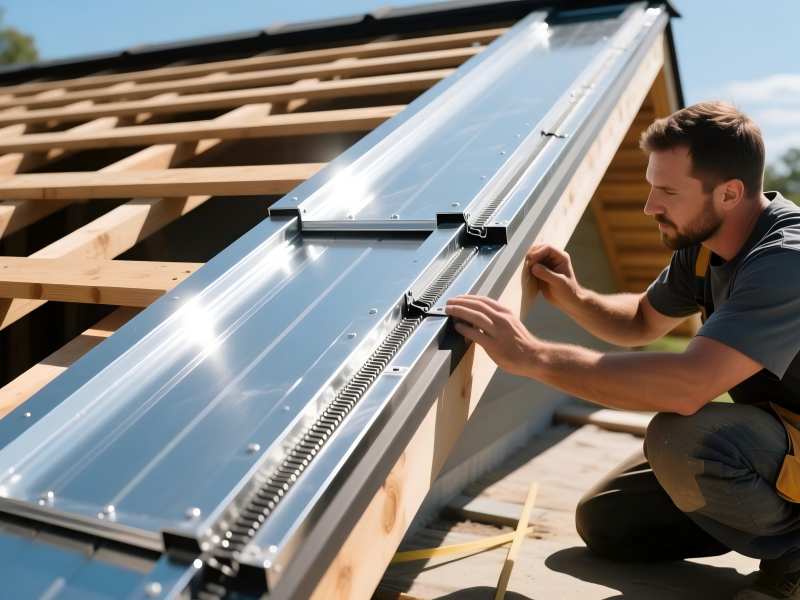
- Insulated aluminium roof panels need to be positioned very carefully to keep thermal integrity, and sealing the joints has to be done meticulously to avoid thermal bridging or air leakage.
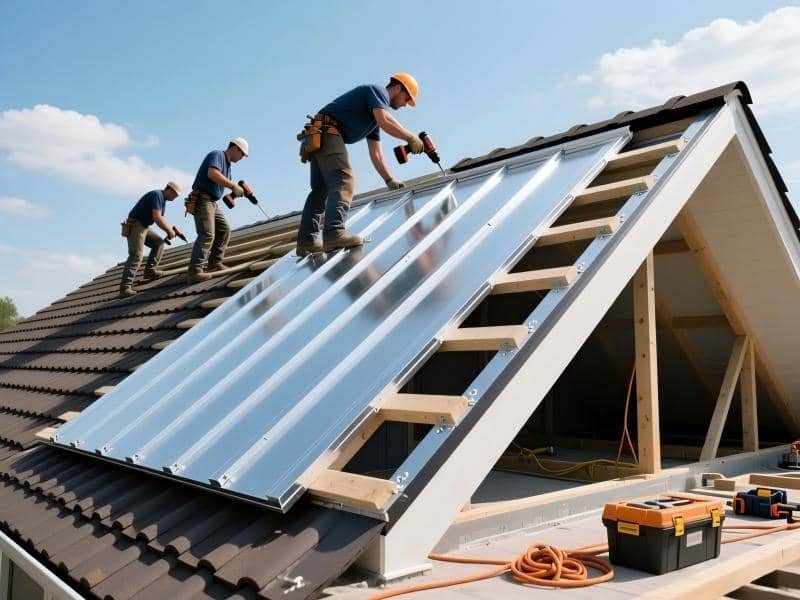
For example, in a residential project in Australia, the installation of insulated aluminium roofing sheets over a sloped roof was done. The installation crew noted that the time taken for installation was 20% more compared to the standard aluminium sheets because of the requirement of special fasteners and joint sealing. Nonetheless, the energy saving in the long run made the initial effort worth it.
Can there be better ways of installation?
- When the right fasteners are used, the life of the roof will not only be extended but also corrosion will be prevented.
- Carefully providing proper overlap and effective sealing will be a good moisture infiltration prevention method.
- For the installation of high R-value panels, hiring a professional may be a wise decision to keep the warranty effective.
How to Maintain and Reduce Lifecycle Cost
Roof panels made of insulated aluminum require little maintenance and are highly valued in the long run:
- Washing: Rarely, the natural washing process is supplemented with water to get rid of the dust and dirt.
- Preservation of the coating: To stop oxidation, it is important to have the surface coating checked from time to time.
- Thermal core inspection: This is mainly done when there is a leak or damage, so it is not done frequently.
| Cost Aspect | Aluminium Roofing Sheet | Insulated Aluminium Panel |
| Initial material cost | Moderate | Higher |
| Installation cost | Low | Moderate |
| Maintenance cost (annual) | Moderate | Low |
| Expected lifespan | 20–25 years | 30+ years |
| Energy savings | Low | High (20–50% reduction in heating/cooling costs) |
Case Study: An industrial facility in Canada reported 30% lower annual energy bills after retrofitting with insulated aluminium roof panels, despite the higher initial investment.
Practical Recommendations for Aluminium Insulated Roof Panels
| Recommendation Category | Key Considerations | Practical Tips | Benefits |
| Climate Consideration | Choose panels with appropriate R-value for the local climate | Choose panels with appan ropriate R-value for the local climate | Reduced energy consumption, improved indoor comfort |
| Building Type | Assess project priorities | Residential: focus on cost-effectiveness; Commercial/Industrial: prioritize energy savings and thermal comfort | Optimal performance tailored to building usage and budget |
| Installation Strategy | Ensure correct installation procedures | Hire skilled labor; maintain proper alignment, seal joints, secure fasteners | Prevents thermal bridging, moisture infiltration, extends panel lifespan |
| Maintenance Planning | Preserve durability and thermal efficiency | Inspect coatings and joints regularly; clean surfaces; repair minor damages | Maintains R-alue, ensures consistent energy savings, prolongs service life |
FAQ
Q1: What are the standard R values for one or more insulated aluminum roofing sheets?
A1: The R-values of insulated aluminum roofing are generally in the range 4-6 m²·K/W, according to lining thickness specifications as well as the type of the insulation used (PIR, PU, or mineral wool).
Q2: What are some differences in the installation process between insulated and un-insulted aluminum roofing panels?
A2: The installation of insulated panels is demanding. The alignment has to be accurate for every panel in order to provide the required thermal insulation in the roofs. The fastener choice is specific for the thermal panel’s performance: in many cases, it may take longer to install the panel overall.
Q3: What kind of maintenance is needed to ensure the thermal performance continues?
A3: The need for cleaning from time to time, periodic inspection for coating integrity, looking for leakage of the joints from as-sealed, are sufficient.
Q4: Are insulated aluminum roof panels a more cost-effective design for residential buildings?
A4: Yes, they work well, especially in regions that have climatic extremities that may cause temperature build-up. All the energy savings realize that the relatively large initial investment gives benefits to a life span of the cause.