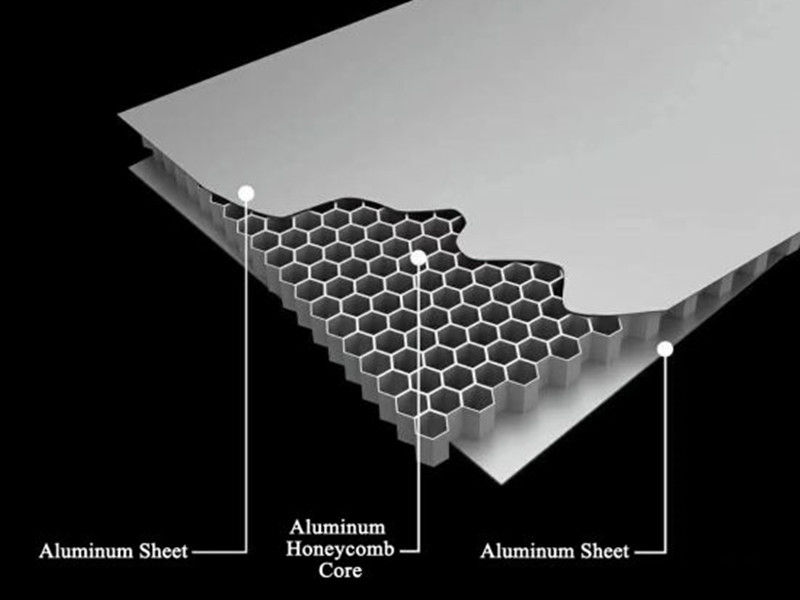
In cabinet design and manufacturing, the outstanding durability, environmental sustainability, and contemporary appearance of aluminum sheet increase their popularity. Nonetheless, many people seem to favor color, surface texture, or cost when choosing this material, while size is the most often neglected characteristic of all.
Selecting an inappropriate size results in material waste, unproductive processing and may even affect the overall structural and visual qualities of the completed cabinet. Having been in the aluminum sheet supply business for many years, CHAL knows all about this. Therefore, the purpose of this article is to provide a systematic approach to this significantly neglected aspect of size selection in order to assist you in optimizing the initial stage of production cost and waste minimization.
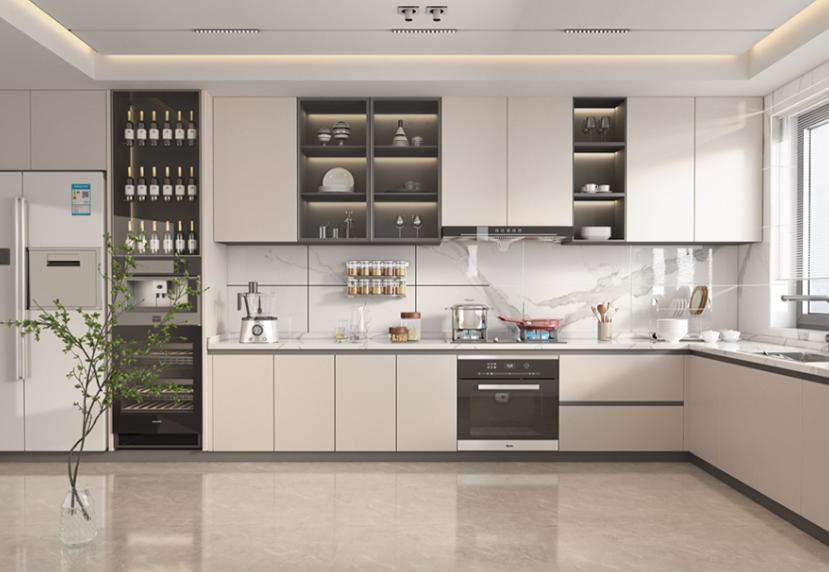
Understanding The Basics – Types of Aluminum Sheets and Standard Sizes for Cabinets.
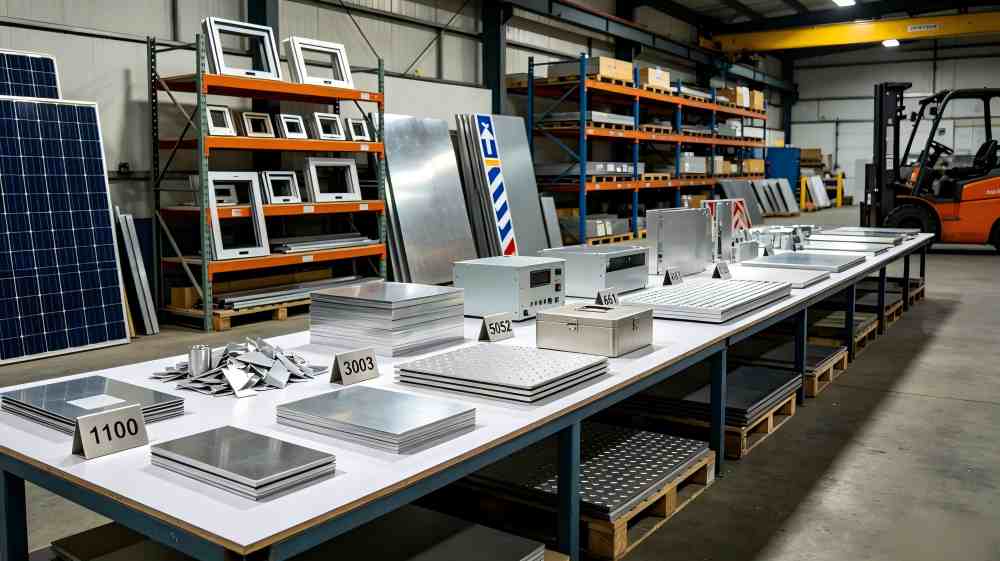
In contemporary cupboard and cabinet manufacturing (especially for all-aluminium kitchens), the base sheet dimension is defined by three parameters: Alloy/Type, Thickness and Standard Width/Length.
| Aluminium Type for Cupboards | Common Thickness Range (T) | Standard Length x Width (L x W) | Typical Application |
| High-end door panels require maximum flatness and rigidity. | 1.0mm – 3.0mm | 1220mm×2440mm (4’×8’), 1500mm×3000mm | Structural components, side panels, internal shelving. |
| Aluminium Composite Panel (ACP) | 3mm – 4mm (Total thickness) | 1220mm×2440mm, 1250mm×3200mm | Cupboard doors, external cladding, decorative surfaces. |
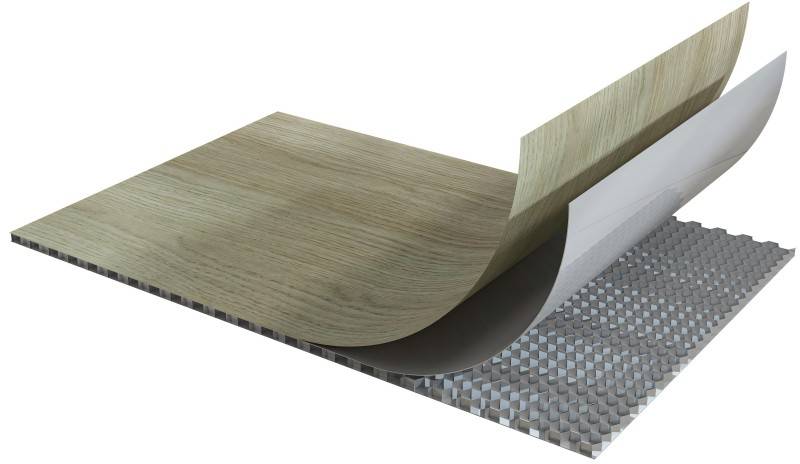
| Aluminium Honeycomb Panel | 10mm – 25mm (Total thickness) | Custom dimensions based on project needs | High-end door panels requiring maximum flatness and rigidity. |
Thickness Role: Thickness (T), in this case, is expressed in millimeters (mm). The thicker the sheet, the better the soundproofing, structural soundness, and deflection resistance. This last property is important for large cupboard doors and load-bearing shelves. Moreover, “standard size” means sufficient stock on inventory, shorter procurement cycles and price stability. This should be prioritized in the early phase of project design.
Understanding Needs – Dimensional Focus Differs at Different Stages
Your focus on dimensions will naturally change depending on where you are in the project timeline. As your supplier, CHAL assists you at every stage.
1. Planning & Design Phase: Focus on Original Sheet Stock
At the initial planning stage, designers and fabricators need to consider “How can I cut the most cabinet components using the least amount of board?”.
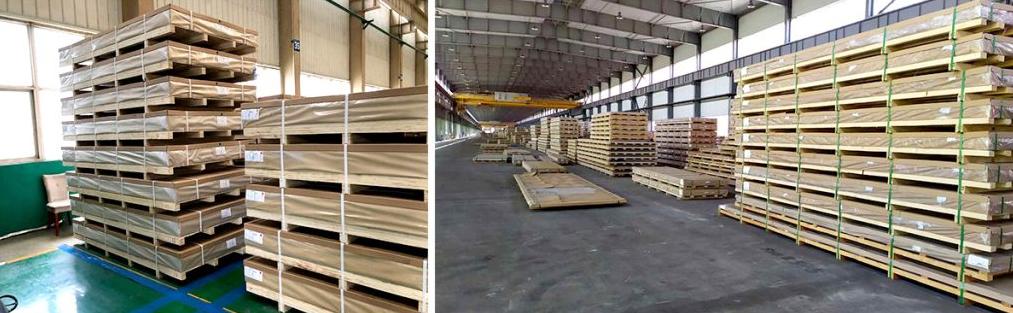
Standard Mill Size: Most raw aluminium sheets and coils are produced in standard widths like 1000mm, 1220mm (4 feet), or 1500mm. Standard lengths are 2440mm (8 feet) and 3050mm (10 feet). Here to look at the Original Sheet Stock Specifications supplied by CHAL.
Maximizing Yield: Knowing these standard sizes allows you to adjust your cupboard module dimensions slightly to ensure the most efficient cutting pattern. Optimizing the layout can significantly reduce scrap and maximize material utilization. CHAL’s technical team can provide free consultation on cutting solutions, helping you save money from the very beginning.
2. Procurement and Comparison Step: Concentrate on the Specifications of the Final Parts
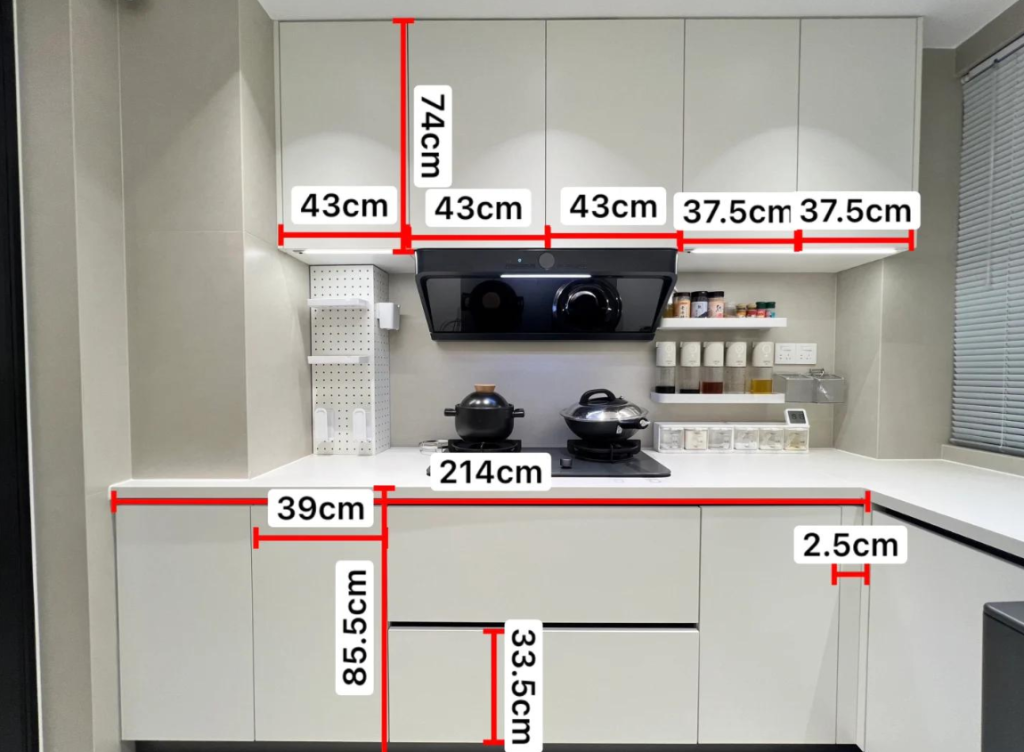
During the ordering process and while evaluating bids, you concentrate on the specifications of the finished pieces. You might ask yourself, “What thickness should the floor cabinet door panels be for the best coordination? How big should my wall cabinets be to avoid being top heavy?”
Here are the considerations:
- Thickness of Parts: Make sure to establish thickness for certain components e.g. for an exposed side panel thickness should be 1.5mm while for a non-structural backing panel it should only be 0.8mm.
- Floor cabinet door panels: Widths typically range between 300mm and 600mm. Height is determined by the cabinet body. For aluminum composite panels, a 4mm thickness is suggested for panels to be smooth and to attain a luxurious sensation.
- Wall cabinet door panels: To lessen weight and visual dominance, cabinets can be somewhat thinner. For visual uniformity, the thickness can be the same.
- Countertops and side panels: Wider panels might be necessary to maximize seam space. For an overall integrated look, CHAL provides extra-wide panels up to 1500mm.
- Specific Cut Sizes: When pre-cut pieces are ordered, you need to specify the final component size, e.g. 715mm×497mm door panel, not only the size of the raw sheet from which it was cut.
3. Custom Fabrication Phase: Workability of Materials
When bending, stamping, or profiling, remember that size and alloy composition matter for ease of processing.
Formability: Thin sheets (below 1.5mm) are simpler to bend and form, without the risk of fracture.
Flatness and Precision: If the parts must be absolutely flat (as are large cabinet doors), it is advisable to use panels that have more total thickness (as is Honeycomb or thicker ACP). CHAL integrates flatness quality at the base material to ensure predictable processing.
Regarding the special shapes and processes, remember to discuss your processing technique with the distributor.
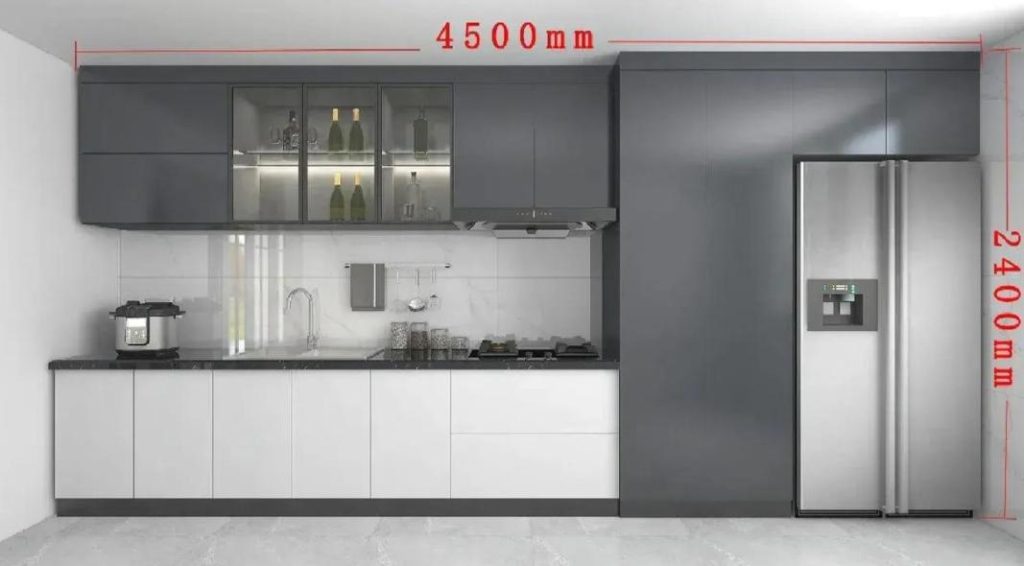
CHAL’s Professional Advice: Choosing the Right Size Determines the Details
Based on countless successful collaborations, we’ve summarized the following practical advice:
Critical Application Thickness Recommendations
| Cupboard Component | Function | Recommended Aluminium Thickness (T) | Why it Matters |
| Structural Frame/Stiffeners | Core load-bearing structure | 1.5mm to 3.0mm | Must resist flexing and hold weight for the life of the cupboard. |
| Large Door Panels | Exterior surface, visual impact | ACP or 1.0mm to 1.5mm single sheet | Balances light weight (for hinges) with resistance to warping. |
| Internal Shelving | Load-bearing storage area | 1.5mm minimum (often coupled with stiffening profile) | Essential for preventing sagging under the weight of dishes or supplies. |
| Cabinet Backing | Non-structural protection | 0.5mm to 0.8mm | Provides closure and protection while minimizing material cost and weight. |
Prioritizing the Universal Standard Sizes
For nearly all projects, we strongly recommend designing your components around the global standard 4’×8’ (1220mm×2440mm) or 4’×10’ (1220mm×3050mm) stock.
The Benefits of Standard Sizes:
- Cost Efficiency: These are the most commonly produced sizes, resulting in the lowest raw material cost per square meter.
- Faster Lead Times: Standard stock is readily available at our facility, accelerating your project timeline.
- Maximum Utility: Using a panel optimization software with these dimensions will generate a cutting list that dramatically improves material utilization (yield).
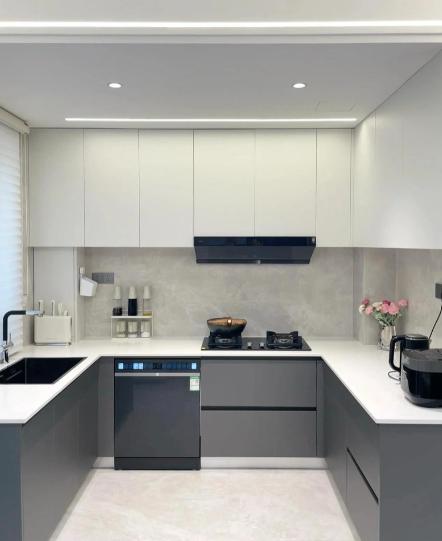
Customization is Key: From Base Sheet to Finished Component
Even though we think of stock as cheap, when we have complex designs we have to factor in the cost of custom cutting as well. At CHAL, we have customization capabilities for every level of custom complex. Standard custom cutting can be allocated to the sheets we sell for cupboard frames. Your custom cutting sheets can be allocated to skip on fabrication and cutting on-site waste.
For container curtain walls we can source pre-painted pre-cut and pre-bent as well as bare boards. Not only can we make bare boards we can also make semi-finished components. For big jobs, we can adjust production runs to source specialized widths or lengths and seam to un-dimensioned cupboard lines so that they fit and finish is seamless to a line of cabinets.
CHAL can have tech people in the project on an initial level to work with you on dimensional, structural or processing obstacles.
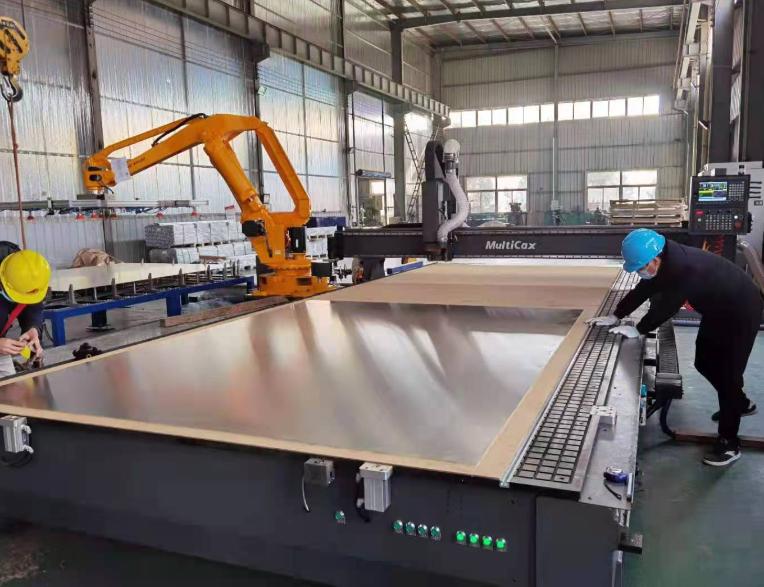
Choosing CHAL for your aluminium sheets for cupboards means selecting a supplier that prioritizes precision, quality, and material expertise. We ensure every product leaving our facility meets strict international quality standards, giving you the confidence that your cabinets will stand the test of time.
Contact the CHAL sales team today to discuss your project specifications and let us help you achieve optimal material selection and cost savings.